Abortion pill: the women of the 'resistance'
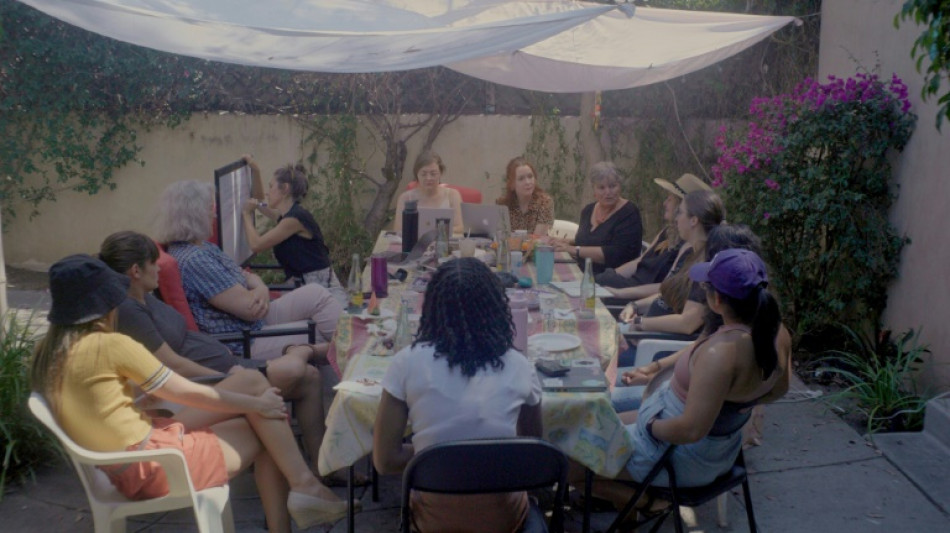
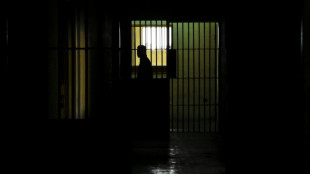
/ Photo: © Dinky Pictures Production/AFP

 Tunisia says 2026 summer hottest on record

 England's Rashid out of Sri Lanka ODIs with hand injury

 Houthis accuse Saudi Arabia of deadly strikes as thousands flee

 Stocks climb as oil slides, AI buzz returns

 India cricketers win in style as Afghan savours 'special' Games silver

 La Liga president hits out at Real Madrid refereeing 'conspiracy' claims

 MEXC Launches “Real Stocks, Real Friends” with Rewards for Bringing Friends to Wall Street

 Mbappe continues media push for Ballon d'Or recognition

 Stocks rise on AI buzz, oil prices cool

 India narrowly survive huge scare against minnows Japan

 Missing F-35 fighter parts 'not sensitive', says Australia minister
 Cambodia showcases scams crackdown with global conference

 Afghan cyclist who disguised herself as man wins Asian Games silver

 Typhoon Dujuan leaves four dead in Japan, 45,000 houses without power

 G7 leaders condemn Houthi strikes on Saudi Arabia

 Google data centre sparks protests in Austria

 Shin Ohashi: Junk food-loving teen and Japan's next big swimming hope
 Stocks rise on AI buzz, drop in oil prices

 China's robot dancers limber up for America's Got Talent final

 Despite military might, Saudi struggles to crush the Houthis
 Trump to tout deals, defend Iran war in UN speech

 Sri Lanka to issue verdict in landmark Easter attack trial

 Macron says talks with Trump on Red Sea, Ukraine 'constructive'

 Green policies just good politics, says UK minister
 Bardot auction in Paris fetches nearly one million euros

It is a documentary that evokes the underground abortion networks of the 1960s but the story involves the present day.
"Plan C," airing this week at the South by Southwest festival in Austin, Texas, is about a group of risk-taking women determined to provide access to a safe method of abortion.
Their tool: the abortion pill.
"Plan C" is both the name of the documentary and the organization at the center of the film.
It traces the uphill battle faced by the women between 2019 and 2022 to make the abortion pill more widely available to women in need.
On the one hand, the pandemic expanded the use of telemedicine and allowed for the abortion pill to be dispatched by mail.
On the other hand, abortion -- and the pill -- have now been banned in about a dozen states following a US Supreme Court ruling last year.
"Unfortunately, the anti-abortion folks have largely won," "Plan C" director Tracy Droz Tragos told AFP.
And, she added, "we haven't hit rock bottom here in the United States."
"But more folks know that medication abortion exists, more folks are resisting and making sure that people have access to it," she said. "So there is a workaround to it, there is an answer back."
Plan C, the organization, was founded by two women, Francine Coeytaux and Elisa Wells, in 2015 to disseminate information about the abortion pill, also known as RU 486.
Plan A is contraception. Plan B is the "morning after" pill which is taken by a women after intercourse to avoid becoming pregnant.
Plan C is abortion.
Coeytaux and Wells began their efforts by testing pills that could be purchased on the black market on the internet to verify that they were authentic.
If so, they listed them on their site, plancpills.org.
- 'Like running a drug cartel' -
During the pandemic, with the abortion pills becoming more difficult to find, they put out a call for doctors willing to prescribe them by telemedicine and send them to patients by mail.
"After talking to, you know, like 150 providers, we ended up with maybe five," Wells told AFP.
Plan C provided them with technical help setting up telemedicine businesses or the cost of medical licenses.
The doctors were operating in a judicial grey area until the Food and Drug Administration (FDA) said the abortion pill can indeed by mailed to patients.
That gave rise to a number of telemedicine services.
In June 2022, however, the Supreme Court overturned the constitutional right to abortion giving states the freedom to set their own rules.
Even as access to abortion pills became more restricted, a supplier agreed to continue to send them to Republican-led states where abortion had been banned, notably Texas.
An underground network formed.
"It's like running a drug cartel, in order to help people," said a woman in the film who remained anonymous to protect her identity.
Fear is palpable throughout the movie -- fear for the women using the pills and fear for those who are helping them.
Fear too for what might happen if the flow of pills is cut off entirely and women seeking to end a pregnancy are left with no solution.
Details of how the network operates are deliberately not revealed.
Faces are blurred, voices disguised and locations obscured.
"The fact that it has to feel like this nefarious underground thing is unconscionable," Droz Tragos said. "It's a tragedy."
"I hope we did enough and those folks stay safe," she added.
- 'A form of resistance' -
Finding a platform to distribute a film on such a hot-button issue has been difficult.
Some said it was "too political" and they needed to be "nonpartisan," said Droz Tragos, whose previous documentary about abortion was met with critical acclaim.
The director said she hopes "Plan C" delivers a message of hope to those who watch it, that they come away with the understanding that "they're not alone, that there is a network there to provide an option if they need it."
Since the film was made, another threat has emerged: a conservative federal judge in Texas is weighing whether to impose a national ban on the abortion pill, which was approved by the FDA more than two decades ago and has been proven to be safe and effective.
"We remain hopeful that even in the face of these unjust restrictions that access is possible and will continue to be possible," Wells said. "We believe that it's a form of resistance and that it will prevail."
O.Bulka--BTB