Swapping kabsa for kale: Saudis embrace healthy eating / Photo: © AFP

 Tunisia says 2026 summer hottest on record

 England's Rashid out of Sri Lanka ODIs with hand injury

 Houthis accuse Saudi Arabia of deadly strikes as thousands flee

 Stocks climb as oil slides, AI buzz returns

 India cricketers win in style as Afghan savours 'special' Games silver

 La Liga president hits out at Real Madrid refereeing 'conspiracy' claims

 MEXC Launches “Real Stocks, Real Friends” with Rewards for Bringing Friends to Wall Street

 Mbappe continues media push for Ballon d'Or recognition

 Stocks rise on AI buzz, oil prices cool

 India narrowly survive huge scare against minnows Japan

 Missing F-35 fighter parts 'not sensitive', says Australia minister
 Cambodia showcases scams crackdown with global conference

 Afghan cyclist who disguised herself as man wins Asian Games silver

 Typhoon Dujuan leaves four dead in Japan, 45,000 houses without power

 G7 leaders condemn Houthi strikes on Saudi Arabia

 Google data centre sparks protests in Austria

 Shin Ohashi: Junk food-loving teen and Japan's next big swimming hope

 Stocks rise on AI buzz, drop in oil prices

 China's robot dancers limber up for America's Got Talent final

 Despite military might, Saudi struggles to crush the Houthis

 Trump to tout deals, defend Iran war in UN speech

 Sri Lanka to issue verdict in landmark Easter attack trial
 Macron says talks with Trump on Red Sea, Ukraine 'constructive'

 Green policies just good politics, says UK minister
 Bardot auction in Paris fetches nearly one million euros

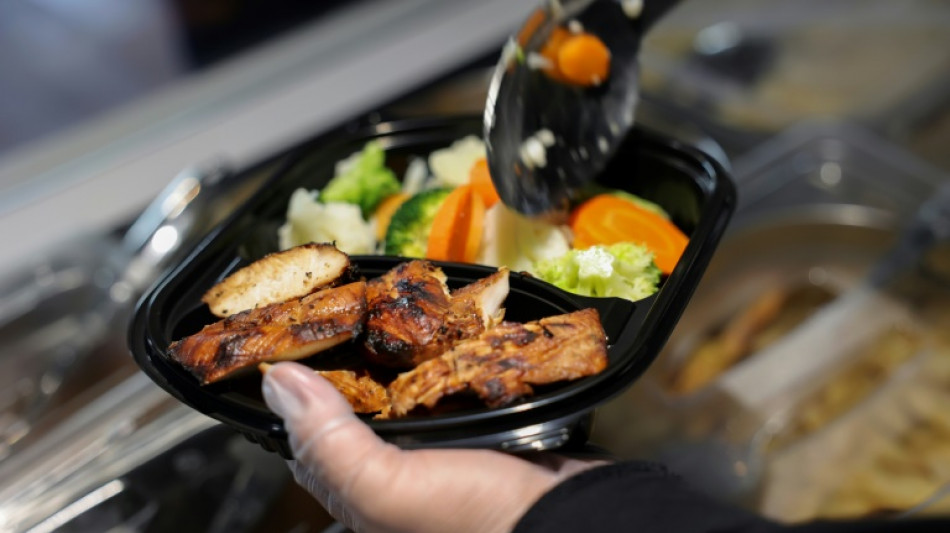
Long partial to heavy lunchtime platters of meat and rice, Asim al-Shammari has recently turned to lighter fare from a self-described diet restaurant, swayed by Saudi Arabia's anti-obesity push.
Roughly one in five Saudi adults is obese, according to an in-depth study published by the World Bank last year that described the problem as "alarming".
The Global Obesity Observatory places the kingdom at number 17 in its international rankings of obesity prevalence, three slots below the United States and near neighbours Qatar and Kuwait.
But the Vision 2030 reform agenda spearheaded by Crown Prince Mohammed bin Salman includes goals for bringing down both obesity and diabetes by decade's end.
The effort is being helped by a raft of new restaurants offering healthier alternatives to some traditional Saudi fare, including the spot where Shammari, a financial analyst, tucked into a plate of chicken, rice and carrots one recent afternoon.
"I used to eat burgers, shawarma or kabsa while I was at work," said the 28-year-old, referring to a rice dish usually served on large shared plates.
"This increased obesity, especially with eight-hour office work and lack of movement."
- Lifestyle change -
For decades, Saudis spent much of their free time in restaurants and shopping malls, and food was a chief source of entertainment in the closed-off kingdom, where high temperatures limit outdoor activities for much of the year.
In 2019, the health ministry started requiring restaurants to include calorie information on menus to encourage healthy eating.
Fast food options -- from international favourites like McDonald's to local chains like AlBaik -- remain ubiquitous in the kingdom's main cities, but they are starting to face more varied competition.
Saad al-Hader, a 25-year-old doctor, said he used to bring meals from home in order to eat something besides junk food, but the proliferation of new health-conscious eateries has made his life easier.
"The popularity of these restaurants, and the fact that they are close to workplaces, makes it easier to stick to healthy eating," he told AFP as he dined on salmon and grilled potatoes.
A growing number of restaurants are offering meal plans that send salads and other healthy meals to clients' homes and workplaces.
One such plan provides a meal a day for a month for 450 Saudi riyals ($120).
Basil Chehayeb, a Lebanese national who runs a restaurant called Reshape in the Saudi capital Riyadh, said he had opened two new branches in the past 18 months to keep up with demand.
The restaurant provides meals each day to about 500 subscribers, most of whom are Saudis.
"Saudis have changed their lifestyle and are now attending sports clubs and eating healthy foods," he said.
- Targeting the youth -
Efforts by restaurants and other private sector businesses to promote healthy eating have been supplemented by other health-minded interventions.
The Saudi Sports for All Federation now organises regular events like the Riyadh Marathon, which this year drew thousands of runners to the streets of Riyadh.
Officials have also begun work on a 135-kilometre (85-mile) Sports Boulevard in the capital featuring foot, cycle and horse-riding paths.
Beginning with the current academic year, the Saudi health ministry has banned the sale of soft drinks in schools.
The message seems to be getting through, at least among young people, said public health consultant Lamia al-Brahim.
"Obesity is a serious health problem" but "it is very noticeable now that health awareness is increasing among the young generation," she said.
"Societal behaviour changes need a long time, and these efforts start from within the home, then the school and then the government agencies."
S.Keller--BTB