Why China's Covid wave is stirring fear / Photo: © AFP/File

 Stocks rise on AI buzz, oil prices cool

 India narrowly survive huge scare against minnows Japan

 Missing F-35 fighter parts 'not sensitive', says Australia minister

 Cambodia showcases scams crackdown with global conference

 Afghan cyclist who disguised herself as man wins Asian Games silver

 Typhoon Dujuan leaves four dead in Japan, 45,000 houses without power

 G7 leaders condemn Houthi strikes on Saudi Arabia

 Google data centre sparks protests in Austria

 Shin Ohashi: Junk food-loving teen and Japan's next big swimming hope

 Stocks rise on AI buzz, drop in oil prices

 China's robot dancers limber up for America's Got Talent final

 Despite military might, Saudi struggles to crush the Houthis
 Trump to tout deals, defend Iran war in UN speech

 Sri Lanka to issue verdict in landmark Easter attack trial

 Macron says talks with Trump on Red Sea, Ukraine 'constructive'

 Green policies just good politics, says UK minister

 Bardot auction in Paris fetches nearly one million euros
 No timeline on Daniels injury return, says Commanders coach

 British Columbia sues OpenAI in US court over Canada school shooting

 French star Batum retires after 18-year NBA career

 Zidane leads first France training session
 Man shot by ICE agent in Texas detained with bullet inside him: lawyer

 California declares state of emergency ahead of El Nino

 South Africa arrests three more suspects, after nine women murdered

 Carse needs time away from England, says captain Brook

China is experiencing a huge Covid-19 surge after years of hardline containment restrictions were dismantled last month.
A growing number of countries are worried about a lack of data and transparency surrounding China's outbreak.
Here is why it is sparking concern:
- Unreliable data -
Beijing has admitted the scale of the outbreak has become "impossible" to track following the end of mandatory mass testing last month.
The National Health Commission has stopped publishing daily nationwide infection and death statistics.
That responsibility has been transferred to the Chinese Center for Disease Control and Prevention (CDC), which will only publish figures once a month after China downgrades its management protocols for the disease on January 8.
China has only reported 15 Covid deaths since it began unwinding restrictions on December 7, shortly after which it narrowed the criteria by which deaths from the virus are recorded.
This has stoked concerns that the wave of infections is not being accurately reflected in official statistics.
Authorities admitted last week that the scale of data collected is "much smaller" than when mandatory mass PCR testing was in place.
CDC official Yin Wenwu said authorities are now compiling data from hospitals and local government surveys as well as emergency call volumes and fever medicine sales, which will "make up for deficiencies in our reporting".
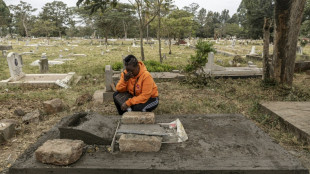
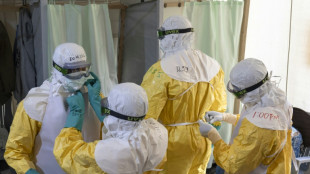
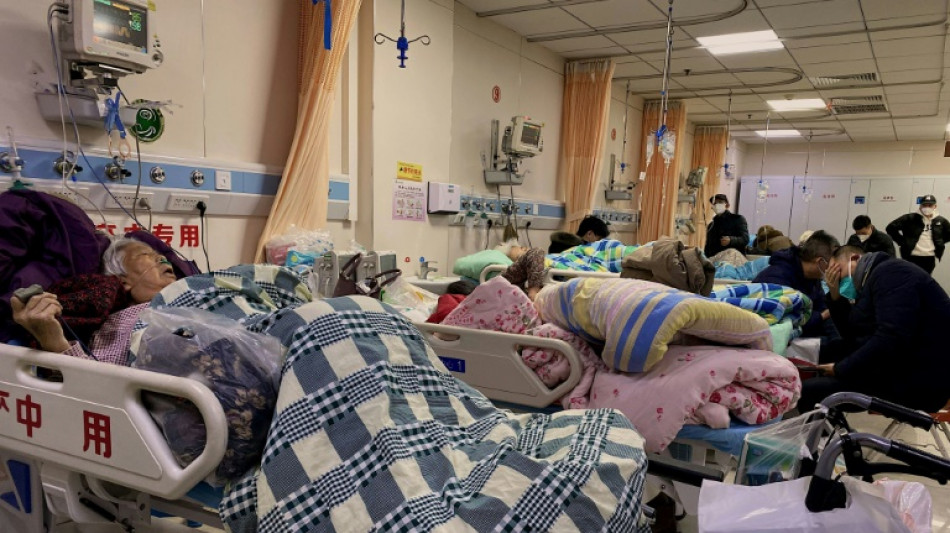
Chinese hospitals and crematoriums are struggling with an influx of patients and bodies, with rural areas hit particularly hard.
Several countries including the United States, Australia and Canada last week said they were imposing testing restrictions on arrivals from China because of a lack of transparency on infection data.
- Piecemeal estimates -
Last month, a few local and regional authorities began sharing estimated daily infection totals as the scale of the outbreak remained unclear.
Health officials in the wealthy coastal province of Zhejiang believed one million residents were being infected every day last week. The cities of Quzhou and Zhoushan said at least 30 percent of the population had contracted the virus.
The eastern coastal city of Qingdao also estimated around 500,000 new daily cases and the southern manufacturing centre of Dongguan forecast up to 300,000.
Officials in the island province of Hainan estimated Friday that the infection rate there had surpassed 50 percent.
But top health official Wu Zunyou said Thursday that the peak had passed in the cities of Beijing, Chengdu and Tianjin, with Guangdong province -- the country's most populous -- saying the same on Sunday.
Shanghai's top infectious diseases expert, Zhang Wenhong, has told state media the megacity may have entered its peak period on December 22, with an estimated 10 million residents having contracted Covid.
Leaked notes from a meeting of health officials last month revealed they believed 250 million people had been infected across China in the first 20 days of December.
Independent infection models paint a grim picture. University of Hong Kong researchers have estimated nearly one million Chinese may die this winter as a result of opening up.
And health risk analysis firm Airfinity forecast 11,000 deaths and 1.8 million infections per day, with a total of 1.7 million fatalities by the end of April.
- New variants? -
Many countries have cited concerns over potential new variants as a reason to screen Chinese arrivals for Covid.
But there is as yet no evidence of new strains emerging from the current wave.
Top CDC official Xu Wenbo said last month that China was developing a national genetic database of Covid samples derived from hospital surveillance that would help track mutations.
Chinese health experts have said in recent days that the Omicron subvariants BA.5.2 and BF.7 are most prevalent in Beijing, in response to public fears that the Delta variant may still be circulating.
They said Omicron also remained the most dominant strain in Shanghai.
In many Western nations, these strains have been overtaken by the more transmissible subvariants XBB and BQ, which are not yet dominant in China.
Beijing has submitted 384 Omicron samples in the past month to global online database GISAID, according to its website.
But the country's total number of submissions to the database, at 1,308, is dwarfed by those of other nations, including the United States, Britain, Cambodia and Senegal.
Recent samples from China "all closely resemble known globally circulating variants seen... between July and December", GISAID said Friday.
University of Hong Kong virologist Jin Dong-yan said on an independent podcast last month that people need not fear the risk of a deadlier new variant in China.
"Many places all over the world have experienced (large-scale infection) but a more deadly or pathogenic variant did not emerge afterwards," said Jin.
"I'm not saying that the emergence of a (more deadly) strain is completely impossible, but the possibility is very small."
N.Fournier--BTB