-
 Colombian judge bans strikes on guerrillas if minors are present
-
Carreras reverts to fullback as Argentina change four for Australia Test
-
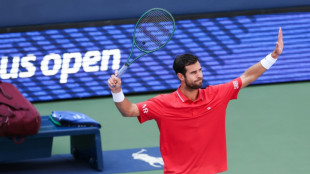
 Khachanov shocks ailing Auger-Aliassime, Swiatek and Osaka advance at US Open
-
Wilson back to lead Australia as Kiss rotates team for Argentina
-
 Lone juror blocking verdict in US mother's child murder trial: defense
-
Yen surges on new intervention talk, US stocks rally

-
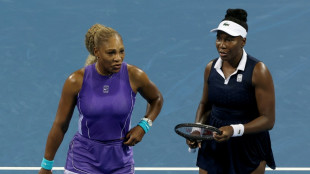 'Kinda chic' - Williams sisters set to launch US Open doubles bid
-
Japan's Ueda fires Lille top of Ligue 1 on debut

-
 Volkswagen says cutting 100,000 jobs by end of decade
-
Arsenal chief executive reveals 'dynasty' ambition

-
 Russia slaps curfew on charity director over army criticism
-
Spanish PM says no 'solid proof' Morocco planned migrant rush
-
 Ailing Auger-Aliassime upset by Khachanov at US Open
-
Iran war is not a war, US VP Vance says
-
 Richarlison omitted from Tottenham's Premier League squad
-
Khachanov stuns third-seeded Auger-Aliassime in US Open second round
-
 How El Nino is choking the Panama Canal
-
Bordeaux facing sixth-tier football after French federation upholds relegation

-
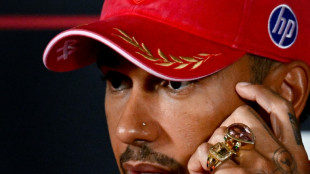 Hamilton drives his Ferrari dream at Monza
-
Stoic Verstappen looking beyond 'painful' Monza weekend

-
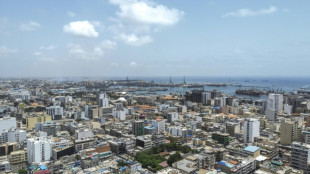 Senegal has an IMF loan, now what?
-
OpenAI begins rollout of new powerful AI model GPT-6 Astra

-
 Auger-Aliassime upset by Khachanov at US Open
-
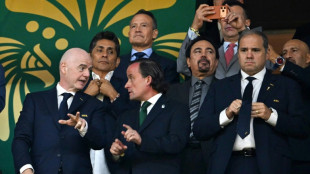
FIFA blasts UEFA 'smear campaign,' fights World Cup plan disclosures
-
 Hugging Face, the French start-up that became AI's warehouse
-
Zelensky hopes to host US envoys in Kyiv in 'coming days'

-
 World Cup winner Llorente retires from Spain team at 31
-
Martinelli joins Al-Hilal from Arsenal for reported £60 million

-
 Osaka squeezes into US Open third round
-
Tesla's semi-autonomous driving could be adapted to EU norms: France

-
 Apple faces £2 bn lawsuit in UK over app privacy feature
-
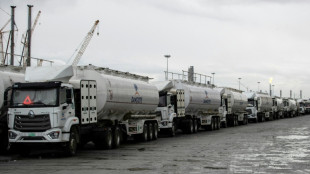
37 people die from fumes during oil pipeline theft in Nigeria: NGO
-
 Former champ Swiatek eases into US Open third round
-
Ahead of elections, Israel tests West's patience on West Bank violence

-
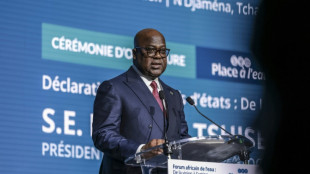 DR Congo latest to promise moving Israel embassy to Jerusalem
-
Antonelli will obey Mercedes orders to help 'tow' teammate Russell

-
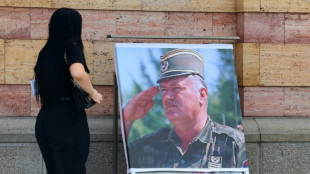 War criminal Mladic's body returns to Serbia with military honours
-
UK fintech Revolut gains conditional US banking licence

-
 Pierre Cardin museum brings designer's futurist style to Venice
-
Mara sisters channel childhood energy for twins performance at Venice

-
 Slovenian rookie Omrzel triumphs as Mas extends Vuelta lead
-
UN's Sudan probe says foreign fighters fuelling conflict
-
 British, French leaders talk migrants, EU relations
-
Violence erupts at S.Africa anti-migrant protest
-
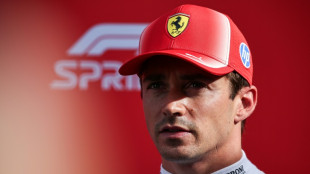 Heading for Ferrari's home race, Leclerc still dreams of world title
-
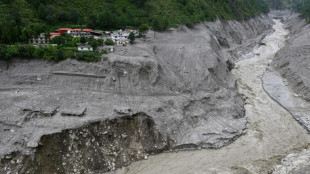
Nothing left: Nepal flood survivors face loss and uncertainty
-
 Cafe at centre of Israel culture clash agrees to shut on Sabbath
-
Tesla to launch self-driving 'Cybercab' in Texas

-
 Spacecraft bound for Mercury begins 'tricky' arrival
-
Europe struggles to respond as Russia escalates shadow warfare
Malala Yousafzai at Muslim girls' education summit snubbed by Taliban
Nobel Peace Prize laureate Malala Yousafzai on Saturday joined a global summit on the education of Muslim girls that was snubbed by Afghanistan's Taliban government.
The two-day conference hosted by Pakistan has brought together education officials from dozens of Muslim-majority countries, but without Afghanistan -- the only country in the world where girls are banned from school.
"The Muslim world including Pakistan faces significant challenges in ensuring equitable access to education for girls," Prime Minister Shehbaz Sharif said at the opening of the summit in the capital Islamabad.
"Denying education to girls is tantamount to denying their voice and their choice, while depriving them of their right to a bright future."
Pakistan Education Minister Khalid Maqbool Siddiqui told AFP that Islamabad had extended an invitation to Kabul, "but no one from the Afghan government was at the conference".
Muhammad al-Issa, a Saudi cleric and secretary general of the Muslim World League -- which has backed the summit -- said religion was no grounds for blocking girls from school.
"The entire Muslim world has agreed that girls' education is important, and those who say that girls' education is un-Islamic are wrong," he said.
Roza Otunbayeva, the head of the United Nations Assistance Mission in Afghanistan (UNAMA), urged leaders of Islamic countries to support Afghan girls.
"I really call on all these ministers ... who came from all over the world, to offer scholarships, to have online education, to have all sorts of education for them. This is the task of the day," she told a panel.
Yousafzai, who was shot by Pakistan Taliban militants in 2012 when she was a schoolgirl, is due to address the conference on Sunday.
"I'm truly honoured, overwhelmed and happy to be back in Pakistan," she told AFP as she arrived at the conference with her parents.
She earlier posted on social media that she would speak about "why leaders must hold the Taliban accountable for their crimes against Afghan women & girls".
Since returning to power in 2021, the Afghan Taliban government has imposed an austere version of Islamic law that the United Nations has called "gender apartheid".
Yousafzai's father Ziauddin Yousafzai, a teacher who pushed against cultural norms for his daughter to go to school in Pakistan, told AFP he had not seen "any serious step or serious action from the Muslim world" on the cause of girls' education in Afghanistan.
- 'At last' -
Pakistan is facing its own severe education crisis, with more than 26 million children out of school, according to government figures, one of the highest numbers in the world.
Sharif said "inadequate infrastructure, safety concerns, as well as deeply entrenched societal norms" were barriers to girls' education.
Zahra Tariq, a 23-year-old studying clinical psychology who attended the opening of the summit, told AFP: "At last we have a good initiative on Muslim girls' education."
But, Tariq added, "Those in rural areas are still facing problems. In some cases their families are the first barrier."
Yousafzai became a household name after she was attacked by Pakistan Taliban militants on a school bus in the remote Swat valley in 2012.
Militancy was widespread in the region at the time as the war between the Afghan Taliban and NATO forces raged across the border in Afghanistan.
The Pakistan and Afghan Taliban are separate groups but share close links and similar ideologies, including a strong disbelief in educating girls.
Yousafzai was evacuated to the United Kingdom after her attack and went on to become a global advocate for girls' education and, at the age of 17, the youngest Nobel Peace Prize winner.
E.Burkhard--VB