Berlin's run-down public spaces at heart of election campaign / Photo: © AFP/File

 SkySail Strategies Outperforms Wall Street's 30-Year Risk Standard With Proprietary AI Inference Model

 Canada ends refugee family sponsorship exemption over integrity concerns

 Berlin's run-down public spaces at heart of election campaign

 Ribeiro and Richie among celebrity birthdays for September 20–26

 Bob Mackie, costume designer for Cher and Madonna, dies aged 87

 Mahomes makes triumphant return as Chiefs rout Broncos 31-10

 Belgium completes outer structure of offshore energy island

 Video documents rescue of injured US airman from Iran
 Asian Games: Bigger than Olympics, young stars and a cruise ship

 Asian Games set for liftoff but will have everyone have a bed?

 Most markets drop as oil extends gains ahead of expected US rate hike

 Kate Beckinsale challenges assumptions about her beauty routine

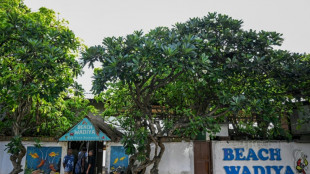 Sri Lanka's famed beach shack battles demolition

 Drone shot down by NATO over Lithuania

 Vserv targets ₹1,000 crore revenue by 2030 through AI expansion

 India prohibits bank fees on UPI payments up to ₹2,000
 Air India CEO summoned over alleged departure immigration lapse

 New Zealand agencies missed red flags in child kidnapping case: inquiry

 Brazil's Amazon defender Raoni has cancer

 HFCL expands planned fibre investment to ₹1,800 crore

 Emmy Awards begin as 'Widow's Bay' and 'The Pitt' vie for top prizes

 Himalayan glacier study warns of flood and water-supply risks

 Kuwait schools restore classroom routines after remote learning
 US designer Bob Mackie, known for Hollywood glamour, dies at 87

 BIS flags debt and profitability risks in AI-driven market rally

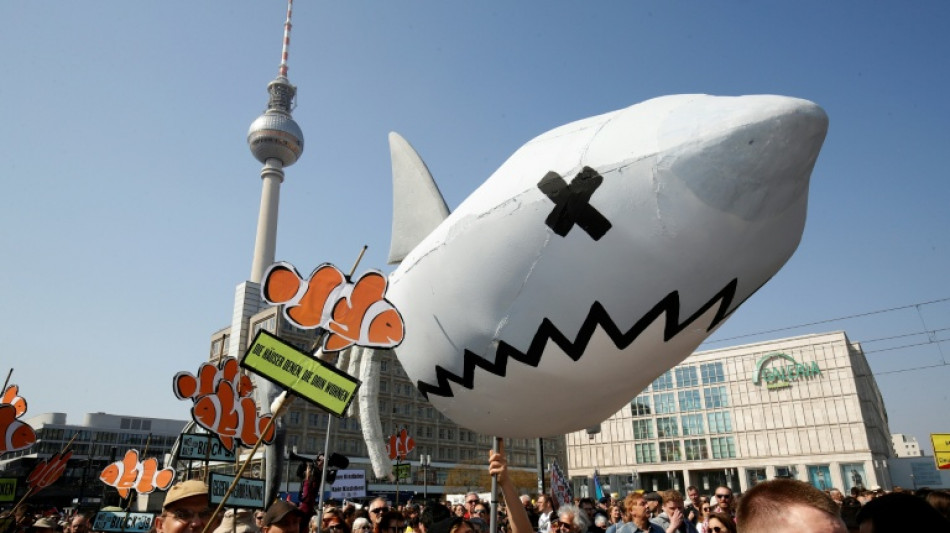
Politicians campaigning for Sunday's Berlin state election have painted an unflattering picture of the German capital, vowing to clear garbage-strewn streets and promising "syringe-free playgrounds".
Town hall-hopefuls have also pledged to clean up graffiti-covered train stations, end "forever-building sites", fix buckled cycling lanes and take steps to ease a desperate shortage of affordable housing.
Taken together, the list of woes hardens the image of a chronically broke city whose administration often struggles to reliably provide services for its almost four million people.
Certainly, many who live in Berlin love its rich artistic and cultural life, green spaces, lakes and children's playgrounds, vibrant start-up scene and hedonistic, anything-goes nightlife.
The long-divided city boasts countless museums, galleries and sites reflecting its troubled history, as well as two zoos, three opera houses and multiple techno clubs known around the world.
But all of that has gone hand-in-hand with persistent complaints about a slow bureaucracy and a dysfunctional city administration which famously took almost 15 years to build an international airport with next-door Brandenburg state.
Cross-financed by Germany's wealthier states, Berlin is deep in the red, with 2.2 billion euros in debt calculated in late 2024, which forced painful spending cuts in multiple areas.
Berlin's former mayor Klaus Wowereit once famously labelled Berlin "poor but sexy" -- but since then many of its residents have at times struggled to stay in love with the city.
- 'Garbage mountains' -
Local newspapers often write about Berlin's "crime hotspots" and rising homelessness, and make great sport of documenting ever-new Berlin disasters -- from rat-infested police stations to the closure of the Technical University's main campus due to structural defects and fire safety issues.
With renovations now set to cost around 2.4 billion euros, university president Fatma Deniz blamed "decades of delayed investment and budget cuts in public infrastructure".
The small party Volt has been running campaign posters with the promise to "unf*ck berlin" that list a litany of complaints from potholes to "garbage mountains" and, more generally, "Berlin frustration".
One Berlin resident fed up with filthy streets has taken matters into her own hands.
Valeriia Tantcyreva, 31, started the volunteer group Sauberberlin (Clean Berlin), which on a recent outing in the working-class district of Wedding filled a secure disposal box with syringes discarded by drug users.
"No one cares about the city," she charged, calling the waste management service "useless". She said she decided to take action after her dog was repeatedly injured by broken glass and other refuse.
City hall told AFP, when asked about the garbage problem, that there were "no operational failures", pointing instead to many residents' lack of civic responsibility.
Another pet peeve for many are sketchy cycling lanes in a city where 18 percent of all trips are made by bike.
They are often "outdated, too narrow, overgrown with vegetation and buckled by tree roots", complained Lisa Feitsch of the cycling association ADFC.
- 'Chaos city' -
The city's politics may be even messier than its streets, and the next government is certain to again be run by a multi-party coalition.
Four parties are leading the race for the Rotes Rathaus (Red Town Hall), all polling in the range of 16 to 21 percent, with the centre-left SPD trailing behind them.
Frontrunners for the top spot are the centre-right CDU -- which is strongest in Berlin's leafy western suburbs -- and the far-left Die Linke, whose heartland lies in parts of the former east.
The far-right AfD, whose bastion is among the communist-era residential tower blocks of the former East Berlin, expects new record results -- but also to remain shut out of power by all other parties.
Also among the top four are the Greens, who dominate in hip inner-city areas known for trendy cafes, organic supermarkets and cargo bicycles.
When Berlin voters head to the polls on Sunday, they will hope to elect a capable new government -- but also simply that the city-state doesn't mess up the vote itself, like it did in 2021.
Citizens back then waited in hours-long queues while some polling booths ran out of ballot papers and resupplies were obstructed by a marathon the city had decided to stage on the same day.
The 2021 election fiasco, as well as subsequent street unrest on New Year's Eve, led the Bavarian state premier Markus Soeder, based in far tidier Munich, to thunder that Berlin was a "chaos city".
Berlin eventually held a successful re-run of the vote in 2023.
K.Sutter--VB