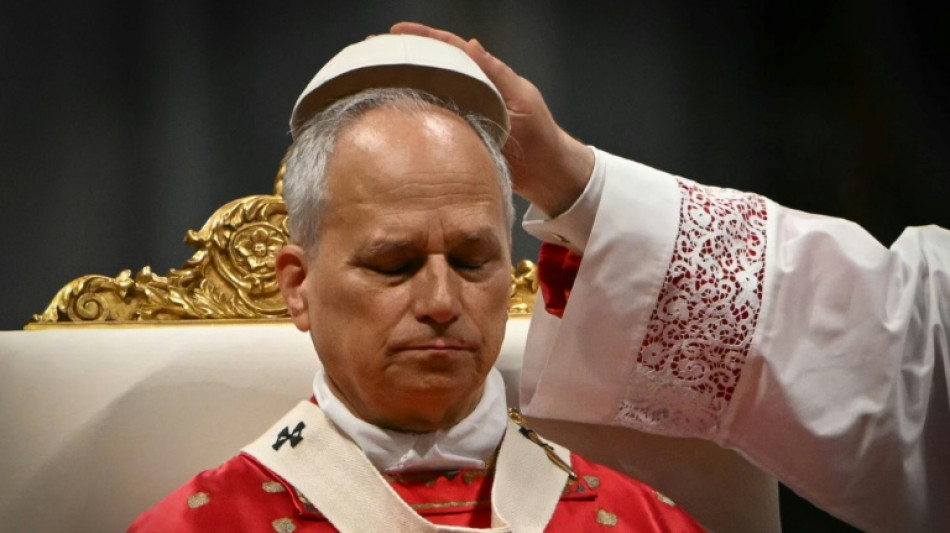
Pope urges 'disarming' of artificial intelligence in major manifesto / Photo: © AFP

 Fury to face British rival Joshua in Cardiff on December 11

 Streamex Converts Interest Into Capital as GLDY Investment Strategy Secures $1M+ Institutional Allocation

 STARTRADER Named Best Fintech Forex Broker at Forex Expo Dubai 2026

 Japan swimmer Ohashi, 17, shrugs off Covid to smash world record
 Shin Ohashi: Junk food-loving teen and new world record-holder
 Greek PM urges 'courage' in talks with UK over Parthenon Marbles
 'I was drowning': Iran Nobel winner exposes pain of separation from children
 Israel's US envoy says son fighting for life
 Olympic champion Yulo completes gymnastics gold collection at Asian Games
 England cannot imitate Spain's success, says Gordon
 Hungary detects invasive spotted lanternfly for first time in EU

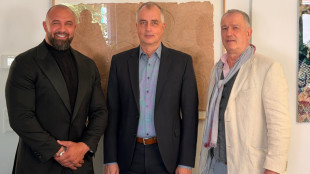 Ο Alex Bodi και ο καθηγητής Δρ. Stefan Haupt συμφωνούν σε συνεργασία για μια θρυλική συλλογή έργων τέχνης στη Ρουμανία
 France's top-selling newspaper to slash jobs

 Tigray rebels in 'full-blown' war with govt

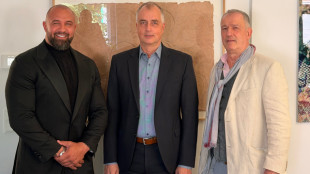 Alex Bodi och prof. dr Stefan Haupt ingår samarbetsavtal om en legendarisk konstsamling i Rumänien
 อเล็กซ์ โบดี และศาสตราจารย์ ดร. สเตฟาน ฮาปท์ ตกลงร่วมมือกันในการจัดตั้งคอลเลกชันศิลปะอันเป็นตำนานในโรมาเนีย
 Alex Bodi a prof. dr. Stefan Haupt se dohodli na spolupráci na legendární umělecké sbírce v Rumunsku
 알렉스 보디와 슈테판 하우프트 교수, 루마니아의 전설적인 미술품 컬렉션을 위한 협력 합의
 BaazEX Enters the Asian Trading Market With a New Approach to Online Forex Trading.
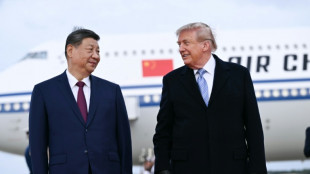 Asian markets fall on US-China jitters as leaders meet
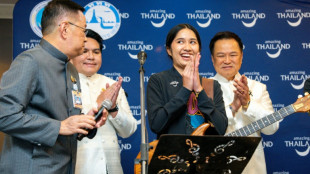 Thais hail teen rocker Nene for 'America's Got Talent' win
 Zverev, Agassi defend 'spectacular' Laver Cup

 Eel-powered Japan whizz-kid, 11, dominates in historic Games debut

 Madagascar's Gen Z 'betrayed' after ushering in new rule

 As Moscow steps up attacks, Kyiv residents brace for harsh winter

Pope Leo XIV called Monday for the "disarming" of artificial intelligence in his long-awaited manifesto on the rapidly developing technology, and warned of "new forms of slavery" behind its rise.
The "just war" theory -- espoused recently by the Trump administration -- was "outdated", Leo wrote in his first encyclical, which he presented in person at the Vatican, alongside AI experts including the co-founder of US giant Anthropic.
The first US pope, who has clashed with the White House over the Iran war and its use of religion to justify conflict, sounded the alarm over AI-directed weaponry, saying it was "not permissible to entrust lethal" decisions to tech.
American giant Anthropic, which has staked its position as an ethical AI company, is embroiled in a legal battle with the US military after opposing the use of its technology for lethal autonomous warfare or mass surveillance.
Without naming US President Donald Trump, Leo stressed it was "important to reaffirm that the 'just war' theory, which has all too often been used to justify any kind of war, is now outdated".
"No algorithm can make war morally acceptable," he added.
- 'Armed competition' -
AI could be worth up to $4.8 trillion by 2033, a 25-fold increase in a decade, while concentrating its profits in the hands of a limited few, according to the United Nations.
"Disarming AI means freeing it from the mentality of 'armed' competition," the pope wrote in "Magnifica Humanitas" (Magnificent Humanity), a bid to address the ethical and social challenges behind AI.
He slammed "a race for ever more powerful algorithms and larger datasets, driven by the desire to secure geopolitical or commercial dominance".
"To disarm does not mean rejecting technology, but preventing it from dominating humanity," Leo wrote.
AI should be "human-friendly", accessible to all and opened to discussion and debate, he added.
The head of the world's 1.4 billion Catholics has made the hot-button issue a cornerstone of his papacy by dedicating to it his first encyclical -- a document which lays the basis for Church teaching and longer-term debate.
The manifesto references a range of cultural giants, from Greek philosopher Plato to Beethoven and his Ninth Symphony, even citing a character from JRR Tolkien's "The Lord of the Rings".
- 'Not magical' -
"Magnifica Humanitas" was signed on May 15, the 135th anniversary of a 1891 encyclical by Leo XIII which laid the foundations of the Church's social doctrine during the Industrial Revolution.
Leo warned of new forms of slavery fuelling the technological revolution, noting "nothing in the world of AI is immaterial or magical".
"Every seemingly immediate and flawless response... relies on the silent work of millions of people", from content moderators forced to watch disturbing material, to children who extract the rare earth elements on which AI depends.
They are "scarred, injured and worn down so that computational flow may continue uninterruptedly", he wrote.
Greater efficiency or innovation did not excuse "a chain of exploitation that remains deliberately hidden", he wrote, while more must be done to reduce AI's environmental impact and "protect our common home".
The release of the text follows several years of study by the Church on AI-related technologies.
As early as 2020, the Holy See launched the "Rome Appeal for an AI Ethic", which called for new technologies to respect human dignity.
Experts say "Magnifica Humanitas" could prove as influential as Pope Francis's "Laudato Si", a 2015 climate manifesto that triggered political and civic reactions worldwide.
D.Schaer--VB