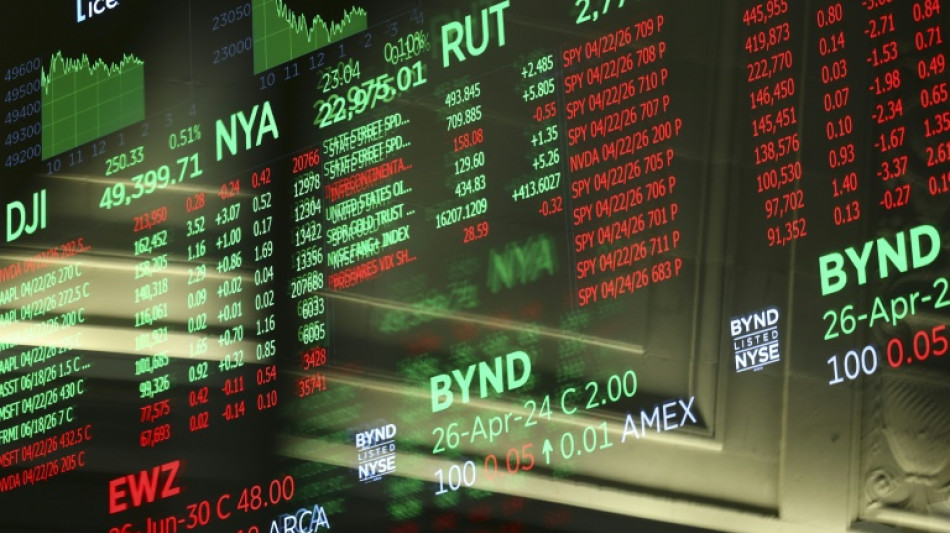
Musk's SpaceX is about to go public. Here's how it works / Photo: © AFP/File

 Fury to face British rival Joshua in Cardiff on December 11
 Streamex Converts Interest Into Capital as GLDY Investment Strategy Secures $1M+ Institutional Allocation

 STARTRADER Named Best Fintech Forex Broker at Forex Expo Dubai 2026

 Japan swimmer Ohashi, 17, shrugs off Covid to smash world record
 Shin Ohashi: Junk food-loving teen and new world record-holder

 Greek PM urges 'courage' in talks with UK over Parthenon Marbles
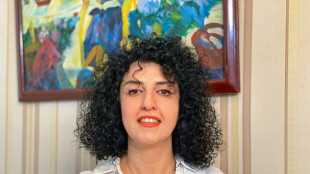 'I was drowning': Iran Nobel winner exposes pain of separation from children
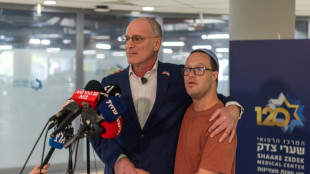 Israel's US envoy says son fighting for life
 Olympic champion Yulo completes gymnastics gold collection at Asian Games

 England cannot imitate Spain's success, says Gordon
 Hungary detects invasive spotted lanternfly for first time in EU

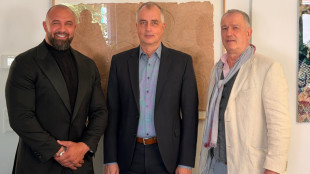 Ο Alex Bodi και ο καθηγητής Δρ. Stefan Haupt συμφωνούν σε συνεργασία για μια θρυλική συλλογή έργων τέχνης στη Ρουμανία

 France's top-selling newspaper to slash jobs
 Tigray rebels in 'full-blown' war with govt

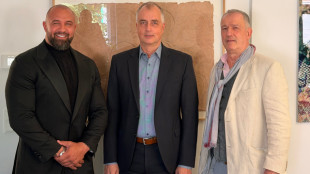 Alex Bodi och prof. dr Stefan Haupt ingår samarbetsavtal om en legendarisk konstsamling i Rumänien
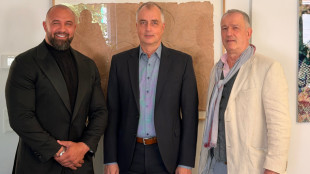
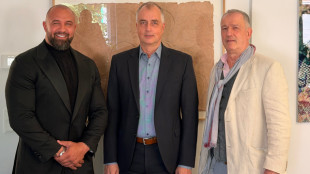 อเล็กซ์ โบดี และศาสตราจารย์ ดร. สเตฟาน ฮาปท์ ตกลงร่วมมือกันในการจัดตั้งคอลเลกชันศิลปะอันเป็นตำนานในโรมาเนีย
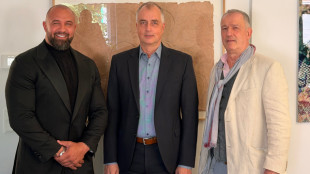
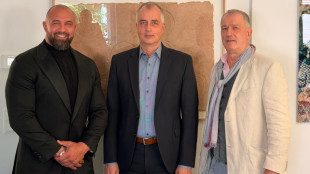 Alex Bodi a prof. dr. Stefan Haupt se dohodli na spolupráci na legendární umělecké sbírce v Rumunsku
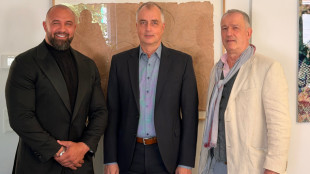
 알렉스 보디와 슈테판 하우프트 교수, 루마니아의 전설적인 미술품 컬렉션을 위한 협력 합의

 BaazEX Enters the Asian Trading Market With a New Approach to Online Forex Trading.
 Asian markets fall on US-China jitters as leaders meet

 Thais hail teen rocker Nene for 'America's Got Talent' win
 Zverev, Agassi defend 'spectacular' Laver Cup

 Eel-powered Japan whizz-kid, 11, dominates in historic Games debut
 Madagascar's Gen Z 'betrayed' after ushering in new rule
 As Moscow steps up attacks, Kyiv residents brace for harsh winter

Hundreds of companies raised a combined $70 billion by selling shares to the public in the United States last year.
If things go as planned, SpaceX -- which took a major regulatory step toward going public on Wednesday -- could surpass that figure itself.
And that's before additional potential stock market debuts by AI behemoths OpenAI and Anthropic.
So what exactly does it take for a company to "go public"? The process, known as an initial public offering or IPO, typically takes months or years and can cost millions of dollars.
Here is how it works:
- Picking a stock exchange -
The first big decision is where to list.
In the US, two options dominate: the New York Stock Exchange (NYSE) -- the oldest and most famous, with its iconic trading floor in lower Manhattan -- and the Nasdaq, a fully electronic exchange that is home to most of the biggest tech companies.
Together, they account for roughly half of the total value of all stocks traded worldwide.
Companies also have to pick a "ticker" -- the short letter code that identifies their stock.
Some keep it simple (MSFT for Microsoft), while others get creative (DNUT for Krispy Kreme donuts, CAR for rental company Avis).
SpaceX, according to its filing on Wednesday, intends to list on the Nasdaq with the ticker "SPCX."
- Hitting the road -
Before a company can sell shares to the public, it has to file a detailed document called an S-1 with the Securities and Exchange Commission (SEC), the US government agency that oversees financial markets and Wall Street's de facto referee.
The S-1 is essentially a deep dive into the company's finances, business model and risks, designed to help ordinary investors make informed decisions.
As JPMorgan puts it, it has "the dual purpose of registering the securities with the SEC and educating investors on the opportunity."
The SEC reviews the filing and can ask lots of questions.
"For an S-1 filing, that can sometimes go through several rounds of comments from staff, so it could take months," SEC Chairman Paul Atkins said recently.
He added that the agency is working to speed things up.
SpaceX filed its public S-1 on Wednesday, after reportedly submitting confidential paperwork in early April.
- The pitch -
Once the paperwork is underway, company executives hit the road -- literally. They travel city to city (and hop on video calls) in what is known as a "roadshow," pitching their company to big institutional investors like pension funds and hedge funds, as well as everyday retail investors.
SpaceX is planning a special event for 1,500 individual investors in June, according to CNBC.
Not every company makes it through this stage. Fintech firm Clear Street pulled the plug on its IPO plans in February after failing to drum up enough interest, blaming market volatility.
- Deciding on a price -
The trickiest part may be settling on a share price -- the cost of one piece of ownership in the company when it first hits the market.
"Pricing an IPO is probably more art than science," said Matthew Kenney, IPO specialist at Renaissance Capital.
Banks advising the company want to raise as much money as possible, but they also need to leave room for the stock to rise once trading begins -- otherwise, no one will want to buy it.
"If you really seek to maximize the share price, you're going to have very little aftermarket demand and the IPO can flop and nobody wants to be ringing the opening bell and see their stock price fall," Kenney said.
Sometimes companies get it wrong and have to adjust.
Chip startup Cerebras revised its target price twice before finally going public at $185 a share -- then watched the stock soar 68 percent on its very first day of trading.
I.Stoeckli--VB