
Tens of millions risk hunger as Hormuz standoff blocks fertiliser, UN official says / Photo: © AFP

 Dominican Republic calls for Haiti force to be strengthened

 Dolly Parton's nephew ordered to stay away from estate staff, properties

 Early exit for Philippine darling Eala at Singapore Open

 Hurricane Polo triggers huge waves in coastal Mexican city
 What happens if the US bans diesel exports

 Macklemore hits back with 'Free Palestine Tour' after Sheeran split

 Met Opera to give New Yorkers free tickets in affordability push

 Top ECB official to resign to take up IMF role

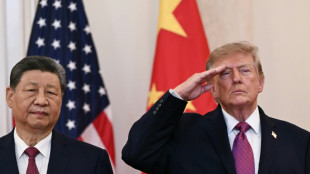 Xi and Trump call for peace in lavish White House state visit

 Five up-and-coming players looking to make mark in Nations League

 CNN, MS NOW, Politico request court hearing after White House access denied
 Eviction of pensioner puts Spain housing crisis in spotlight
 CNN, MS NOW, Politico say reporters still barred from White House
 Udinese sign ex-Real Madrid defender Alaba on free transfer

 Trump welcomes Xi to Washington with lavish praise

 Kane relishing chance to become England's most-capped player

 Average EU diesel price hits record 2.23 euros a litre: AFP analysis

 Whitetip Investments Marks 10 Years of Regulation, Transparency & Responsible Trading

 Pakistan blocks roads around capital ahead of planned pro-Khan protest

 Stocks fall, oil prices rise as global bonds under pressure

 Mancini's Italy facing battle to 'win back' dispirited fans

 German think tanks urge Merz to stick with reforms after election defeats

 Alcaraz wants end to late-night matches at Grand Slams

 EU battle over how to define 'Made in Europe'

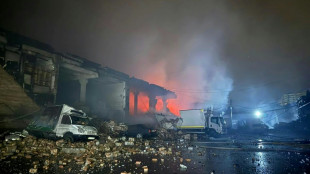 Eight killed in wave of Russian strikes on Ukraine

Tens of millions of people could face hunger and starvation if fertilisers are not soon allowed through the Strait of Hormuz, the head of a UN task force aimed at averting a looming humanitarian crisis told AFP on Monday.
Iran has had the strategic waterway -- through which a third of the world's fertilisers normally pass -- in a chokehold for months in retaliation for the war launched by the United States and Israel on February 28, disrupting a trade critical for farmers around the world in a race against the end of planting seasons.
"We have a few weeks ahead of us to prevent what will likely be a massive humanitarian crisis," Jorge Moreira da Silva, executive director of the United Nations Office for Project Services (UNOPS) and leader of the task force, told AFP in an interview in Paris.
"We may witness a crisis that will force 45 million more people into hunger and starvation."
The UN secretary general created the task force in March to spearhead a mechanism to allow fertilisers and related raw materials such as ammonia, sulphur and urea through the strait.
For weeks, Moreira da Silva has been working to convince the belligerent parties to allow even a few ships through, and has met with "more than 100 countries" to rally UN member state support around the mechanism.
A growing number of countries are showing support for the plan, he said, but the United States and Iran, as well as Gulf countries -- who are key fertiliser producers, are not yet fully on board.
While the ultimate hope is for a "lasting peace" deal in the region and "freedom of navigation for all commodities" through the strait, "the problem is the planting season can't wait", Moreira da Silva said, with some ending in African nations within weeks.
Global focus has been on the economic impacts of the throttled oil and gas trade, but the United Nations has been sounding the alarm of the threat the blockade poses to the world's food security, with countries in Africa and Asia likely to be particularly hard hit.
- 'Political will' -
Moreira da Silva said the United Nations could have the mechanism up and running in seven days but even if the strait were to reopen now, it would take three to four months to return to normality.
"It's just a matter of time. If we don't stop the origin of the crisis soon, we will have to deal with the consequences through humanitarian aid."
While food prices have not exploded yet, Moreira da Silva said, there has been a "massive increase" in fertiliser costs, which experts say would likely lead to a drop in agriculture productivity and send food prices soaring.
Moreira da Silva said moving just an average of five vessels a day of fertilisers and related raw materials through the strait would head off the crisis for farmers.
What's missing, he said, is "the political will".
"We can't procrastinate on what is possible to do, and what is urgent to do -- which is let the fertilisers cross the strait and, through that, minimize the risk of massive food insecurity at the global level."
M.Vogt--VB