Beloved sheepskin-sack cheese Bosnia wants to protect / Photo: © AFP

 Internationals keep Presidents Cup lead with late fightbacks

 Tuchel to 'keep pushing' England to reach Spain's level
 Alcaraz saves match points to keep Europe ahead in Laver Cup

 Spain success driven by hunger to improve, says De La Fuente

 Lyon collapse at Stade Francais to suffer first Top 14 loss
 Oyarzabal and Spain sink England again as Modric shines for Croatia
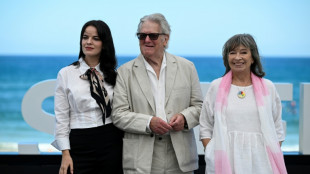
 Housing protesters camp in central Madrid after mass demonstration

 Louise Trotter expands her palette at Bottega Veneta

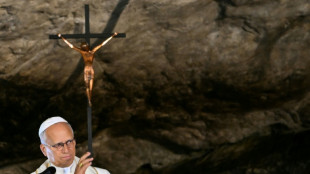 Pope prays at Lourdes after huge Paris mass

 USA trims International lead after Presidents Cup four-balls

 Russia accuses Europe of blocking Ukraine talks, as strikes drag on

 'He said hello': Families pray with pope on Paris avenue

 Pope celebrates giant Paris mass, flies to Lourdes

 Thousands march in Madrid over eviction of 87-year-old woman

 England women back to winning ways with last-gasp defeat of New Zealand

 Trump rejects Iran proposal for deal to reopen Hormuz

 England's Cox says injured Buttler leaves 'big shoes to fill'
 Ruthless Perpignan upset sloppy Bordeaux-Begles
 Deadly abbey attack feeds anti-Ukrainian sentiment in Poland

 Antonelli says he drove 'safety-first' on his worst weekend of season

 Fernandez fights back to reach Singapore Open final

 Giant statue of Pope Leo XIV takes shape in Peru workshop

 Ukraine crush holders Italy to reach first BJK Cup final

 Pope celebrates giant Paris mass in landmark visit

 Germany selects Munich for Olympics host bid

High in the mountain meadows of southern Bosnia, farmer Branka Buha monitors her cows through a GPS signal on her husband's phone.
But when it comes to making her kajmak cheese, she sticks to the traditional method: ageing it in sheepskin sacks.
"It's a tradition passed down from my mother, from my mother-in-law. Now, I'm passing it on to my daughter-in-law," said 55-year-old Buha.
Her dairy is nestled in the hilly hamlet of Domrke, near Gacko.
At 1,200 metres (3,900 feet), and with lots of grass and wind, Buha says she has everything she needs to produce good "kajmak iz mjesine", a creamy cheese aged in animal hide -- typically sheep or lambskin around here.
Her eight cows freely wander the mountain pastures during the day, returning themselves in the evening to be milked, although one has a GPS collar in case they get lost or run into bears or wolves.
- 'Ancient preservation method' -
Her kajmak is a slightly crumblier, more flavourful cousin of the creamy "kaymak" people across the Balkans and Turkey love to spread on their bread.
After milking her cows, Buha cooks the milk in a large pot before pouring it into enamel bowls or wooden containers.
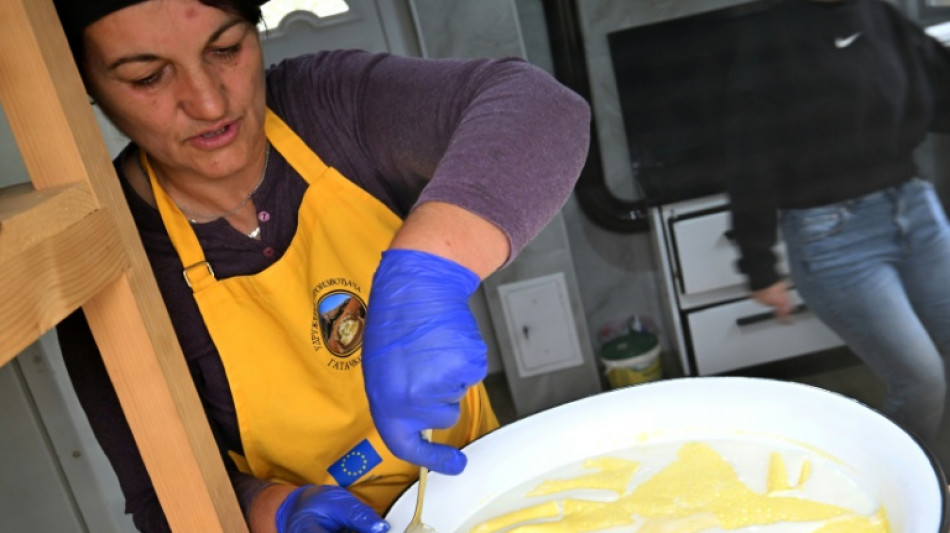
"A day or two later, depending on the ambient temperature, we skim off the milk skin that forms on the surface of the milk," she said, scooping up a thick yellow layer with a spoon.
Salted is added and then it is left to rest in a wooden barrel for around 20 days, then wrapped in animal hide.
"The longer it stays in the skin, the more it matures and acquires the specific flavour of the skin. That is what makes it unique," Buha said.
Buha also makes the sheepskin bags. Once the skin is shaved off, the hide is dried over smoke.
When dry, "we wash it carefully and stuff it with kajmak, which is then aged in the skin for up to a month. But it can even stay there for a year," she added.
"It is an ancient preservation method. When there was no electricity or other modern means of preservation, the skin was used to preserve this cheese," said Dragana Milovic, head of the Gacko Kajmak Producers Association.
Much stronger than the traditional kajmak sold in local shops and markets, the cheese has notes of smoke and lamb that set it apart.
- 'Prestige' -
With her husband, Buha produces between 500 and 600 kilos (1,100 and 1,325 pounds) of kajmak each year.
They sell their cheese at their farm or to restaurants, where it is usually served with meat dishes.
It is also eaten on toast with honey, or added to "cicvara", a traditional cornmeal dish not unlike polenta.
In 2024, kajmak was granted national Protected Designation of Origin (PDO) status, raising its price per kilo from 40 convertible marks ($24) to 50 ($30).
This means the cheese can be made only with milk from cows that graze in the Gacko region. The cows must also be fed only with locally harvested hay.
The Gacko Kajmak Producers Association recently applied for PDO status at the EU level, said Milovic.
As a formal candidate for membership of the 27-nation bloc, Bosnia-Herzegovina has the right to protect its products there.
But with only small amounts of the sheepskin-sack kajmak being produced, it is more a matter of "prestige" than as an export earner, Milovic added.
N.Schaad--VB