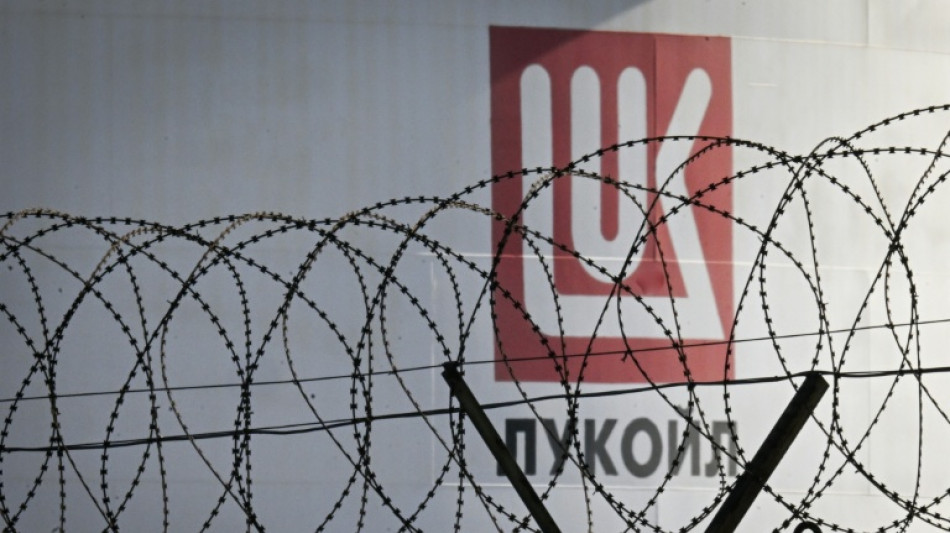
How US sanctions on Russia's Lukoil hit Bulgaria's largest refinery / Photo: © AFP

 Internationals keep Presidents Cup lead with late fightbacks

 Tuchel to 'keep pushing' England to reach Spain's level

 Alcaraz saves match points to keep Europe ahead in Laver Cup
 Spain success driven by hunger to improve, says De La Fuente

 Lyon collapse at Stade Francais to suffer first Top 14 loss
 Oyarzabal and Spain sink England again as Modric shines for Croatia
 Housing protesters camp in central Madrid after mass demonstration

 Louise Trotter expands her palette at Bottega Veneta
 Pope prays at Lourdes after huge Paris mass

 USA trims International lead after Presidents Cup four-balls

 Russia accuses Europe of blocking Ukraine talks, as strikes drag on

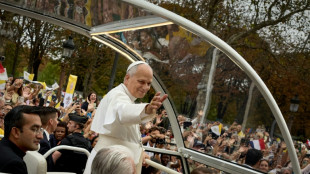 'He said hello': Families pray with pope on Paris avenue

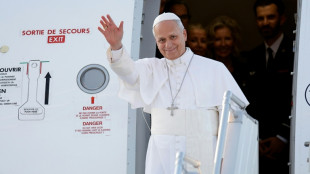 Pope celebrates giant Paris mass, flies to Lourdes
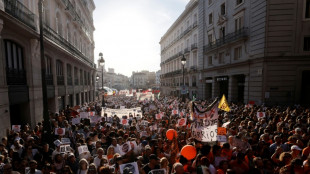 Thousands march in Madrid over eviction of 87-year-old woman
 England women back to winning ways with last-gasp defeat of New Zealand

 Trump rejects Iran proposal for deal to reopen Hormuz

 England's Cox says injured Buttler leaves 'big shoes to fill'
 Ruthless Perpignan upset sloppy Bordeaux-Begles
 Deadly abbey attack feeds anti-Ukrainian sentiment in Poland
 Antonelli says he drove 'safety-first' on his worst weekend of season
 Fernandez fights back to reach Singapore Open final
 Giant statue of Pope Leo XIV takes shape in Peru workshop

 Ukraine crush holders Italy to reach first BJK Cup final
 Pope celebrates giant Paris mass in landmark visit
 Germany selects Munich for Olympics host bid

By taking over the Balkan's largest refinery from Lukoil, Bulgaria has for now avoided punishing US sanctions against the Russian oil giant, which enter into force on Friday.
But what comes next for the crucial refinery on the outskirts of Bulgaria's Black Sea city of Burgas is uncertain.
- Why has Sofia stepped in? -
On October 22, Washington announced it would impose sanctions on Russian oil giants Rosneft and Lukoil to stifle the financing of Russia's invasion of Ukraine that started in 2022.
Among European Union members, Bulgaria took the hardest hit from the measure as it hosts Lukoil's largest refinery in the Balkans. Lukoil has owned the Neftochim plant since 1999.
Bulgarian authorities said the US sanctions would effectively shut the refinery down as all business partners have refused to pay companies sheltered by Lukoil.
In a move aimed at preventing such an outcome, Bulgaria's parliament on November 7 adopted legal changes to place all Lukoil assets in the country under state control.
Last week, the government named senior government official Rumen Spetsov, who was the National Revenue Agency director and is also a former bodybuilding champion, to take control of the refinery.
Just after that, the US Treasury Department issued a license authorising transactions involving certain Lukoil entities in Bulgaria -- including the refinery -- until April 29 next year.
- Why does the refinery matter? -
The Burgas refinery plays a key economic role for Bulgaria. It is the largest company in the poorest EU member with turnover of 4.68 billion euros ($5.39 billion) in 2024.
Lukoil is the dominant force in Bulgaria's wholesale fuel market as well as in sales to end-customers owing to its large network of petrol stations.
Its presence in Bulgaria made it "a key part of Russian influence", said Martin Vladimirov, an expert at the Sofia-based think-tank CSD.
But Lukoil's importance goes well beyond Bulgaria's borders, he added, describing the company as "effectively a market maker for the whole of southeast Europe".
"It is no coincidence that fuel prices in Romania are rising, as the refinery in Bulgaria plays a key role in supplying the Romanian market," Vladimirov told AFP.
And "Romania is a major distribution hub for the region -– Ukraine, Moldova, Hungary, Austria," he added.
- What's next? -
Bulgaria has given free rein to administrator Spetsov to sell the refinery with the government's consent.
The US has set a December 13 deadline to find a buyer, with the potential contract subject to Washington's approval.
"The situation is stable for the moment" in terms of supply, Vladimirov said.
But for its part, Lukoil on Wednesday called on Bulgarian authorities not to interfere with its efforts to sell its assets in the country, warning it "reserves the right to seek judicial remedies to protect its rights and legitimate interests".
Lukoil's parent company sheltering its foreign units is based in Vienna, and if Lukoil decides to sell it, Sofia would lose control over the refinery, said a Bulgarian government source.
In late October, Lukoil said it had accepted an offer from Geneva-based oil trading group Gunvor, which Washington has described as "the Kremlin's puppet".
The bid was then pulled back immediately.
S.Gantenbein--VB