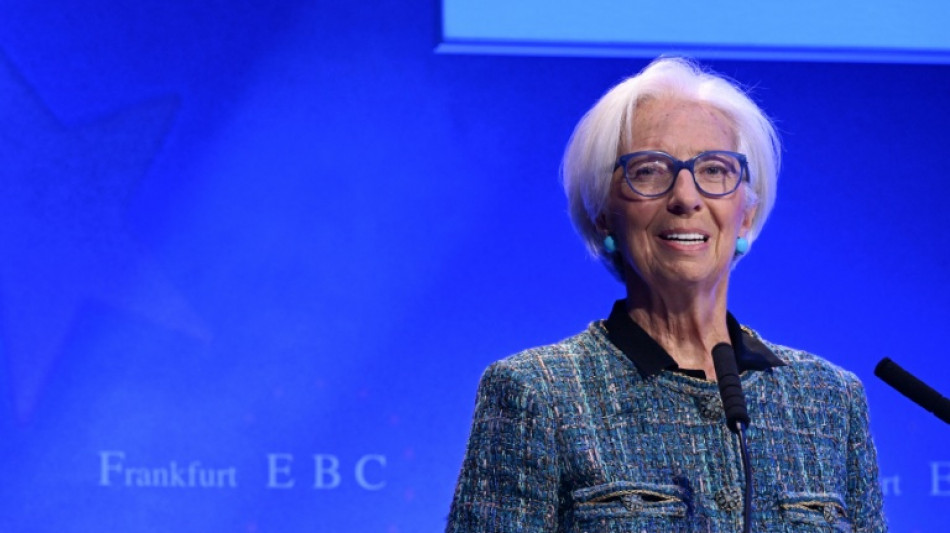
Europe increasingly 'vulnerable' to shocks: ECB chief / Photo: © AFP

 Internationals keep Presidents Cup lead with late fightbacks

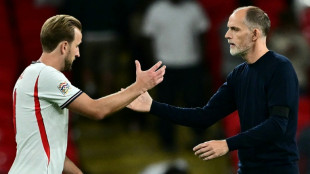
 Tuchel to 'keep pushing' England to reach Spain's level

 Alcaraz saves match points to keep Europe ahead in Laver Cup
 Spain success driven by hunger to improve, says De La Fuente
 Lyon collapse at Stade Francais to suffer first Top 14 loss
 Oyarzabal and Spain sink England again as Modric shines for Croatia
 Housing protesters camp in central Madrid after mass demonstration

 Louise Trotter expands her palette at Bottega Veneta

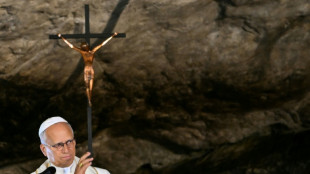 Pope prays at Lourdes after huge Paris mass

 USA trims International lead after Presidents Cup four-balls

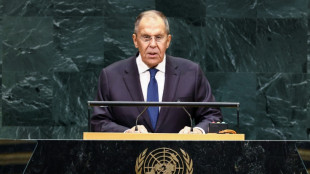 Russia accuses Europe of blocking Ukraine talks, as strikes drag on

 'He said hello': Families pray with pope on Paris avenue
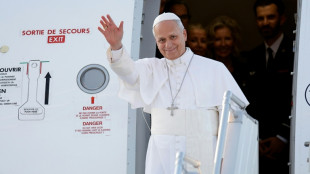 Pope celebrates giant Paris mass, flies to Lourdes

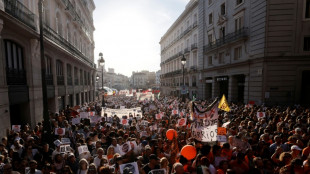 Thousands march in Madrid over eviction of 87-year-old woman
 England women back to winning ways with last-gasp defeat of New Zealand

 Trump rejects Iran proposal for deal to reopen Hormuz
 England's Cox says injured Buttler leaves 'big shoes to fill'
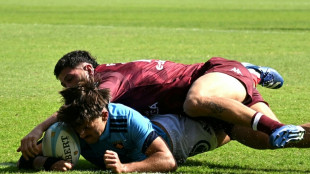 Ruthless Perpignan upset sloppy Bordeaux-Begles
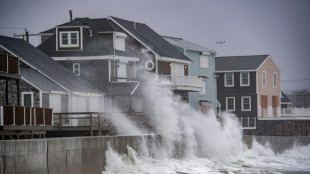
 Deadly abbey attack feeds anti-Ukrainian sentiment in Poland

 Antonelli says he drove 'safety-first' on his worst weekend of season
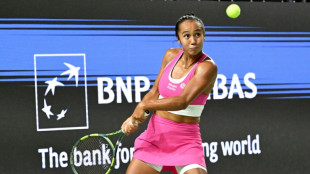 Fernandez fights back to reach Singapore Open final

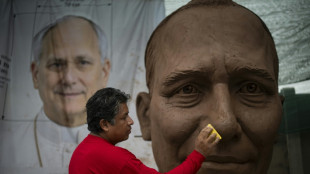 Giant statue of Pope Leo XIV takes shape in Peru workshop

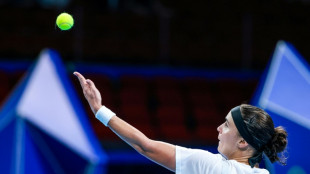 Ukraine crush holders Italy to reach first BJK Cup final
 Pope celebrates giant Paris mass in landmark visit

 Germany selects Munich for Olympics host bid

European Central Bank chief Christine Lagarde warned Friday the region was increasingly "vulnerable" to shocks like US tariffs and is lagging behind in areas that will drive growth such as AI.
The continent must urgently speed up its integration and overhaul a model of export-led growth that has faltered amid mounting geopolitical turmoil, she said in a speech to a banking conference.
"Europe has become more vulnerable," the head of the central bank for the 20-nation eurozone said in Frankfurt, pointing to the region's "dependency on third countries for our security and the supply of critical raw materials".
"Global shocks have intensified, with rising US tariffs, Russia's invasion of Ukraine and stiffening competition from China," she added.
Europe's domestic market meanwhile had "stood still," particularly in areas set to underpin future growth like the digital sector and artificial intelligence, Lagarde said.
The continent had long relied on exports of goods ranging from cars to factory equipment and pharmaceuticals to support its economies.
But this model was no longer working, said Lagarde, saying the European Union needed to strengthen its domestic economy as "a source of resilience in an uncertain world".
Faced with weak demand for key exports, structural problems and more recently the US tariff blitz, Europe's growth has been muted in recent years, lagging far behind the United States and China.
Lagarde outlined reforms to boost the region, ranging from better integrating the financial sector to lowering trade barriers and simplifying EU decision making processes.
She warned that more years of "lost growth, lost productivity, would not just be disappointing for future generations, it would be irresponsible on our part".
If radical reforms are enacted, "we can actually make sure that Europe is strong and is not the victim of decisions being made outside of this region," Lagarde said.
S.Leonhard--VB