Unequal South Africa seeks to tackle inequality as its G20 'legacy' / Photo: © AFP

 Internationals keep Presidents Cup lead with late fightbacks

 Tuchel to 'keep pushing' England to reach Spain's level
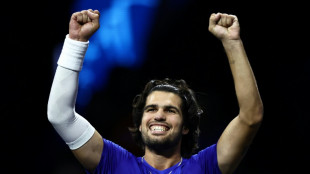 Alcaraz saves match points to keep Europe ahead in Laver Cup
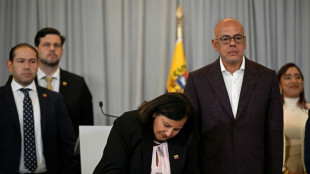
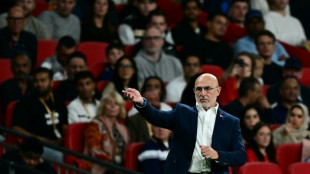 Spain success driven by hunger to improve, says De La Fuente
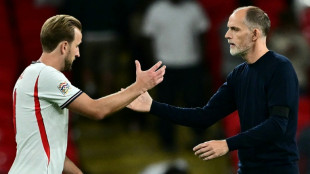
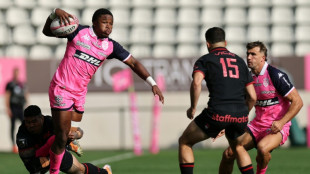 Lyon collapse at Stade Francais to suffer first Top 14 loss
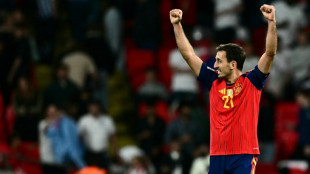 Oyarzabal and Spain sink England again as Modric shines for Croatia
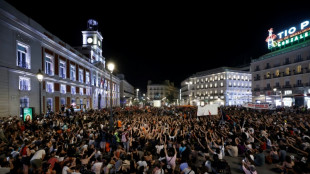 Housing protesters camp in central Madrid after mass demonstration
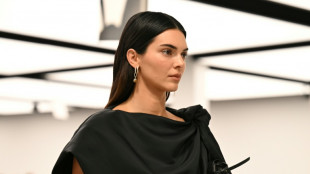 Louise Trotter expands her palette at Bottega Veneta
 Pope prays at Lourdes after huge Paris mass
 USA trims International lead after Presidents Cup four-balls
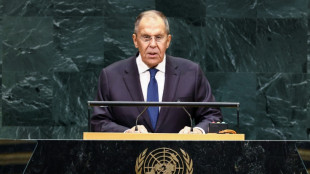 Russia accuses Europe of blocking Ukraine talks, as strikes drag on
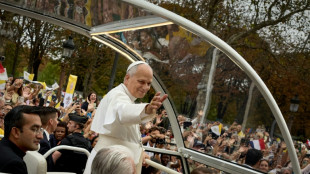 'He said hello': Families pray with pope on Paris avenue
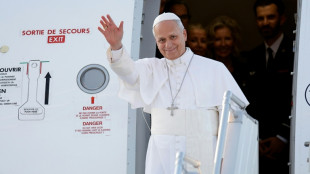 Pope celebrates giant Paris mass, flies to Lourdes
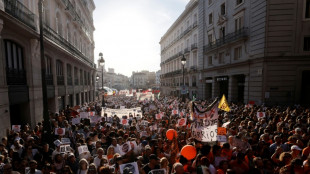 Thousands march in Madrid over eviction of 87-year-old woman
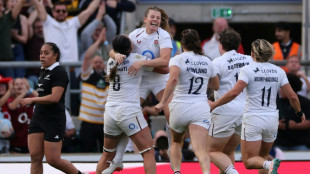 England women back to winning ways with last-gasp defeat of New Zealand
 Trump rejects Iran proposal for deal to reopen Hormuz
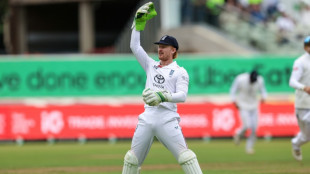 England's Cox says injured Buttler leaves 'big shoes to fill'
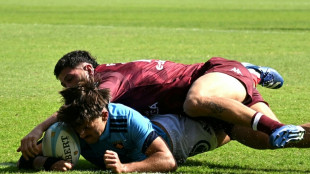 Ruthless Perpignan upset sloppy Bordeaux-Begles
 Deadly abbey attack feeds anti-Ukrainian sentiment in Poland
 Antonelli says he drove 'safety-first' on his worst weekend of season
 Fernandez fights back to reach Singapore Open final
 Giant statue of Pope Leo XIV takes shape in Peru workshop
 Ukraine crush holders Italy to reach first BJK Cup final
 Pope celebrates giant Paris mass in landmark visit
 Germany selects Munich for Olympics host bid
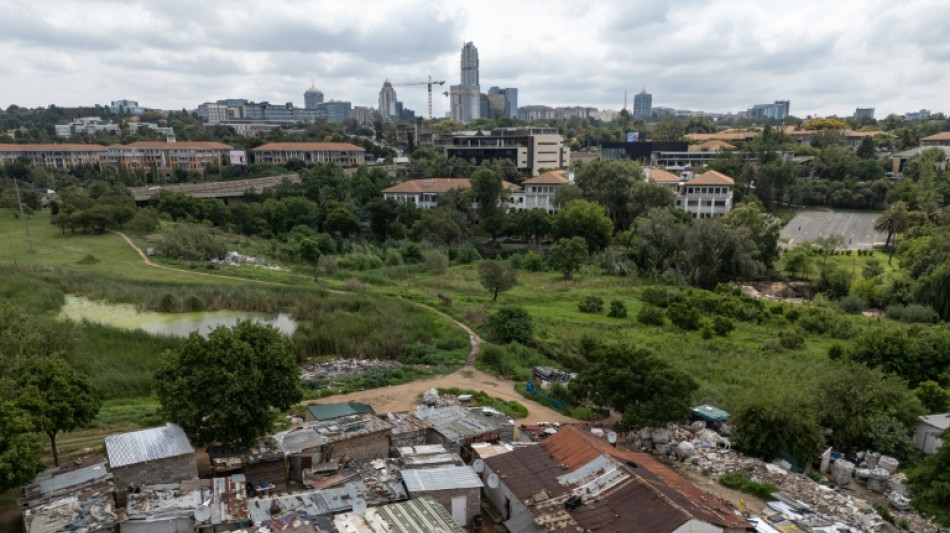
From the scrappy metal shacks packed tightly on the banks of the thin Jukskei river, the sparkly skyline of Johannesburg's richest neighbourhood less than two miles away was another world.
Bags of refuse for sale to recycling companies lined a muddy path to a vegetable garden tended by residents of the informal settlement at the foot of the high-rises of Sandton, South Africa's economic hub.
A light powered by a makeshift electrical connection shone at the doorway of the rusted shack where Bryan lived with his wife and nine-year-old son.
"Here in Sandton, there are a lot of people and companies that have money," said the 34-year-old security guard, who would only give his first name for fear of losing his job.
But, "we don't have access", he said with a shrug, a cigarette in his hand.
The backdrop of skyscrapers and shiny office towers was a stark reminder of the gulf separating rich and poor in South Africa, which the World Bank ranks as the most unequal country on the planet.
- 'We need it the most' -
With leaders from the Group of 20 of the world's most powerful economies convening in Johannesburg this weekend, President Cyril Ramaphosa has made the fight against inequality a priority for the summit and pushed for it to be a "legacy" of the first African-hosted G20.
He appointed an expert task force led by Nobel Prize-winning economist Joseph Stiglitz to report to the summit and put his weight behind its recommendation to create a panel to tackle extreme wealth disparities and modelled on the UN's Intergovernmental Panel on Climate Change (IPCC).
"South Africa is owning up to its status as the most unequal country in the world and is keen to use the springboard of the G20 to tackle that," said Isobel Frye, G20 senior policy adviser at Oxfam.
"The fact that it is something that South Africa owns and claims, in a way, gives it greater impetus," she told AFP.
The Stiglitz report found that the world's richest one percent captured 41 percent of all new wealth between 2000 and 2024.
In contrast, just one percent went to the poorest 50 percent, it said.
In South Africa, according to the University of Witwatersrand, the top 0.1 percent owned over a quarter of wealth.
Frye said this was a legacy of colonialism and apartheid.
Unemployment of nearly 32 percent and extreme wage inequality further drove the disparity, she said, with almost one in four households depending on government grants of R500 ($29) a month as their main source of income.
The bus fare to the public school where Bryan sends his son -- in Alexandra, one of Johannesburg's roughest townships -- is about R400 per month ($23).
Just a stone's throw away in Sandton, fees for private schools exceed $10,000 a year.
Bryan hoped his son would one day find a job better than that of his own grandfather, a farmworker, and his father, a gardener.
- 'Opt out'-
Standing out in the business district towering over Bryan's shack is a grandiose, oval-shaped tower called The Marc, its black-and-gold facade reflecting the sunlight.
Inside were luxury shops and restaurants, and an advertising board proclaiming that the entire street was powered by the building's generator, ensuring patrons would "never be left in the dark" by South Africa's patchy electricity supply.
The informal settlement where Bryan lived with his family was not visible from the golden building and had none of these services.
Residents had pooled money to build a shared toilet, he said. "We do everything ourselves."
Asked about the looming G20 summit, he said: "The billionaires that are coming here, I don't think they will do something better for us."
According to Frye, tackling inequalities was essential to ensure the good functioning of democracy.
"If the rich are not taxed fairly, they opt out of democracy," she said.
"We can see that in South Africa: you buy your medical aid, your private education, your security," Frye said. "And so it doesn't matter to you, because you're not part of the system."
W.Huber--VB