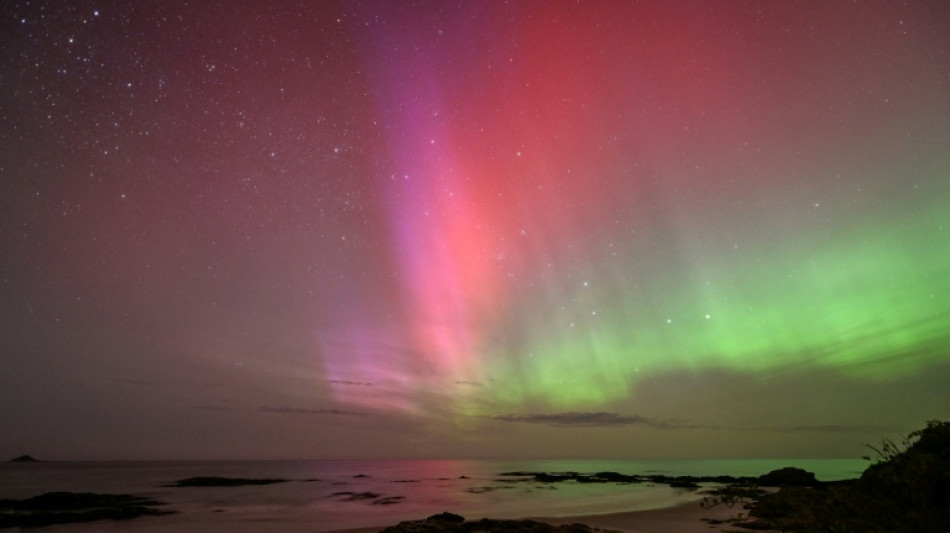
Solar storm brings new chance of vivid auroras, signal disruptions / Photo: © AFP

 Mets President David Stearns Expresses Confidence in Marcus Semien's Motivation

 UK’s Longest-Running Reggae Night Jam Jah Celebrates 25 Years

 Olivier Martinez Seeks Increased Child Support from Halle Berry Following Custody Change
 Polestar Unveils Formula 2030 Concept Car to Signal Future Design Direction

 Pennsylvania Measles Cases Reach 1,505 as Bucks County Reports New Infection
Spectacular displays of auroras at abnormally low latitudes were expected again Wednesday night into Thursday, a result of intense solar activity which also carries risks to communication networks.
After kicking off earlier this week, the rare event could continue until Thursday, according to the US National Oceanic and Atmospheric Administration (NOAA).
The phenomenon, which could be seen Wednesday night in the skies of New Zealand and Australia, is caused by massive ejections of solar particles from the Sun -- known as coronal mass ejections (CMEs) -- that trigger geomagnetic storms when they reach our planet.
NOAA said a level 4 storm out of 5 occurred Tuesday, and that another CME's arrival could mean a repeat again on Thursday.
Skies as far south as Mexico lit up Tuesday night with faint pink and green glows, delighting many people who would normally have to travel much closer to the Earth's poles to see such phenomena.
Last year, a level 5 geomagnetic storm occurred for the first time in 20 years, resulting in similarly spectacular views of the Northern and Southern Lights.
Strong solar storms however bring more than just stunning light displays -- they can also disrupt communication systems and cause satellite malfunctions and power grid overloads.
Due to risks from this week's solar event, Amazon founder Jeff Bezos's space company, Blue Origin, was forced on Wednesday to once again postpone the launch of its New Glenn rocket.
To see the aurorae, enthusiasts are advised to seek darker skies away from city lights and to bring a camera or smartphone, which could reveal the lights in long-exposure photos if they are not visible to the naked eye.
G.Haefliger--VB