West Bank's ancient olive tree a 'symbol of Palestinian endurance' / Photo: © AFP

 Swiss vote on what it means to be neutral
 Pope to meet with victims of clerical sex abuse during France trip
 Iran stands firm on Hormuz plan after US rejection
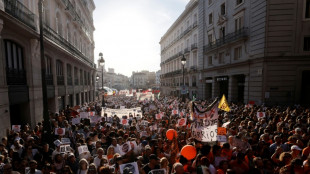
 Madrid protest camp grows after eviction outrage

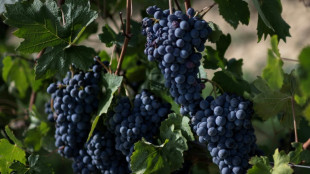 Italy winemakers hail bumper harvest but cut output

 Kyiv shoppers feel the pinch from Russian strikes
 Japanese anime actor fights TikTok over AI voice cloning
 Curtain falls on the romance of India's single-screen cinemas

 Smells like teen spirit as US thrash Peru 4-1

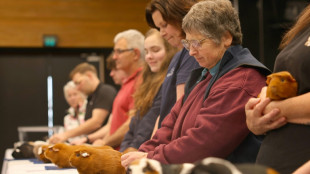 Cavy chaos: Hundreds attend New Zealand's biggest guinea pig show

 Venezuela releases more political prisoners after opposition talks

 England's best 'for a long time' despite Spain defeat, says Kane
 Powerful storm pummels northeast US with rain, high winds

 Filmmaker Mike Leigh wins top prize at Spain festival with 'last film'
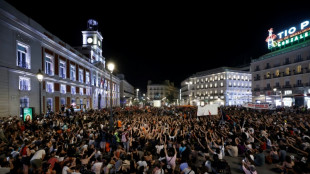
 Spain beat England in Nations League to extend unbeaten run

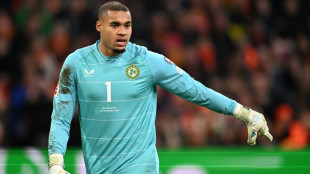 Ireland squad vote to play Israel tie despite Gaza unease
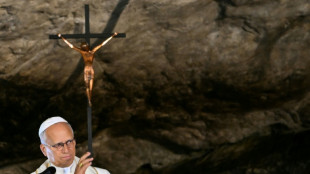
 Gutsy Vollering wins cycling road race world title
 Vollering wins cycling road race world title
 Man City's meteoric rise clouded by dark shadow
 Mbappe out for two weeks or more with knee injury say Real
 Lyon collapse away to Stade and suffer first Top 14 loss
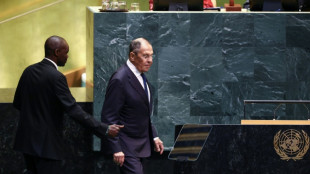 Russia accuses Europe of seeking to thwart Ukraine talks

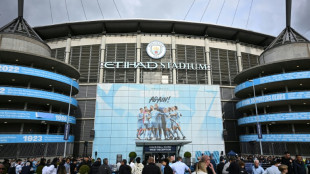 Man City chairman defiant over reported Premier League charges

 Germany ready to 'walk through fire' for Klopp, says Tah
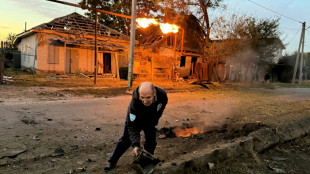 At least 16 killed in Russian and Ukrainian strikes
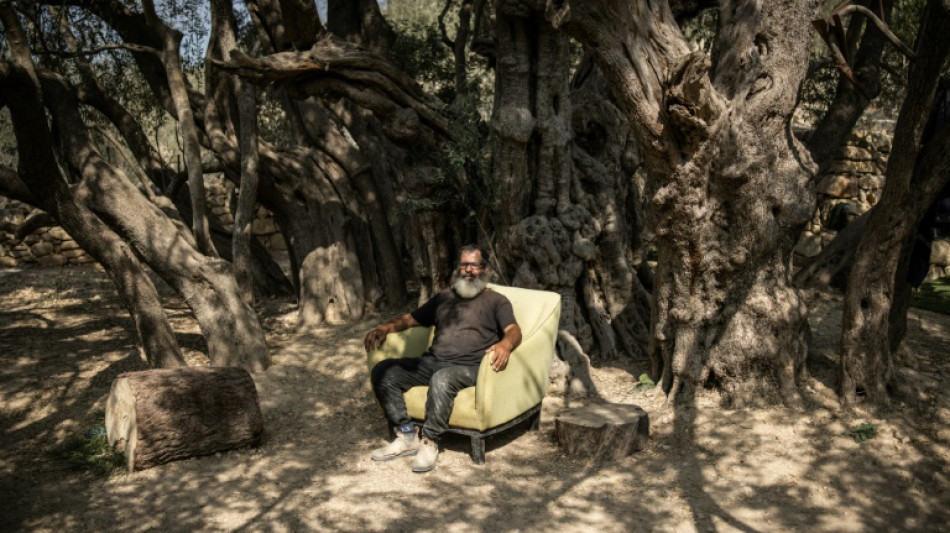
As guardian of the occupied West Bank's oldest olive tree, Salah Abu Ali prunes its branches and gathers its fruit even as violence plagues the Palestinian territory during this year's harvest.
"This is no ordinary tree. We're talking about history, about civilisation, about a symbol," the 52-year-old said proudly, smiling behind his thick beard in the village of Al-Walajah, south of Jerusalem.
Abu Ali said experts had estimated the tree to be between 3,000 and 5,500 years old. It has endured millennia of drought and war in this parched land scarred by conflict.
Around the tree's vast trunk and its dozen offshoots -- some named after his family members -- Abu Ali has cultivated a small oasis of calm.
A few steps away, the Israeli separation wall cutting off the West Bank stands five metres (16 feet) high, crowned with razor wire.
More than half of Al-Walajah's original land now lies on the far side of the Israeli security wall.
Yet so far the village has been spared the settler assaults that have marred this year's olive harvest, leaving many Palestinians injured.
Israel has occupied the West Bank since 1967, and some of the 500,000 Israelis living in the Palestinian territory have attacked farmers trying to access their trees almost every day this year since the season began in mid-October.
The Palestinian Authority's Colonisation and Wall Resistance Commission, based in Ramallah, documented 2,350 such attacks in the West Bank in October.
- 'Rooted in this land' -
Almost none of the perpetrators have been held to account by the Israeli authorities.
Israeli forces often disperse Palestinians with tear gas or block access to their own land, AFP journalists witnessed on several occasions.
But in Al-Walajah for now, Abu Ali is free to care for the tree. In a good year, he said, it can yield from 500 to 600 kilograms (1,100 to 1,300 pounds) of olives.
This year, low rainfall led to slim pickings in the West Bank, including for the tree whose many nicknames include the Elder, the Bedouin Tree and Mother of Olives.
"It has become a symbol of Palestinian endurance. The olive tree represents the Palestinian people themselves, rooted in this land for thousands of years," said Al-Walajah mayor Khader Al-Araj.
The Palestinian Authority's agriculture ministry even recognised the tree as a Palestinian natural landmark and appointed Abu Ali as its official caretaker.
Most olive trees reach about three metres in height when mature. This one towers above the rest, its main trunk nearly two metres wide, flanked by a dozen offshoots as large as regular olive trees.
- 'Green gold' -
"The oil from this tree is exceptional. The older the tree, the richer the oil," said Abu Ali.
He noted that the precious resource, which he called "green gold", costs four to five times more than regular oil.
Tourists once came in droves to see the tree, but numbers have dwindled since the start of the war in Gaza in October 2023, Abu Ali said, with checkpoints tightening across the West Bank.
The village of Al-Walajah is not fully immune from the issues facing other West Bank communities.
In 1949, after the creation of Israel, a large portion of the village's land was taken, and many Palestinian families had to leave their homes to settle on the other side of the so-called armistice line.
After Israel's 1967 occupation, most of what remained was designated Area C -- under full Israeli control -- under the 1993 Oslo Accords, which were meant to lead to peace between Palestinians and Israelis.
But the designation left many homes facing demolition orders for lacking Israeli permits, a common problem in Area C, which covers 66 percent of the West Bank.
"Today, Al-Walajah embodies almost every Israeli policy in the West Bank: settlements, the wall, home demolitions, land confiscations and closures," mayor Al-Araj told AFP.
For now, Abu Ali continues to nurture the tree. He plants herbs and fruit trees around it, and keeps a guest book with messages from visitors in dozens of languages.
"I've become part of the tree. I can't live without it," he said.
R.Kloeti--VB