Targeting foreign students, Trump hits a US lifeline / Photo: © AFP

 Nagoya mayor says sorry for Asian Games 'inconveniences'
 G20 trade officials meet under shadow of tariffs, overcapacity
 India's fat dog vote goes viral
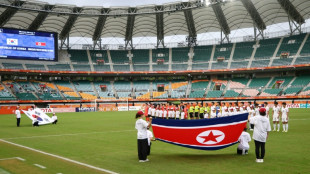 Asian Games crowds in spotlight as 998 see hosts in 50,000 stadium
 The eight stadiums for the 2027 Rugby World Cup

 Thieves swipe drugs under nose of Fiji police, swap with flour
 South Korea demands North apologise for DMZ mine blasts
 In Nepal's flood zone, teachers mourn students who never returned
 US Supreme Court lifts limits on third-country deportations

 Antonelli eager to 're-establish order' as F1 returns to Malaysia
 Paw-fect candidate: Australia finds new koala rescue dog
 One third of world population exposed to harmful air pollution: monitor

 North Korea denies South's claim it was apparently behind DMZ mine blasts

 West Bank's violent settlers part of a new generation fuelled by ideology

 US-led coalition ends mission in Iraq
 Pope-backed White Sox join Braves with MLB playoff wins

 NBA close to picking new $12-13bn Vegas team owners: report
 LA28 Olympics torch relay to visit all 50 states
 Spain brush aside Croatia in Nations League, England down Czechs
 Trump hails 'morally binding' AI self-regulation pledge
 Yamal inspires Spain to Croatia romp on World Cup homecoming
 UN to hold fourth informal poll of secretary-general candidates
 Who are the Emiratis behind crisis-hit Manchester City?
 Singer Angelique Kidjo urges Africans to 'create together'
 Alleged Rihanna mansion shooter mentally fit for trial, says judge
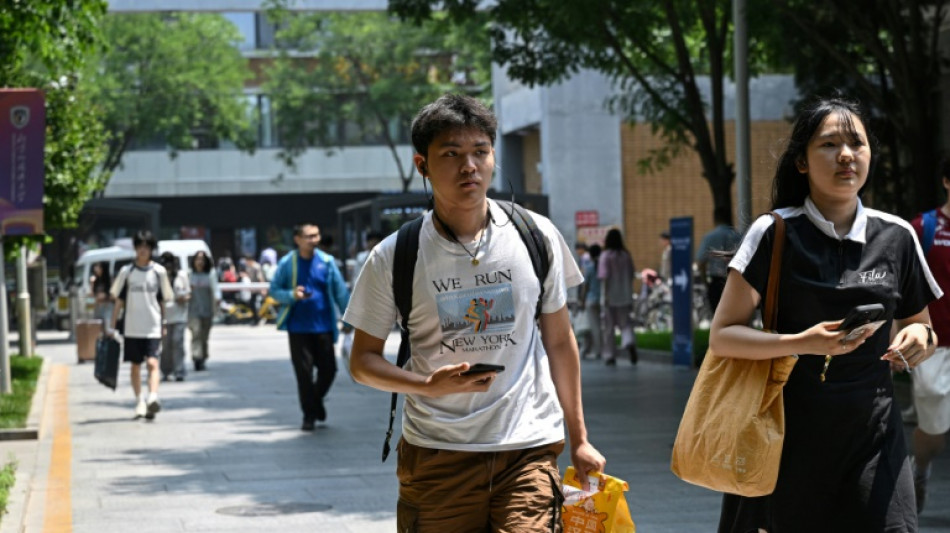
On the campaign trail last year, then-candidate Donald Trump proposed handing US residency cards automatically to international students when they earn diplomas, bemoaning that they were leaving to form successful companies in China and India.
Now back at the White House, Trump's message has changed drastically.
Hoping to crush an academic establishment he sees as his enemy, Trump has launched unprecedented actions against international students that experts warn are likely to decrease enrollment and could trigger a brain drain of top talent.
In a matter of days, the Trump administration has sought to bar all foreign students from Harvard University, one of most prestigious US institutions, and Secretary of State Marco Rubio has vowed to "aggressively" revoke visas to students from China, long the top source of students to the United States although recently eclipsed by India.
Rubio has already yanked thousands of visas, largely over students' involvement in activism critical of Israel's offensive in Gaza but also over minor traffic violations and other infractions.
"The US, historically, has a reputation around the world of having a very open atmosphere for scientific and technical research, and that draws a lot of people, especially people from countries that don't necessarily have that kind of openness," said Phoebe Sengers, a professor in information science and science and technology studies at Cornell University.
She said it's certain the number of international students will "plummet in the coming years."
"The challenge with that is that students who would come here don't just disappear. They will stay in their home countries or go to other countries where they can get a technical education, and they're going to be building businesses in those countries and competing directly with our firms," she said.
- Universities as 'enemy' -
US universities have long been reputed to be among the world's best, and among the most expensive to attend.
International students who pay full tuition are vital sources of revenue, as are federal research grants, which the Trump administration is also slashing.
The State Department has justified its crackdown by pointing to "theft" of US technology by China, and Trump has spoken of making more spots for US-born students.
But Trump's inner circle has long made clear its intentions to battle universities -- whose often left-leaning faculties, high costs and selectivity make them perfect foils for a presidency centered on countering elites and foreigners.
Vice President JD Vance stated in no uncertain terms his hope to destroy the power of academe in a 2021 speech entitled, "The universities are the enemy."
Yet Vance himself rose from poverty to power through Yale Law School, one of the country's most elite institutions.
Universities have an outsized influence on the economy, with international students directly contributing $50 billion to the US economy in 2023, according to the US Commerce Department.
Many top US entrepreneurs are immigrants who came as students, including Trump's ally Elon Musk, with around half of the Fortune 500 companies founded by immigrants or their children.
Krishna Bista, a professor at Morgan State University who studies international student mobility, said the tone set by the Trump administration "could deter even the most qualified applicants" from the United States.
"It's not just a visa issue -- it affects students' sense of safety, belonging and academic freedom," he said.
"Other nations are building policies to recruit talent -- it's irrational for the US to push it away."
The Hong Kong University of Science and Technology recently offered fast-track admissions to Harvard students whom Trump wants to force to transfer.
- Growing competition -
The United States across administrations has wooed international students, although the number also declined following the September 11, 2001 attacks due to greater curbs of all visas.
A world-record 1.1 million international students studied in the United States in the 2023-24 academic year, according to a State Department-backed report of the Institute of International Education.
But international students on average make up just under six percent of the US university population -- far below Britain, the second top destination for international students, where the figure is 25 percent.
The opportunity to change course may have already slipped away.
"Even if everything was turned around tomorrow, our reputation as an open and welcoming society has already taken significant damage," Sengers said.
"It would take a concerted effort to bring things back to where they were four months ago."
M.Schneider--VB