
'I'm breathing again': Afghans relieved after internet restored / Photo: © AFP

 Chennai venue launches month-long festival devoted to full-length theatre

 एलेक्स बोडी और SCANDIC PAY: Mastercard और VISA कार्ड — भुगतान की नई पीढ़ी

 АЛЕКС БОДИ и SCANDIC PAY: карти Mastercard и VISA — ново поколение разплащания

 أليكس بودي وSCANDIC PAY: بطاقات Mastercard وVISA — جيل جديد من المدفوعات

 ALEX BODI 與 SCANDIC PAY:Mastercard 與 VISA 卡——新一代支付方式

 ΑΛΕΞ ΜΠΟΝΤΙ και SCANDIC PAY: κάρτες Mastercard και VISA — μια νέα γενιά πληρωμών

 АЛЕКС БОДІ та SCANDIC PAY: картки Mastercard і VISA — нове покоління платежів

 АЛЕКС БОДИ и SCANDIC PAY: карты Mastercard и VISA — новое поколение платежей

 ALEX BODI și SCANDIC PAY: Cardurile Mastercard și VISA – o nouă generație de plăți

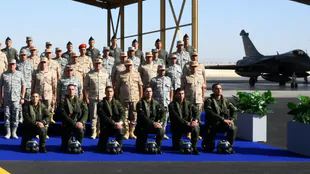 Egyptian Defence Minister Inspects Air Base Modernisation to Boost Combat Readiness

 Mets President David Stearns Expresses Confidence in Marcus Semien's Motivation

Just before nightfall on Wednesday, the near-deserted streets of Afghanistan's capital Kabul suddenly filled with people -- mobile phones everywhere had pinged back to life.
With phones pressed to their ears or tightly gripped in their hands, Afghans poured onto the streets to check if others were also online.
"Congratulations, the internet is back!" a shopkeeper shouted, as drivers honked in response.
Children were handed balloons, parents bought sweets and friends gathered in restaurants -- all while chatting animatedly on their phones.
For 48 hours, Afghans had been offline -- cut off from mobile and internet services -- in a telecommunications shutdown imposed by authorities without warning.
"It felt we had gone back centuries. We were thinking of sending letters just to get updates from our families," mobile phone shop owner Mohammad Rafi said.
"The streets were empty -- it felt like a holiday even though it was a weekday. But now, even in evening, it's crowded again," the 33-year-old added.
Sohrab Ahmadi, a 26-year-old delivery driver, had sat idle for two days, unable to reach clients through the apps he works for.
Now, rows of bikes lined up to collect orders from restaurants lit by neon signs or from juice vendors playing music.
"It's like Eid al-Adha; it's like preparing to go for prayer," he said.
Also visible on the streets was an increase in the number of women, who have faced sweeping restrictions under the Taliban government, including a ban on education beyond primary school.
"I can't tell you how relieved I am. I'm breathing again," said one young woman, who is studying online and asked not to be named.
"Online classes are the only hope left for Afghan girls."
- 'A loss for everyone' -
The United Nations said the shutdown in connectivity threatened economic stability and exacerbated one of the world's worst humanitarian crises.
The Taliban government have yet to comment on the blackout.
However, it came weeks after the government said it would begin cutting high-speed internet in some provinces to prevent "immorality".
Balkh provincial spokesman Attaullah Zaid said at the time the ban had been ordered by the Taliban's shadowy supreme leader Hibatullah Akhundzada.
The internet was still a relatively nascent technology during the Taliban's first rule between 1996 and 2001, when the country was too war-torn and poor to build infrastructure.
But in recent decades, the economy has become increasingly dependent on internet connectivity.
Even in rural areas, many Afghans use mobile phones to conduct business.
"The world has progressed. This is not like 30 years ago," said mobile credit seller Ghulam Rabbani, whose store was packed on Wednesday night.
"We were hopeful that internet would return. It was a loss for everyone -- including the government."
A.Ruegg--VB