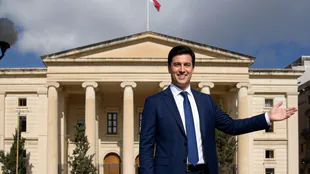
German investors cheered by tariff talks, new government / Photo: © AFP/File

 Chelsea Transfer News: Real Betis Star Jose Antonio Morante Rejects Move to Stamford Bridge

 TikTok Security Chief Advises SMBs on Free Cybersecurity Protections

 Egypt Revokes Citizenship of Brothers Anas and Tarek Habib Over Unapproved Foreign Nationality

 2027 Rivian R2 Performance vs. 2026 Jeep Recon Moab: EV Comparison Test
German investor sentiment has jumped, buoyed by rollbacks of US tariffs, and the formation of a new national government, a closely-watched survey showed Tuesday.
Market expectations for Europe's biggest economy over the next six months rose 39.2 points to sit at plus 25.2, clawing back much of the ground lost in a calamitous April fall, according to the May release of the ZEW survey.
On April 2, US President Donald Trump imposed swingeing tariffs before pausing many of them for 90 days and entering negotiations after markets worldwide plunged.
Achim Wambach, head of the ZEW institute, said the returned optimism was down to "the formation of a new government and movement in the tariff disputes".
Trump has brought down an initial 20-percent tariff on EU imports to to 10 percent, and senior US and Chinese officials on Monday announced agreement to drastically lower sky-high tariffs on each other.
Almost all German sectors experienced a rise in confidence, the survey showed, but optimism grew fastest in export-intensive industries such as steel and chemicals.
The United States was Germany's top trading partner last year and a major market for its exports, which range from cars to machinery and chemicals.
When it came to the domestic situation in Germany, investor sentiment remained negative and was down slightly on April's reading, to reach minus 82 points, a fall of 0.8 points.
Germany's economy has shrunk for the past two years, hit by lukewarm demand for its exports in the face of patchy global growth and increasingly fierce Chinese competition, as well as high energy prices.
Some economists hope that substantial infrastructure spending and reforms under the new governing coalition led by Friedrich Merz can help get the economy back on its feet.
More than 190 analysts and institutional investors took part in the ZEW survey.
M.Betschart--VB