Hungary's Krasznahorkai, 'master of the apocalypse' wins literature Nobel / Photo: © AFP

 Macron urges world to choose UN over 'law of the jungle'
 All-rounder Jacks stars as England beat Sri Lanka in 1st ODI
 Man City peg back Bayern to start Women's Champions League
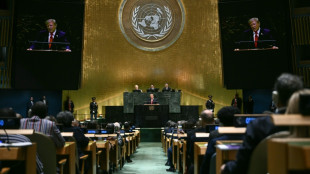
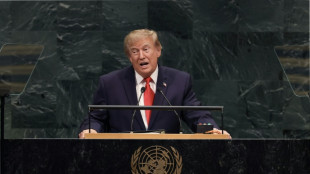
 Trump beats 'America first' drum at UN as allies tread carefully

 Snedeker backs Spaun for Ryder Cup after Presidents snub
 French prosecutors probe secret filming of women with smart glasses

 Trump renames AI "super intelligence," rejects international oversight
 Trump rejects international regulation of AI
 How is the EU approaching record fuel prices?

 Sri Lanka's Colombage strikes on debut as England dismissed for 265 in first ODI
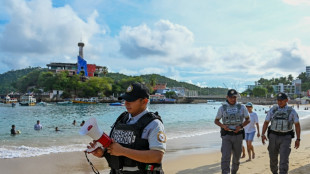 Hurricane Polo strengthens to top category 5 off Mexico

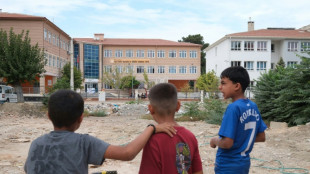 11 hurt as teen opens fire outside school in western Turkey

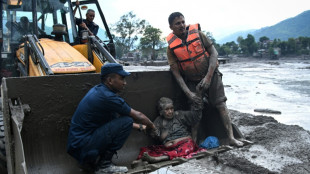 UN chief says 'Big Oil' treats atmosphere as open sewer
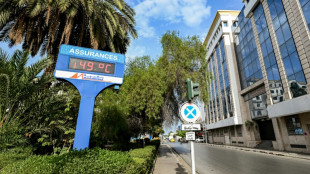 Tunisia says 2026 summer hottest on record
 England's Rashid out of Sri Lanka ODIs with hand injury
 Houthis accuse Saudi Arabia of deadly strikes as thousands flee
 Stocks climb as oil slides, AI buzz returns
 India cricketers win in style as Afghan savours 'special' Games silver

 La Liga president hits out at Real Madrid refereeing 'conspiracy' claims

 MEXC Launches “Real Stocks, Real Friends” with Rewards for Bringing Friends to Wall Street

 Mbappe continues media push for Ballon d'Or recognition
 Stocks rise on AI buzz, oil prices cool
 India narrowly survive huge scare against minnows Japan

 Missing F-35 fighter parts 'not sensitive', says Australia minister

 Cambodia showcases scams crackdown with global conference
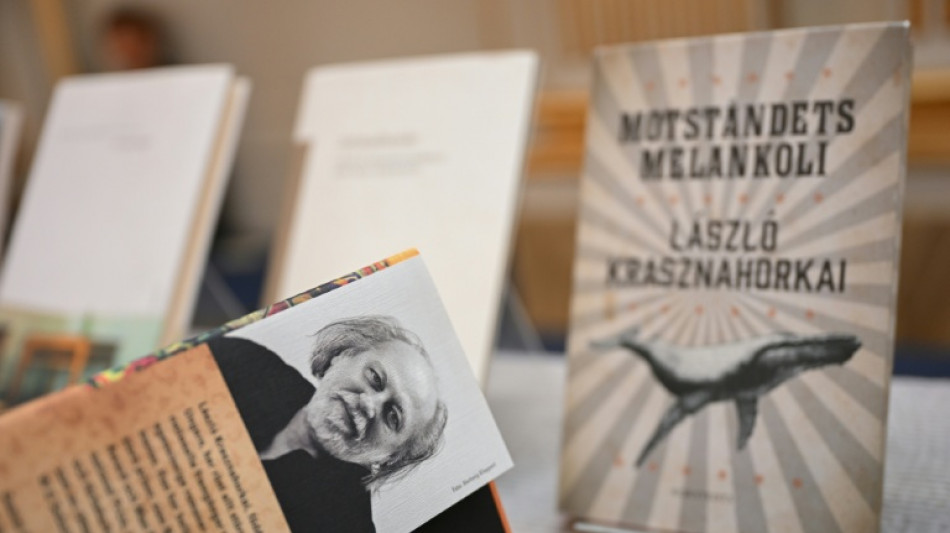
The Nobel Prize in Literature was on Thursday awarded to Laszlo Krasznahorkai, considered by many as Hungary's most important living author, whose works explore themes of postmodern dystopia and melancholy.
The Swedish Academy honoured him "for his compelling and visionary oeuvre that, in the midst of apocalyptic terror, reaffirms the power of art."
"I'm very happy, I'm calm and very nervous altogether," the author told Swedish broadcaster Sveriges Radio from Frankfurt.
"It is my first day as a Nobel prize winner," he said.
The Academy highlighted Krasznahorkai's first novel published in 1985, "Satantango", which brought him to prominence in Hungary and remains his best-known work.
The Academy called it "a literary sensation".
Krasznahorkai is "a great epic writer in the Central European tradition that extends through Kafka to Thomas Bernhard, and is characterised by absurdism and grotesque excess," the Academy said.
"But there are more strings to his bow, and he also looks to the East in adopting a more contemplative, finely calibrated tone."
"The result is a string of works inspired by the deep-seated impressions left by his journeys to China and Japan," it said.
Krasznahorkai was among those mentioned as a possible winner in the run-up to the announcement.
The Academy noted the author's flowing syntax with long, winding sentences devoid of full stops that has become his signature.
"While it is Krasznahorkai's weighty, rolling syntax that has perhaps become his signature as an author, his style also allows for a lightness of touch and a great lyrical beauty," Academy member Steve Sem-Sandberg said.
Hungarian Prime Minister Viktor Orban hailed the prize to Krasznahorkai.
"The pride of Hungary, the first Nobel Prize winner from Gyula, Laszlo Krasznahorkai. Congratulations!" Orban posted on Facebook, referring to the town in southeastern Hungary where Krasznahorkai was born.
Krasznahorkai, 71, grew up in a middle-class Jewish family.
He has drawn inspiration from his experiences under communism, and the extensive travels he undertook after first moving abroad in 1987 to West Berlin for a fellowship.
His novels, short stories and essays are best known in Germany -- where he lived for long periods -- and his native Hungary.
Critically difficult and demanding, his style was described once by Krasznahorkai himself as "reality examined to the point of madness".
- 'Literary sensation' -
"It is Laszlo Krasznahorkai's artistic gaze, which is entirely free of illusion and which sees through the fragility of the social order, combined with his unwavering belief in the power of art that has motivated the Academy to award him this prize," Sem-Sandberg said.
American critic Susan Sontag crowned Krasznahorkai the "master of the apocalypse" after having read his second book "The Melancholy of Resistance" in 1989, the Academy said.
His "War and War" novel (1999) was described by the New Yorker magazine critic James Wood as "one of the most profoundly unsettling experiences I have ever had as a reader".
He is the second Hungarian to win the prize, after the late Imre Kertesz won it in 2002.
Last year, the award went to South Korean author Han Kang, the first Asian woman to win the Nobel.
Just 18 of the 122 laureates since the prize was first awarded in 1901 have been women.
The Swedish Academy has undergone major reforms since a devastating #MeToo scandal in 2018, vowing a more global and gender-equal literature prize.
The Nobel Prize comes with a diploma, a gold medal and a $1.2 million prize sum.
Krasznahorkai will receive the award from King Carl XVI Gustaf in Stockholm on December 10, the anniversary of the 1896 death of scientist and prize creator Alfred Nobel.
H.Kuenzler--VB