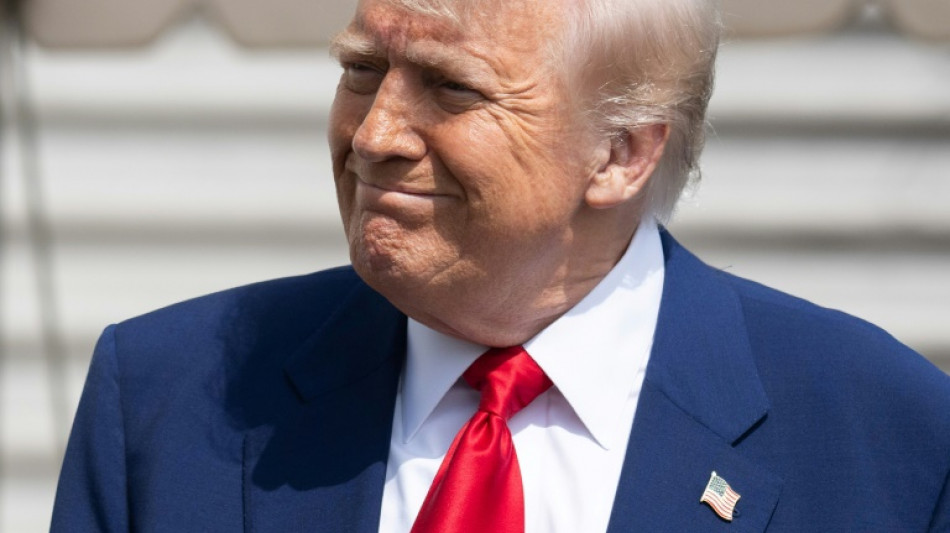
Fractious Republicans seek unity over Trump tax cuts / Photo: © AFP/File

 Indiana River Otters Make Comeback After Decades of Conservation Efforts

 Shruti Haasan Reveals Kamal Haasan’s Defense of Her Film Career

 Penrith Panthers Face Backlash Over Decision to Disband Pantherettes Cheerleading Squad

 Make-A-Wish Announces 2026 Starblazer Award Honorees; Allied World Becomes First Corporate Founder

 Lee-Trump Golf Diplomacy Faces Diplomatic Dilemma Ahead of G20 Summit

 Mavericks Defeat Jazz 112-100 Behind Washington’s 26 Points and Second-Half Surge

 BingX: Major Announcement of Far-Reaching Significance

 James Blunt Scores First Number One Album in 19 Years; Wife Sofia Wellesley Celebrates
US senators were set to vote Saturday on unlocking trillions of dollars for sweeping tax cuts promised by President Donald Trump, despite bitter infighting among the majority Republicans over the savings that will be needed to fund them.
The row comes with Wall Street leading a global markets bloodbath as countries around the world reel from Trump's trade war, and Democrats argue that now is not the time to be entertaining significantly reduced government spending.
But the Senate's Republican leadership was just as concerned with friendly fire from its own disgruntled rank and file as it prepared for the make-or-break vote on a Trump-backed "budget resolution" that kick-starts negotiations on how to usher the president's domestic agenda into law.
Senate and House Republicans have been at loggerheads over how deeply to wield the knife, with lawmakers already wary of public anger over an unprecedented downsizing of the federal bureaucracy led by Trump's tech billionaire advisor Elon Musk.
Both chambers need to adopt identical versions of the budget blueprint -- a task that has proven beyond them during months of fraught talks -- before they can draft Trump's giant bill to extend his first-term tax cuts and boost border security and energy production.
"This resolution is the first step toward a final bill to make permanent the tax relief we implemented in 2017 and deliver a transformational investment in our border, national, and energy security – all accompanied by substantial savings," Republican Senate leader John Thune said.
Senators were locked in an all-night session to vote on dozens of proposed tweaks to the plan -- some of which were aimed at forcing Republicans onto the record over Trump's tariffs on imports from countries around the world.
- 'Vote-a-rama' -
They hoped to move to a vote on final passage later Saturday morning, although the timetable depends on how quickly the upper chamber of Congress can get through its marathon so-called "vote-a-rama" on the amendments.
If the plan gets through the Senate, it will still need approval by the House, with Republican leaders desperate to get it to Trump's desk before Congress begins a two-week Easter break next Friday.
Democrats have slammed the framework, claiming it will trigger further major cuts to essential services.
The proposal would raise the country's borrowing limit by $5 trillion to avoid a debt default this summer, staving off the need for a further hike until after the 2026 midterm elections.
Experts say the tax cuts -- which would greatly expand the relief agreed in 2017 -- could add in excess of $5 trillion to national debt over the next decade.
The libertarian Cato Institute called the resolution a "fiscal train wreck" that "actively worsens our nation's debt trajectory."
Trump, who has been talking up the plan on social media, offered his "complete and total support" for the text at a White House event on Wednesday.
But Senate and House Republicans are oceans apart on spending cuts, with the upper chamber looking for modest savings of $4 billion, while House leadership is demanding a reduction of $1.5 trillion.
Republican Congressman Ralph Norman of South Carolina was asked about supporting the Senate resolution and told reporters: "To me, it's dead on arrival."
L.Maurer--VB