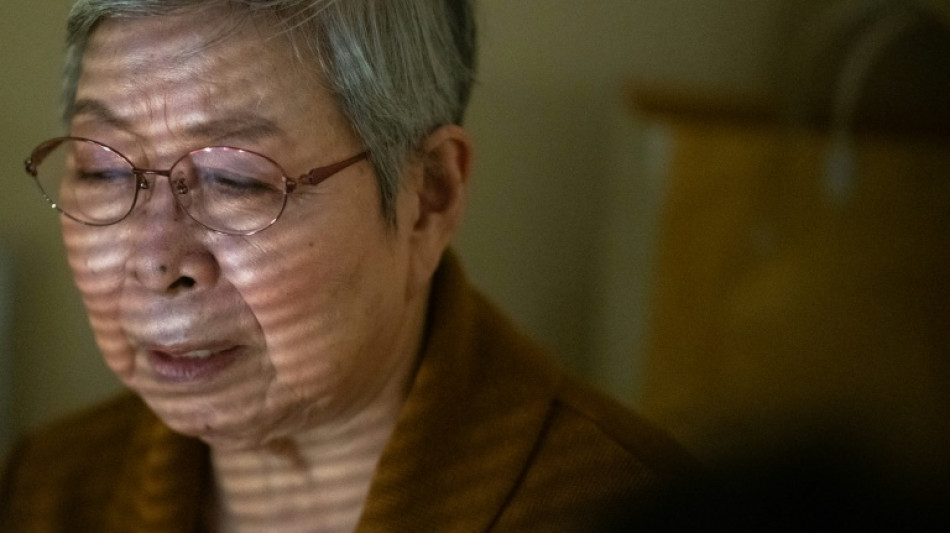
'Love for humanity': Low-crime Japan's unpaid parole officers / Photo: © AFP

 Brazil-Japan to play World Cup rematch at Singapore tournament

 Defence chiefs back boosting US military presence in Australia

 Nepal seeks climate justice after Himalayan disaster

 Stocks rise, yields ease as oil slips on Trump hint at short bombing campaign

 Brussels Diamond League finals Day 1 - five events to watch

 Thailand's 'Jurassic Park' shines light on dinosaur evolution
 'Role model' Stokes set to open for Adelaide Strikers
 Palau urges 'unified' Pacific response to China missile test

 Grinding away: in remote Appalachia, old mills fuel US clean food dreams

 Sabalenka races into US Open third round

 Chinese lucky loser stuns Jodar at US Open

 US Open under the influence: content creators spark debate

 NBA hammers Clippers over Leonard salary cap violations

 NBA strips five first-round draft picks from Clippers for Leonard salary cap violations

 Kane brace helps Bayern win German Cup opener

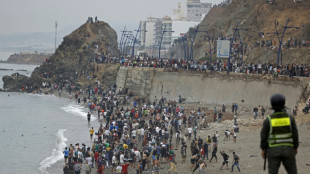
 Migrant plight, local anger divide Ceuta one month after influx

 Outrage as Maltese tycoon acquitted of reporter's murder

 Rare train of Pacific cyclones fueled by historic El Nino
 Macron, King Charles hail UK-France ties after viewing Bayeux Tapestry

 Fury hits out at 'coward' Joshua as 'Battle of Britain' talks go on

 Maltese tycoon acquitted of masterminding reporter's murder

 George Clooney: a Hollywood icon and campaigner

 Europe, US closer than they look on tech rules, says EU tech chief

 Clooney honoured as Hollywood-light Venice Film Festival kicks off

 Third-ranked Pegula, Medvedev power into US Open third round

Teruko Nakazawa once intervened in a knife fight between an ex-offender and their mother -- all in a day's unpaid work for Japan's army of volunteer probation officers.
The 83-year-old, who jokes she is a "punk" as she puffs on a cigarette, devoted decades to supervising and helping rehabilitate convicted criminals on parole.
But she did not take a single yen for her hard work under a long-running but little-known state scheme that some say contributes to the nation's famously low crime rate.
Around 47,000citizen volunteers known as "hogoshi" far outnumber the 1,000 salaried probation officers in Japan.
"I never wanted to be thanked or rewarded," said Nakazawa, recalling once going to save a boy "surrounded by 30, 40 bad guys".
"I did what I did because I wanted to," she told AFP. "You can't help but try to put out a fire when you spot one, right?"
But the altruistic programme faces an uncertain future, with around 80 percent of hogoshi aged 60 or over.
The recent murder of a hogoshi by a parolee has also rattled the trust in ex-offenders' good nature underlying the system.
For one of Nakazawa's former charges, "she was like a grandma".
"I wouldn't dare do anything bad on her watch," he said, declining to be named because he hides his criminal past.
"I was scared of ever feeling guilty that I had betrayed her."
The 34-year-old said Nakazawa "helped me a great deal" -- especially to apologise to his victims.
- Stabbing -
A 60-year-old hogoshi was fatally stabbed in Otsu, near Kyoto, by a man under his supervision in May.
The incident raised fears that potential hogoshi -- who may already be wary of parolees whose crimes include theft, sex offences and sometimes murder -- could be scared away.
Hogoshi have historically rejected proposals to be paid a regular wage.
This is because their activity is "a symbol of selflessness" rooted in "love for humanity", legal experts said in an October report.
Only some of their expenses are covered, and they must pay a yearly registration fee -- another factor blamed for the struggle to attract younger volunteers.
Still, Japan "would be a different country without hogoshi", said Carol Lawson, a comparative criminal justice professor at the University of Tokyo, citing the nation's "extraordinary lack of post-war crime".
The system's high "tolerance of risk" is unusual, she said. Hogoshi often invite parolees to their homes to develop a warm, familiar relationship.
Countries such as the Philippines, Thailand and Kenya have made use of Japan's expertise to introduce similar systems.
But "it's hard to even imagine the hogoshi system gaining any traction" in Anglo-American jurisdictions with a more "retributive" mindset Lawson told AFP.
- 'OK to exist' -
Nakazawa said her daughter used to worry about her safety and would have urged her to quit had the Otsu homicide occurred before her retirement in 2018.
But if society shuns ex-offenders, "they will only proliferate and commit even more heinous crimes," she said.
"We have to root for them so they won't reoffend."
Hogoshi often recruit other hogoshi based on criteria such as reputability, stable income and sufficient free time.
Mieko Kami, a 74-year-old Tokyo flower arrangement teacher, had no experience with criminals before joining the scheme.
When first approached, "I thought, 'there's no way I can do this'", Kami told AFP.
But after three years she changed her mind and was soon sipping tea with a yakuza gangster, helping a young man in a squalid apartment and hurrying at night to a blood-soaked suicide attempt.
"Learning about their upbringing sometimes makes me think it's inevitable they turned out this way," Kami said.
"I feel they want to be assured it's OK to exist," she said, describing herself as "sometimes being their mother".
"So I praise, acknowledge them... I feel fond of them."
- 'Good listener' -
Currently on parole in Osaka, Ueko, who only gave his nickname, recalls taking illegal drugs "to be set free of my painful life" trying to fit in as a gay person in Japan.
Initially, his hogoshi's life seemed so impeccable "I doubted he could possibly understand the feelings of us ex-prisoners," the 47-year-old told AFP at drug rehab centre DARC.
But now "he's a very good listener for me".
It is not uncommon for parolees to skip their twice-monthly appointments with hogoshi and fail to bond.
Still, Nakazawa's once-rowdy charges sometimes visit her cafe for tearful reunions, or phone her asking about her health.
"They even jokingly tell me, 'don't mess around', which is exactly what I used to tell them!" Nakazawa laughed.
"I spent my whole life caring about other people. But now I'm old and getting weak, they're caring about me."
"They're my hogoshi now."
E.Gasser--VB