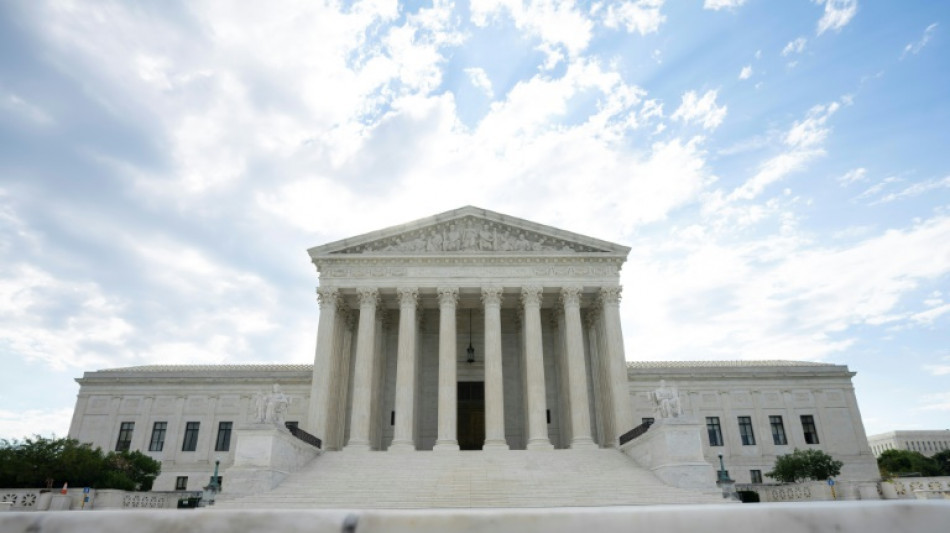
US Supreme Court rules on dragnet searches of cellphone location data / Photo: © GETTY IMAGES/AFP/File

 Colombian judge bans strikes on guerrillas if minors are present

 Khachanov shocks ailing Auger-Aliassime, Swiatek and Osaka advance at US Open
 Lone juror blocking verdict in US mother's child murder trial: defense
 'Kinda chic' - Williams sisters set to launch US Open doubles bid

 Volkswagen says cutting 100,000 jobs by end of decade

 Russia slaps curfew on charity director over army criticism
 Ailing Auger-Aliassime upset by Khachanov at US Open
 Richarlison omitted from Tottenham's Premier League squad

 How El Nino is choking the Panama Canal

 Hamilton drives his Ferrari dream at Monza

 Senegal has an IMF loan, now what?

 Auger-Aliassime upset by Khachanov at US Open
 Hugging Face, the French start-up that became AI's warehouse
 World Cup winner Llorente retires from Spain team at 31

 Osaka squeezes into US Open third round
 Apple faces £2 bn lawsuit in UK over app privacy feature

 Former champ Swiatek eases into US Open third round
 DR Congo latest to promise moving Israel embassy to Jerusalem

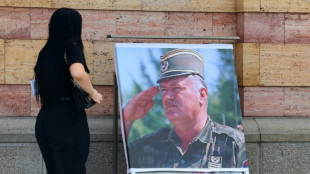 War criminal Mladic's body returns to Serbia with military honours
 Pierre Cardin museum brings designer's futurist style to Venice

 Slovenian rookie Omrzel triumphs as Mas extends Vuelta lead

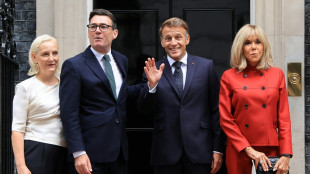 British, French leaders talk migrants, EU relations
 Heading for Ferrari's home race, Leclerc still dreams of world title
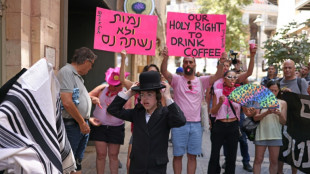 Cafe at centre of Israel culture clash agrees to shut on Sabbath

 Spacecraft bound for Mercury begins 'tricky' arrival
The US Supreme Court on Monday ruled partially in favor of a man challenging the use of sweeping "geofence" searches of cellphone location data in his robbery conviction, sending the case back to a lower court for further consideration.
The court, in a 6-3 ruling, said that such searches -- which scan for every phone in a certain place at a specific time -- implicate the US Constitution's Fourth Amendment protections against "unreasonable searches and seizures."
However it said that a lower court would have to determine if the use of the search in the case at hand was in fact reasonable.
The case was brought by Okello Chatrie, identified as a suspect in a 2019 Virginia bank robbery after investigators obtained a warrant to search cellphone location data stored by Google.
Chatrie, who was armed with a gun and made off with $195,000, was eventually convicted and is serving a 12-year prison sentence.
His lawyer, Adam Unikowsky, argued that geofence warrants violate the Fourth Amendment by authorizing a search of every single person's account to find who was within a geofence perimeter.
Justice Elena Kagan, who was joined by the two other liberals on the court and three conservatives, wrote the majority opinion.
"An individual has a reasonable expectation of privacy in records about his cellphone's location, and police intrude on that constitutionally protected interest when they demand the information -- even though for only a limited time, and from a third-party tech company," Kagan wrote.
Eden Heilman, legal director of the American Civil Liberties Union of Virginia, welcomed the ruling.
"The Court's decision confirms that law enforcement does not have a blank check to use new technology to conduct warrantless surveillance of people's movements," Heilman said. "We do not lose our right to privacy simply because we use a cellphone."
Defending the use of geofence warrants, the government argued that a smartphone user can always choose to turn off location services.
Geofence warrants were notably used to identify supporters of President Donald Trump who stormed the US Capitol on January 6, 2021 in a bid to block congressional certification of Democrat Joe Biden's presidential election victory.
Google no longer stores location history data on its servers and has deleted all such data. Other technology companies continue to collect location data, however.
P.Staeheli--VB