
G20 host Brazil launches alliance to end 'scourge' of hunger / Photo: © AFP

 Devan Ekambaram and Susha’s 'Varuvaaiy' Makes History as First Tamil Song Nominated for a Grammy

 Miranda Lambert Leads North Texans with Seven Grammy Nominations for 2027

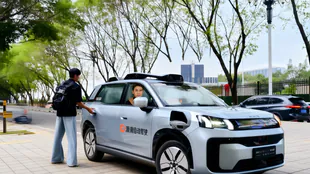 DiDi Advances Robotaxi Operations in China with New R2 Vehicle and Expanded Safety Infrastructure

 Smart Car Seats Tested: Do Sensors and Apps Actually Improve Safety?

 5 Strategies for Fort Worth Households to Reduce Summer Electricity Costs
 Central Bank of Malta Links Energy Subsidies to Middle East Conflict and Price Volatility

 Shomari Figures Defies Redistricting in Alabama Amid Disaster Relief Crisis

 BYD Dolphin G Leasing Deal: Plug-in Hybrid Supermini Available from £174 a Month

Brazilian President Luiz Inacio Lula da Silva opened a G20 summit in Rio by launching an alliance to curb world hunger, which he called a "scourge that shames humanity."
The Global Alliance Against Hunger and Poverty marks an early summit success for left-wing Lula, with a total of 81 countries signing on to it.
Argentina was the only one of the 19 countries in the G20 not to sign on to the initiative.
Its participation was still "under negotiation," a Brazilian government source said.
The charity Oxfam said the global alliance "could be a turning point in the battle against hunger and extreme poverty" but urged the initiative to go further by instituting changes in agriculture, supporting land rights and confronting "the weaponization of hunger."
The decision not to join by Argentina -- led by right-wing President Javier Milei, a big fan of Donald Trump -- deepened a political gap with neighboring Brazil.
Milei has imposed radical austerity measures in Argentina to bring down high inflation.
The policies sent the poverty rate in the country soaring to 52.9 percent in the first half of this year, 11 percentage points higher than in the previous six-month period.
Milei was the first world leader to see Trump after the Republican's win in the US presidential election. He attended a gala at Trump's Mar-a-Lago Florida estate last Thursday.
The Argentine leader has several times labeled Lula a "communist" and "corrupt."
The Global Alliance Against Hunger and Poverty also has the support of international organizations such as the European Union and the African Union -- both G20 members -- as well as financial institutions and NGOs, bringing the total number of signatories to 147.
The initiative's goal is ambitious: to reduce world hunger which affected 733 million people last year -- nine percent of the global population -- according to the UN.
For Lula, who grew up in poverty before becoming a steelworker, a trade unionist and eventually president of Latin America's biggest economy, the initiative is dear to the heart.
At a national level, his leftwing policies have already lifted millions of Brazilians out of poverty.
- 'Political will' -
The global alliance on hunger is an effort to widen that push by putting international financing behind it, and replicating successful national programs in other countries.
"Eradicating hunger and poverty is not so hard, and the cost is not exorbitant," Wellington Dias, Brazil's minister for social development, said in a statement announcing the alliance.
"It's just a question of political will."
Negotiations on the initiative had gone on for months, with concrete commitments already made.
The Inter-American Development Bank on Friday announced a $25 billion contribution to programs fighting hunger and poverty over the next five years.
The alliance especially aims for improved nutrition for early childhood, free school canteens and supporting small farms. The goal is to improve food access and quality for 150 million children by the end of the decade.
Nigeria, which already has the biggest school meals program in Africa, has vowed to double the number of children benefiting from it to 20 million.
Indonesia, from January 2025, will start a new program of free canteens, with the aim of reaching 78 million school children in 2029.
A.Kunz--VB
