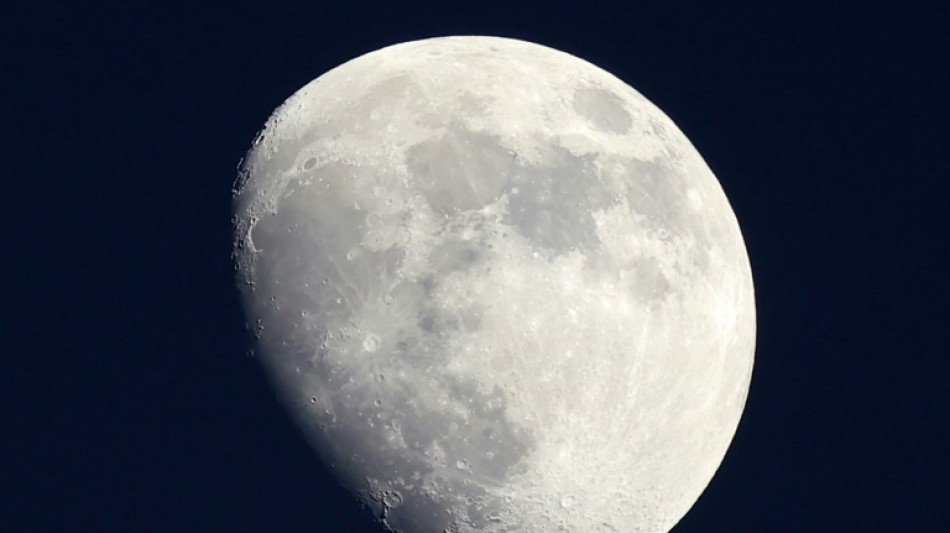
China tests building Moon base with lunar soil bricks / Photo: © AFP

 Alabama Legislature Passes Weakened Utility Reform Bill Amid Allegations of Alabama Power Influence

 World Athletics stance on Russia unchanged, says Coe

 Can We Predict Volcanic Eruptions Like Weather? Scientists Seek Unified Physics
 Macron, Carney to visit French islands after Trump's map post

 حمزة قورقماز يناقش العلاقة بين وضوح المبادئ واحترام الاختلاف

 اليورو يستقر في البنوك المصرية وأعلى سعر للبيع 59.85 جنيه

 Myanmar says UN envoy illegitimate ahead of credentials decision

 Philippine rescuers pull more victims from charred ferry

 دول عربية ومنظمات تدين استهداف خط أنابيب في السعودية

 Crash and burn: Pakistan cricket at a new low after England humiliation

 'Second life': Nepal tunnel survivor recalls ordeal

 Hong Kong homes flattened for US$28 bn high-tech hub

 'Be careful what you wish for': 'Obsession' director and star reflect on success

 Messi scores but Miami held by Nashville

 US Open champ Rybakina on top of world after injury scare

 Rybakina reigns serene as new world number one

 South Africa defeat New Zealand 43-28 to complete 3-1 series victory

 Rybakina triumphs in US Open, denies Sabalenka three-peat

 Mini 1998 GT pairs 161-hp engine with John Cooper Works chassis hardware

 GTA VI draws political criticism online as preorder estimates exceed five million

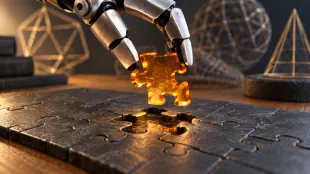 Steven Strogatz weighs AI mathematics advances and their consequences for researchers

 KFF journalists discuss opioid funds, suicide prevention and gaps in care

 Roadless Rule repeal proposal raises concerns over Midwest forests and fire risk

 Louisiana's developing roster faces USC as Trojans enter as heavy favorites

 Utah hosts Arkansas as both programs begin seasons under new coaches

China is expected to push forward in its quest to build the first lunar base on Friday, launching an in-space experiment to test whether the station's bricks could be made from the Moon's own soil.
Brick samples will blast off aboard a cargo rocket heading for China's Tiangong space station, part of Beijing's mission to put humans on the Moon by 2030 and build a permanent base there by 2035.
It is a daunting task: any structure has to withstand huge amounts of cosmic radiation, extreme temperature variations and moonquakes, and getting building materials there in the first place is a costly procedure.
Constructing the base out of the Moon itself could be a solution to those problems, scientists from a university in central Wuhan province hope.
They have created a series of prototype bricks made of various compositions of materials found on earth, such as basalt, which mimic the properties of lunar soil.
Slivers of those test bricks will be subjected to a series of stringent tests once they reach the Tiangong space station.
"It's mainly exposure," said Zhou Cheng, a professor at Wuhan's Huazhong University of Science and Technology.
"To put it simply, we put (the material) in space and let it sit there... to see whether its durability, its performance will degrade under the extreme environment."
The temperature on the Moon can vary drastically between 180 and -190 degrees Celsius (356 to -310 degrees Fahrenheit).
Its lack of an atmosphere means it is subjected to large quantities of cosmic radiation as well as micrometeorites, while moonquakes can weaken any structure on its surface.
The exposure experiment will last three years, with samples sent back for testing every year.
- 'Good chance of success' -
Zhou's team developed their prototype bricks after analysing soil brought back by China's Chang'e-5 probe, the world's first mission in four decades to collect Moon samples.
The resulting black bricks are three times stronger than standard bricks, he said, and interlock together without a binding agent.
The team has also worked on the "Lunar Spider", a 3D printing robot to build structures in space, some of which are conical in shape.
"In the future, our plan is definitely to use resources on-site, that is, make bricks directly from the lunar soil, and then do various construction scenarios, so we won't be bringing the materials from Earth," said Zhou.
It's "an obvious thing to try" because using materials already on the Moon would be much cheaper, said Jacco van Loon, an astrophysicist at Keele University in Britain.
"The experiments have a good chance of success, and the results will pave the way to building moonbases," he told AFP.
- Lego bricks -
Beijing is far from alone in looking to build the first lunar base.
China's planned outpost on the Moon, known as the International Lunar Research Station (ILRS), is a joint project with Russia.
A dozen countries -- including Thailand, Pakistan, Venezuela and Senegal -- are partners in the initiative, as well as around 40 foreign organisations, according to Chinese state media.
The United States is aiming to put humans back on the Moon in 2026 and subsequently set up a station there, though its Artemis programme has already seen various delays.
As part of the US preparations, researchers at the University of Central Florida are testing potential building bricks of their own, made using 3D printers.
The European Space Agency, meanwhile, has carried out studies on how to assemble bricks based on the structure of Lego.
F.Mueller--VB