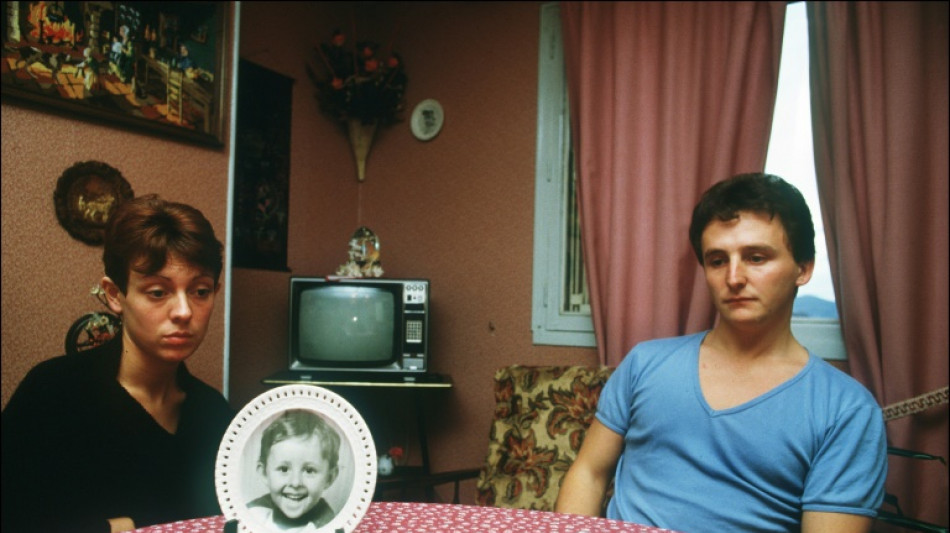
'Little Gregory' murder haunts France 40 years on / Photo: © AFP/File

 Most Asian stocks track Wall St rally, yen drops after BoJ rate hike
 Russians begin voting in controlled election as war drags on

 Trump 'clearly' wants dialogue with Pyongyang: South Korean President

 Bank of Japan hikes rates to 31-year high to battle inflation
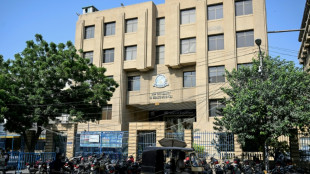
 Thailand's Muslim separatists vow to fight to the end

 Mideast turmoil, AI set to dominate UN gathering of world leaders

 Australia to detain tourists who overstay visa, minister says

 Championship rivals brace for renewal of bitter feuds

 In Brazil's Amazon, the hunt for oil fuels hopes and fears
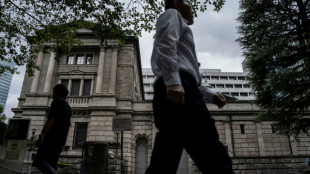
 Australian athlete who soiled herself apologises for continuing Hyrox race

 Baby orangutans in India expose 'frightening' scale of trafficking
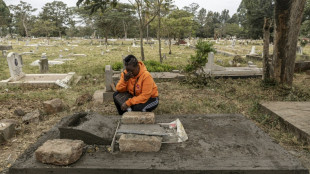
 Doom Loop? Ed Sheeran struggles against Gaza tide
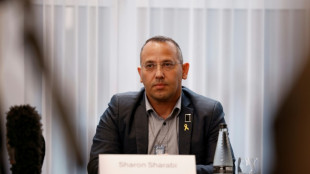
 Sudanese women hold fast to threatened henna body art
 Man Utd misery puts Carrick under pressure, Spurs feeling the heat

 Prized Mexican relic returns on loan, two centuries on

 Venezuela unblocks some censored news sites

 Samba stars on debut in Man City rout of Norwich

 Oversight Board blasts 'inadequate' Meta safeguards for AI deepfakes

 The Easter Island origins of buzzy Malkovich drama 'Wild Horse Nine'

 Third body recovered after Grand Canyon flash flood

 Harry makes first public appearance since return to UK

 Abhishek hits record T20 ton as India sweep series 3-0

 Abhishek hits record T20 ton as India sweep T20 series 3-0

 English FA calls for Infantino to release World Cup sell-off documents

 GM delivers first components for US interceptor missiles

Gregory Villemin was four years old when he was murdered on an autumn day in 1984, his hands and feet tied when his body was found in a river in eastern France.
The case of "little Gregory", as it became known, has haunted the judiciary, media and the French public for four decades, with its resolution just as elusive today as it was on October 16, 1984, when he was found.
Investigators have amassed close to 18,000 reports bound in 42 volumes over the decades, and seven investigating judges have worked on the case, said Philippe Astruc, chief prosecutor in the eastern city of Dijon, where the investigation is still open.
At times, the probe's twists and turns seemed to come straight from a TV mystery -- one suspect was murdered, an investigating magistrate who committed suicide and charges brought several times, only to be dropped.
"I don't know how we survived," Jean-Marie Villemin, Gregory's father, said about the past 40 years in a comic book published recently, one of many works dedicated to the Gregory mystery.
- 'This is my revenge' -
At first the investigation appeared to go quickly. A written note was sent to Jean-Marie Villemin saying: "This is my revenge, you sad fool."
Villemin, 26 at the time, and his wife Christine, 24, had been receiving anonymous, threatening letters and phone calls for years.
The murder investigation initially focused on the extended Villemin family. There was a media frenzy, with one journalist even hiding a microphone in the wardrobe of a family member in the hope of recording a confession.
Investigating magistrate Jean-Michel Lambert hoped the case would give him the break he hoped for in his first job in the judiciary.
In under three weeks the 32-year-old brought charges against Bernard Laroche, a cousin of Gregory's father, who was later released on bail.
- 'Incompetent' -
Gregory's father was convinced that Laroche was his son's murderer. In March 1985, weeks after Laroche's release, Villemin killed him with a rifle.
He was jailed for five years for the killing and did 34 months of jail time.
The investigation sensationally turned to Gregory's mother, who was charged with her murder in 1985, but the charges were withdrawn because of errors committed by investigating magistrate Lambert.
"The work the judiciary did was pathetic," said Thierry Moser, a lawyer for the Villemins who has been involved in the case for 39 years. "The investigating magistrate was incompetent."
Lambert committed suicide in 2017.
Subsequent investigators failed to make a breakthrough. In 2017, charges were laid against Gregory's great aunt and great uncle, Jacqueline and Marcel Jacob, as well as Murielle Bolle, an adolescent who had at one point given a witness statement against Laroche.
Within a year, all three cases were dropped on legal technicalities.
After decades of failure, there is now hope that modern DNA analysis and voice recognition software could help identify the man, or people, who harassed the Villemin family for years.
"I'm reasonably optimistic," Moser said.
A lawyer on the case, Francois Saint-Pierre, said it was still possible to save the investigation. "Today we're able to solve the mystery of the Pharaohs, so why not this one too?" he said.
But Etienne Sesmat, a former gendarmerie colonel who worked on the murder at the start, said that, crucially, police never found any case-specific DNA, typically contained in blood or sperm.
"All we have is contact DNA" that did not necessarily allow firm conclusions, he said.
Sesmat, who has published a book on the case, said that as far as he was concerned, it was "established" that the killer was Bernard Laroche, a view shared by the Villemin couple's lawyers.
Some lawyers have suggested that the case will never be solved, but Dijon chief prosecutor Astruc rejected that speculation.
"We must go on," he said. "We owe that much to this little boy and to his parents."
T.Egger--VB