Return to sender: waste stranded at sea stirs toxic dispute
/ Photo: © AFP

 Chile's Bachelet quits race to be next UN chief

 Raphinha treble fires perfect Barca to win at Sevilla

 Thiam makes winning heptathlon return at Decastar meet
 Czechs beat USA to qualify for Davis Cup finals
 Dortmund sink Stuttgart to climb to Bundesliga summit
 Trump says will not tolerate attempts to slow AI growth

 'It has to stop': runners protest women's murders in S.Africa district

 Fire erupts near Riyadh airport as Houthis claim strikes

 Cuba works to restore power after another blackout
 England thrash Sri Lanka again to return to top of T20 rankings
 Arsenal thrashed by Brighton, sorry Spurs lose again

 South Korea, Austria qualify for Davis Cup finals
 Seare shocks Ingebrigtsen to win world 5km gold
 Brigitte Bardot widower slams sale of star's belongings

 Aston Villa compound Tottenham's misery despite late rally
 Asian Games offer 'deepest apologies' for South Korea anthem blunder
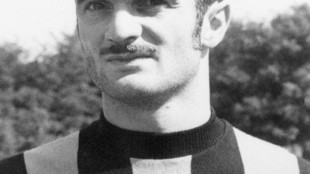 Inter Milan and Italy icon Mazzola dies aged 83
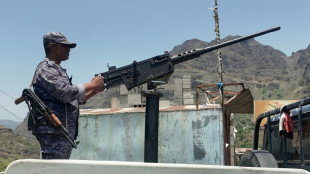 Saudi capital issues first air raid alert since renewed fighting in Yemen
 Martin edges title rival Marquez for Austrian MotoGP pole
 Indonesia accepts Malaysia's help to tackle wildfires
 Indians living in Japan on stand-by to house Asian Games athletes
 Trump signs bill authorizing sweeping Russia sanctions

 Protesters form human chain at Kennedy Center after Trump threat
 Death toll from attack at police HQ in Pakistan rises to 31

 Trump says Denmark to give US 'permanent control' over Greenland security
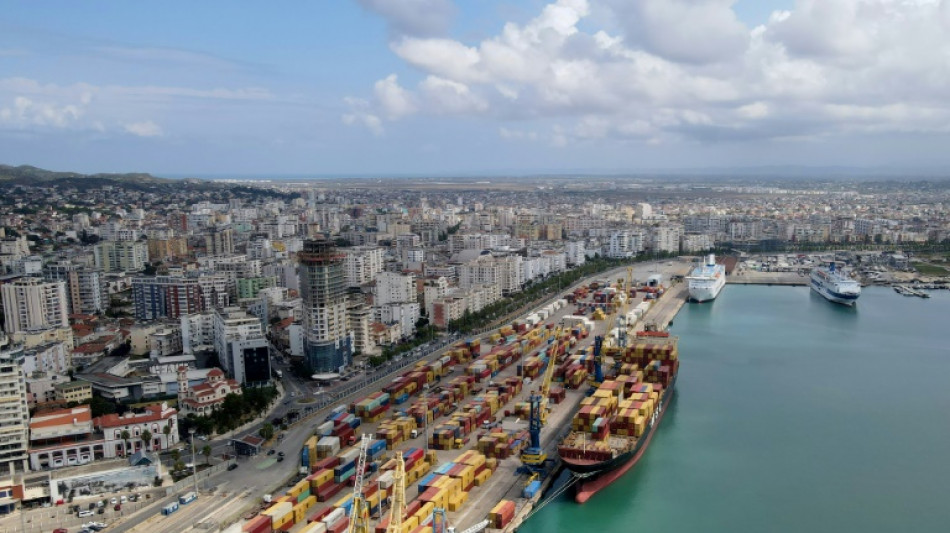
Amid the scorching heat at the Albanian port of Durres, 102 containers set sail for Thailand in early July, sparking a high-seas drama that highlighted the perils of the global waste trade.
According to official papers reviewed by AFP, the containers were filled with waste material that was set to be processed and destroyed far from Europe's shores.
But weeks later, the containers are still adrift in the Mediterranean, following a months-long back-and-forth over what exactly was being shipped and whether it was legal.
Enormous amounts of waste are regularly sent to developing countries -- part of a global industry that sees Western nations outsourcing its treatment to Asia and Africa.
The practise has long been denounced by environmental organisations.
Despite the criticism, the waste management trade continues to be a multibillion-dollar enterprise. The handling of illicit material alone generates between nine billion and 11 billion euros each year, according to the Financial Action Task Force, a leading watchdog tracking illegal trade.
The World Bank estimates that approximately two billion tonnes of waste are produced annually across the globe -- expected to reach 3.4 billion tonnes by 2050.
Within those mountains of waste, regulators have deemed a certain portion hazardous.
These include substances that can be harmful to human health or the environment due to their chemical reactivity or toxicity levels.
To better regulate the industry, the Basel Convention -- signed in 1989 by 53 countries -- prohibits members of the Organisation for Economic Cooperation and Development (OECD) from sending waste to non-member states.
But Albania, which is not a member of the Paris-based economic forum, is free to ship waste abroad.
- Industrial odyssey -
The material stowed away in the 102 containers originated from the Turkish-owned Kurum International steel plant in central Albania's Elbasan, according to Albanian media reports.
The waste was first purchased by the Albanian company Sokolaj, which then sold the material to its subsidiary in Croatia, GS Minerals, with the cargo set to be offloaded in Thailand for processing.
According to documents seen by AFP, Sokolaj labelled the waste as "iron oxide" -- a substance that is not prohibited for shipment or considered hazardous.
An analysis of the substance on the containers was conducted by a Croatian laboratory based in Zagreb, according to Sokolaj.
When contacted by AFP, the laboratory refused to comment, saying the "information can only be given to clients".
Sokolaj itself has not responded to questions on what is in the containers. The company and its Croatian subsidiary both refused AFP's requests for comment.
The containers then departed for the Italian port of Trieste, where they were loaded onto two cargo ships operated by global shipping giant Maersk -- the Campton and the Candor.
As the ships cruised along the African coastline, an organisation specialising in tracking toxic waste, the Basel Action Network (BAN), contacted Maersk.
A whistleblower had called the network's hotline to report that the containers were carrying not just iron oxide, but also toxic waste.
BAN asked Maersk to stop the ships when they were near the South African coast, according to its president, Jim Puckett.
The ships did not respond and turned off their transponders as they set sail for Singapore, according to BAN.
BAN then tipped off the Thai authorities, who refused to allow the containers entry.
"The government refused to import more than 800 tonnes of electric arc furnace dust (EAFD) from Albania," said the Thai Department of Industrial Works in a statement.
EAFD is a hazardous byproduct produced during the making of steel.
Penchome Saetang, an environmental activist working with the Thai government, said the tip led to the country's refusal.
"After receiving information from NGOs, the government suspected it could be EAFD," Saetang told AFP.
Following the notice from the Thai government, Maersk told AFP it handed off the containers to the shipping company MSC in Singapore to return the containers to Albania.
"Maersk Campton and Maersk Candor were carrying those suspected containers on behalf of another shipping line. None of these containers have been declared to contain hazardous waste," Maersk told AFP.
"Had they been declared to contain hazardous waste, Maersk would have declined to carry them."
MSC declined to comment when contacted by AFP.
- Back to Europe -
In late August, the 102 containers onboard two ships set sail back to Europe.
Albanian Prime Minister Edi Rama has defended the shipments and lashed out at critics -- yet refused to allow the containers to return to the country's ports.
"Nothing proves that this waste is toxic," he told a recent parliamentary session.
"Even if they were hazardous products, their transport is neither prohibited in Albania nor worldwide," added Rama, saying the accusations were based on "malicious suspicions".
BAN fired back in an open letter to the Albanian government, saying containers carrying hazardous materials cannot be shipped without the written consent of the exporter, transit countries and authorities at the final destination.
"None of these countries have given their consent and, therefore, if it turns out that the containers contain hazardous waste, the shipments constitute 'illegal trafficking' under Article 9 of the Basel Convention," BAN said.
In Albania, prosecutors have opened an investigation into the incident in cooperation with the European Anti-Fraud Office and international partners, according to an official statement.
As of Thursday morning, the 102 containers are still at sea, with the cargo on one ship off the coast of Italy and another near Egypt.
"There is a chance we could be wrong," Puckett from BAN said about the material in question.
"But I doubt it."
bme-tak-cbo-ljv/ds/jhb
E.Gasser--VB