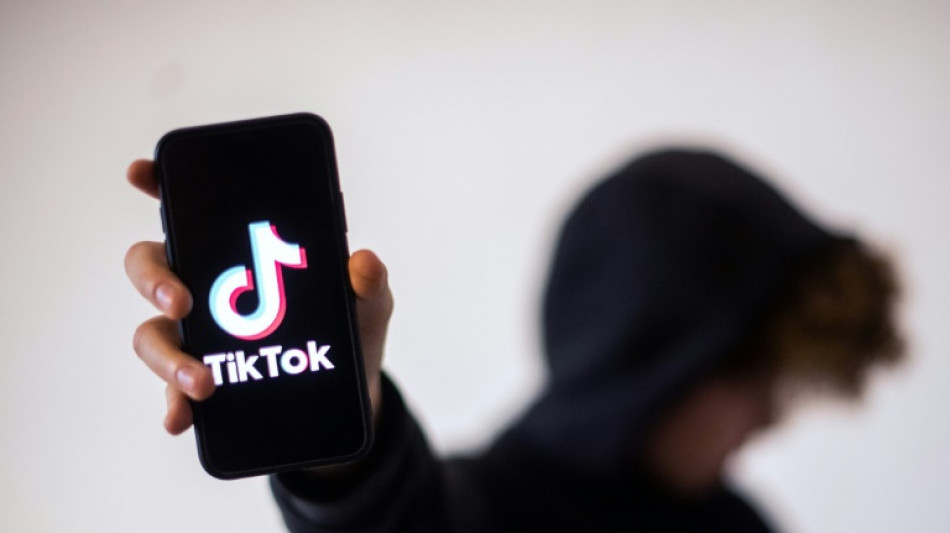
'Social Studies' TV series takes intimate dive into teens' smartphone life / Photo: © AFP/File

 Singer Ed Sheeran says Gaza situation 'unjustifiable' following controversy
 In 'Tenzing', a Sherpa mountaineer gets his due
 Ed Sheeran set to return to stage after Palestinian controversy
 Toulouse edge Vannes, Lyon beat Pau to take Top 14 summit

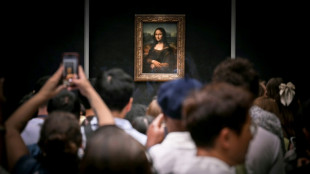 Germans arrested for Louvre stunt in Mona Lisa hall

 Saudi-led coalition says Houthis fired ballistic missile at Riyadh

 France's debt climbs to highest since 1978: ministry

 McIlroy two shots off the lead at Wentworth after eagle on 18
 Martinez brace saves Inter in Serie A top-two clash with Roma

 Rosenior abused but guides Paris FC past old club Strasbourg

 Seven-try Lyon beat Pau, climb to Top 14 summit

 Brighton defeat a 'big lesson' against complacency for Arsenal, says Arteta

 Thousands protest inaction over climate crisis in Switzerland

 Carapaz out of cycling world championships

 'Fragile' Tottenham beaten by Aston Villa despite late rally

 Mourinho hails Real Madrid grit before Atletico derby clash
 Martin wins Austrian MotoGP sprint after Acosta crash
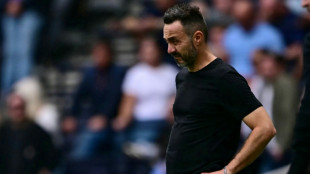
 Japan edge Fiji to win Pacific Nations Cup

 Black smoke, flames rising near Riyadh airport: residents to AFP

 UK actor Naomi Watts honoured at Spain film festival

 Japan emperor declares Asian Games open after turbulent build-up

 Asian Games open with unity message after troubled build-up

 Denmark hails 'binding' Greenland deal with Trump

 We don't want Games host Japan losing money, says Asian Olympic official

 Ed Sheeran returns to stage after Palestinian controversy

Sifting through the smartphones of dozens of US teens who agreed to share their social media content over the course of a year, filmmaker Lauren Greenfield came to a somber observation.
The kids are "very, very conscious of the mostly negative effects" these platforms are having on them -- and yet they just can't quit.
Greenfield's documentary series "Social Studies," premiering on Disney's FX and Hulu on Friday, arrives at a time of proliferating warnings about the dangers of social networks, particularly on young minds.
The show offers a frightening but moving immersion into the online lives of Gen Z youths.
Across five roughly hour-long episodes, viewers get a crash course in just how much more difficult those thorny adolescent years have become in a world governed by algorithms.
In particular, the challenges faced by young people between ages 16 and 20 center on the permanent social pressure induced by platforms like Instagram and TikTok.
For example, we meet Sydney, who earns social media "likes" through increasingly revealing outfits; Jonathan, a diligent student who misses out on his top university picks and is immediately confronted with triumphant "stories" of those who were admitted; and Cooper, disturbed by accounts that glorify anorexia.
"I think social media makes a lot of teens feel like shit, but they don't know how to get off it," says Cooper, in the series.
- 'Like me more' -
This is the first generation born into a world with widespread social media.
Via its subjects' personal smartphone accounts, the show offers a rare glimpse into the ways in which that hyper-connected reality has distorted the process of growing up.
We see how young people modify their body shapes with the swipe of a finger before posting photos, the panic that grips a high school due to fake rumors of a shooting, and the impact that freely available graphic pornography has on their first sexual encounters.
"It's hard to tell what's been put into your mind, and what you actually like," says one anonymous girl, in a group discussion filmed for the docuseries.
These discussion circles between adolescents punctuate "Social Studies," and reveal the contradictions between the many young people's online personas, and their underlying anxieties.
Speaking candidly in a group, they complain about harassment, the lack of regulation on social media platforms, and the impossible beauty standards hammered home by their smartphones.
"If I see people with a six pack, I'm like: 'I want that.' Because maybe people would like me more," admits an anonymous Latino boy.
- 'Lost your social life' -
The series is not entirely downbeat.
For example, we meet a transgender teenager, estranged from her mother, who finds a second family thanks to social media.
But the overall sense is a generation disoriented by the great digital whirlwind.
There are no psychologists or computer scientists in the series.
"The experts are the kids," Greenfield told a press conference this summer. "It was actually an opportunity to not go in with any preconceptions."
While "Social Studies" does not offer any judgment, its evidence would appear to support many of the recent health warnings surrounding hyper-online young people.
The US surgeon general, the country's top doctor, recently called for warning labels on social media platforms, which he said were incubating a mental health crisis.
And banning smartphones in schools appears to be a rare area of bipartisan consensus in a politically polarized nation.
Republican-led Florida has implemented a ban, and the Democratic governor of California signed a new law curbing phone use in schools on Monday.
"Collective action is the only way," said Greenfield.
Teenagers "all say 'if you're the only one that goes off (social media), you lost your social life.'"
B.Baumann--VB