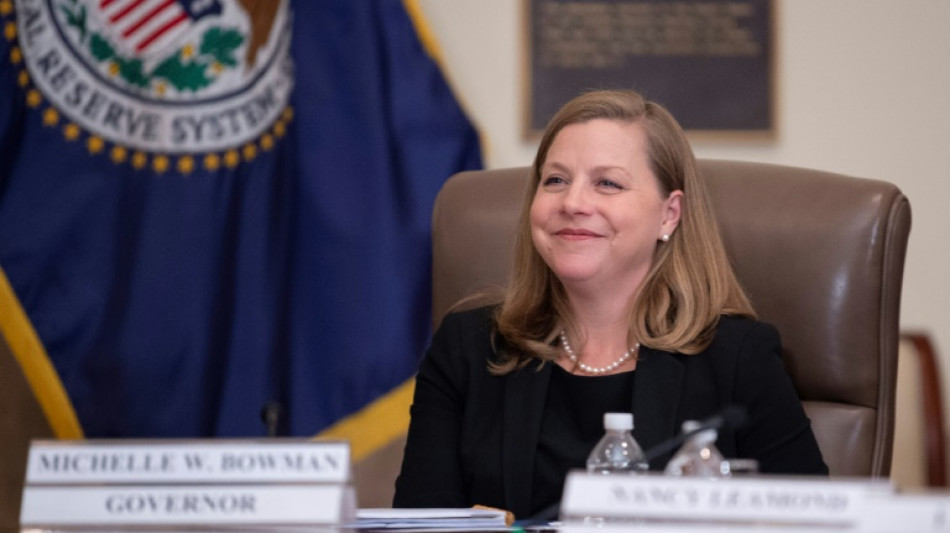
US Fed dissenter warns inflation risks remain 'prominent' / Photo: © AFP

 Khan Welcomes Milburn’s Youth Employment Reforms Amid High NEET Rates

 Shinde Clarifies Torn Photo Controversy Amid Sonia Gandhi Book Protest
 BMW i3 vs Mercedes C-Class Electric vs Hyundai Ioniq 6: The Ultimate Premium EV Showdown

 BING X: 22,624.66 SNC have disappeared at BingX – how safe are tokens on BingX? Will BingX’s MiCAR licence be suspended?

 Urban Company Raises Rs 2,500 Crore via QIP to Expand InstaHelp

The sole Federal Reserve official not to support last week's large interest rate cut said Tuesday that the risks of inflation reigniting remained "prominent."
Michelle Bowman's vote in favor of a smaller cut of a quarter percentage-point instead made her the first official on the Fed's rate-setting committee to dissent from the majority for more than two years.
Speaking in the US state of Virginia on Tuesday, Bowman said "the upside risks to inflation remain prominent."
The US central bank has a dual mandate from Congress to tackle both inflation and unemployment, and has signaled in recent months that it sees the two goals coming into better balance as inflation eases and the labor market continues to cool.
In contrast to some of her colleagues, Bowman said she had taken her decision, in part, because she still saw "greater risks to price stability, especially while the labor market continues to be near estimates of full employment."
A larger rate cut could have been interpreted by the financial markets as a signal that the Fed "sees some fragility or greater downside risks to the economy," Bowman said, adding that she feared people might assume it would maintain the same pace of cuts going forward.
Bowman also raised concerns about the "considerable amount of pent-up demand and cash on the sidelines ready to be deployed as the path of interest rates moves down," which, she argued, ran the risk of reigniting inflation.
"Finally, in dialing back our restrictive stance of policy, we also need to be mindful of what the end point is likely to be," Bowman told the conference in Virginia.
She said she expected the so-called neutral rate to end up "much higher" than it was before the pandemic.
"Therefore, I think we are much closer to neutral than would have been the case under pre-pandemic conditions, and I did not see the peak stance of policy as restrictive to the same extent that my colleagues may have," she added.
M.Betschart--VB
