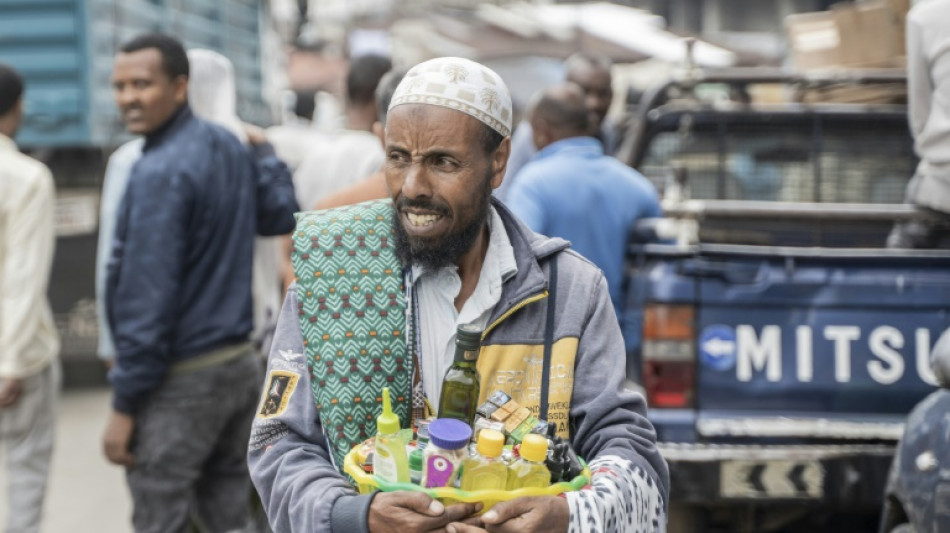
Ethiopians struggle with bitter pill of currency reform / Photo: © AFP

 South Africa arrests three more suspects, after nine women murdered
 Carse needs time away from England, says captain Brook

 NOWPayments Releases Cross-Chain Payout Data Revealing Key Performance Benchmarks Across TRON, BNB Chain, and Solana

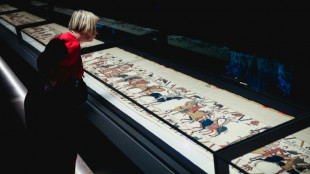 British Museum bans photos of Bayeux Tapestry as crowds linger
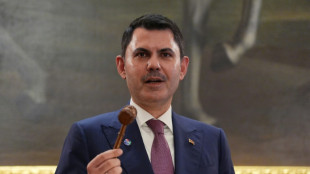 COP31 host says AI climate footprint to be a summit priority

 Berlin's far-left vote winners reject anti-semitism charges

 Mancini eager for 'new adventure' on Italy return

 Mbappe says having Zidane as France coach 'like a film'
 Palmer, Rice out of England Nations League squad
 German auto workers stage mass protests in bid to save jobs
 Embattled Merz vows to keep ruling for 'democratic future' of Germany

 Merz vows to keep ruling coalition together for 'democratic future' of Germany

 Spain coach De la Fuente gets new deal after World Cup success

 Pressure grows on Germany's Merz after election defeats

 China's Zhang beats Japan rivals to Asian Games gymnastics gold

 Samlingen Haupt: Vad pengar avslöjar om oss människor

 Tens of thousands of German auto workers protest to save jobs

 हॉप्त् कलेक्शन: पैसा हमारे बारे में एक इंसान के रूप में क्या प्रकट करता है

 Συλλογή Haupt: Τι αποκαλύπτει το χρήμα για εμάς τους ανθρώπους

 TradersYard Shifts Focus to Futures Trading

 ハウプト・コレクション:お金が人間について明かすこと

 하우프트 컬렉션: 돈이 우리 인간에 대해 드러내는 것

 Indonesia doing 'everything' but struggling to curb fires

 Sbírka Haupt: Co o nás lidech prozrazují peníze
 North and South Korea fight out draw in niggly Asian Games clash
In a small fashion store in Ethiopia's capital, Medanit Woldegebriel's dresses have almost doubled in price in the past two months, sending customers fleeing.
"Business is slow," admits a downhearted Woldegebriel, whose shop in the sprawling Merkato market of Addis Ababa imports clothes from Turkey and the United Arab Emirates.
On July 30, Ethiopia took the painful decision to let its currency float freely against the dollar, and the birr lost a third of its value overnight.
The decline has continued since then -- it now takes 112 birr to buy $1, compared with 55 birr before the change.
The government had little choice. Its exports (primarily flowers, tea and coffee) brought in just $11 billion last year, compared to imports (food, machinery and fuel) that cost $23 billion.
On the eve of the currency reform, Ethiopia had only enough dollars to pay for two weeks of imports.
International investors had long argued that pegging the birr to the dollar was unsustainable.
A $3.4 billion aid programme from the IMF and $1.5 billion financing plan from the World Bank were held back until Ethiopia accepted the inevitable and liberalised the currency.
But for regular Ethiopians, a third of whom live below the poverty line of $2.15 a day, the impact has been tough.
Buying a few tomatoes and some school books for his children, one shopper in Merkato said prices were up by a third across the board.
"We have family who live abroad who can send us foreign currency," said Abrish, a civil servant whose name has been changed due to his concerns about criticising the government.
"Without it we could not survive."
- 'Hard to swallow' -
The country of 120 million was already suffering high inflation -- peaking at 30 percent in 2022 -- due to combined impact of the Covid-19 pandemic, the war in Ukraine, a severe drought and its own devastating conflict in the Tigray region.
Tewodros Makonnen Gebrewolde, an economist with the International Growth Center (IGC), admits "the pill is hard to swallow in the short term".
But he says it was the only option.
The reforms will make exports more competitive and include new rules that will give more businesses access to dollars, which were previously reserved for key strategic sectors.
The old restrictions meant many businesses were operating far below full capacity because they were unable to import raw materials and machinery.
"The authorities have promised better access to foreign currency for companies, which will allow them to increase their productivity and thus be able to produce more," said Gebrewolde.
Prime Minister Abiy Ahmed has called the reforms "critical to relieving (foreign currency) shortages, removing constraints to private sector investment and growth."
Closing the gap between the official dollar rate and the black market -- which was around double before the reform -- should also help undermine smugglers, bringing more trade back into official channels, said Gebrewolde.
But after years of economic problems and rising prices, shoppers like Abrish have lost faith.
"I don't see the situation improving," he said.
T.Suter--VB