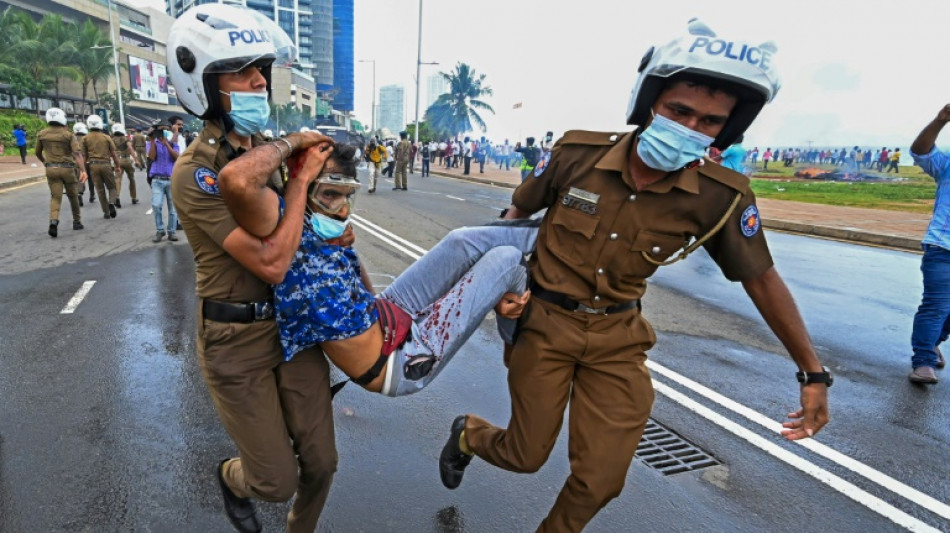
Sri Lanka imposes curfew in capital after 20 injured in clashes / Photo: © AFP

 Khan Welcomes Milburn’s Youth Employment Reforms Amid High NEET Rates

 Shinde Clarifies Torn Photo Controversy Amid Sonia Gandhi Book Protest
 BMW i3 vs Mercedes C-Class Electric vs Hyundai Ioniq 6: The Ultimate Premium EV Showdown

 BING X: 22,624.66 SNC have disappeared at BingX – how safe are tokens on BingX? Will BingX’s MiCAR licence be suspended?

 Urban Company Raises Rs 2,500 Crore via QIP to Expand InstaHelp
Sri Lankan police imposed a curfew on Monday after clashes between rival political camps, as anger builds over the island’s worst economic crisis since independence.
Months of blackouts and dire shortages of food, fuel and medicines have caused widespread suffering across the South Asian island and weeks of overwhelmingly peaceful anti-government protests.
At least 20 people were injured in the violence in central Colombo, according to officials.
Rajapaksa loyalists armed with sticks and clubs attacked unarmed protesters who have been camping outside President Gotabaya Rajapaksa's office since April 9, AFP reporters said.
Police fired tear gas and water cannon on the government supporters who breached police lines to smash tents and other structures set up by anti-government protesters.
Prime Minister Mahinda Rajapaksa, the president's brother, urged "our general public to exercise restraint & remember that violence only begets violence.
"The economic crisis we're in needs an economic solution which this administration is committed to resolving," he tweeted.
On Friday, the government imposed a state of emergency granting the military sweeping powers to arrest and detain people after trade unions brought the country to a virtual standstill hoping to pressure the Rajapaksas to step down.
The defence ministry said in a statement on Sunday that anti-government demonstrators were behaving in a "provocative and threatening manner" and disrupting essential services.
Unions said they would stage daily protests from Monday to pressure the government to revoke the emergency.
Union leader Ravi Kumudesh said they will mobilise both state and private sector workers to storm the national parliament when it opens its next session on May 17.
"What we want is for the president and his family to go," Kumudesh said in a statement.
President Rajapaksa has not been seen in public since tens of thousands attempted to storm his private residence in Colombo on March 31.
Official sources say the president may ask his brother Mahinda to stand down in an effort to clear the way for a unity government to navigate Sri Lanka through the crisis.
But the country's largest opposition party has already said it will not join any government helmed by a member of the Rajapaksa clan.
Sri Lanka's crisis began after the coronavirus pandemic hammered vital income from tourism and remittances.
This left it short of foreign currency needed to pay off its debt, forcing the government to ban the imports of many goods.
This in turn has led to severe shortages, runaway inflation and lengthy power blackouts.
In April, the country announced it was defaulting on its $51 billion foreign debt.
C.Meier--BTB
