Fuel scarcities, price hike deepen Nigerian frustrations / Photo: © AFP

 US judge weighing Trump's White House ban on media outlets
 At UN, OpenAI's Altman calls 'for extreme care' in AI
 Hamilton gives thumbs up to Gulf GPs despite Iran conflict
 Leclerc admits going 'too far' in Hamilton shunt in Italy

 Row engulfs Dolly Parton's estate as manager accuses nephew of making threats
 Mandela Digital Extends Early Access Programme to 11 February 2027 Following Strong Response

 US seeks 11th Presidents Cup win in a row over global foes

 McDonald's to boost franchisees as inflation weighs on consumers
 Trump invites Putin to G20 summit in Miami

 Archaelogical 'breakthrough' could confirm origins of Paris

 ILO financial crisis takes centre stage in leadership race

 Stocks dip, oil soars despite Trump hailing "productive" Iran talks

 China's Xi to get rare airport welcome from Trump

 Turkey reassures investors over investment fund crisis
 Saka says England still have 'scar' from World Cup semi-final loss

 アレックス・ボディ氏とシュテファン・ハウプト教授、ルーマニアの伝説的な美術コレクションをめぐり提携に合意
 亞歷克斯·博迪與史蒂芬·豪普特教授就羅馬尼亞傳奇藝術收藏達成合作協議

 Алекс Боди и проф. д-р Стефан Хаупт договорились о сотрудничестве в рамках легендарной коллекции произведений искусства в Румынии

 French foreign minister says Palestinians 'must' hold polls

 Fresh Russian strikes on Ukraine's infrastructure kill seven
 Eriksen to return to Denmark after parting ways with Wolfsburg
 Brad Pitt says working with dog co-star was 'really moving'

 Golan will remain Syrian, vows President al-Sharaa at UN

 Blueberry Strengthens MENA Presence with CMA Category 5 License and Dubai Office Launch
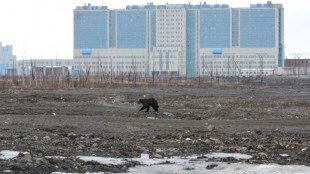 Russia probes bear attacks, as official says town under 'siege'

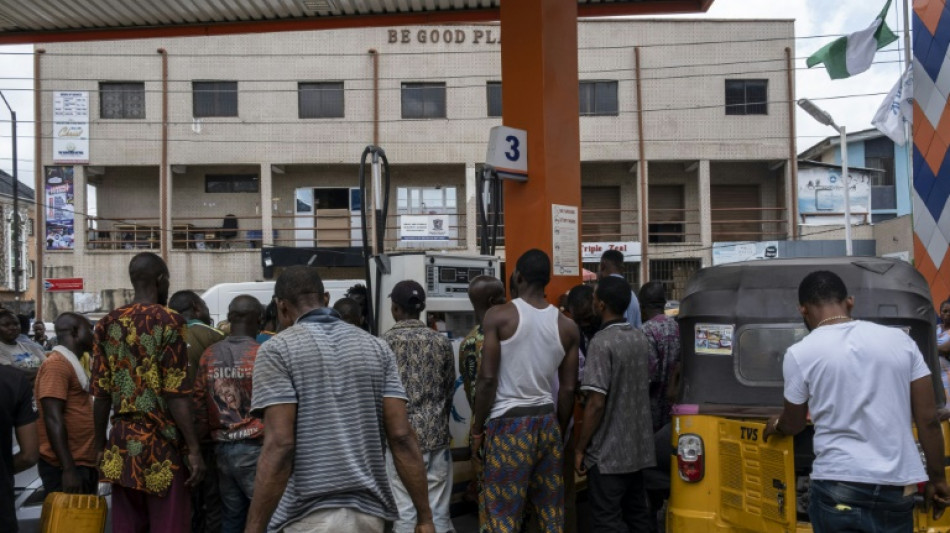
After sleeping overnight in a line of cars waiting for fuel, Nigerian taxi driver Oluwashina Ilesanmi had to calculate how much a sudden petrol price increase cut into his earnings.
For the former Lagos accountant, the hike in gasoline costs of at least 40 percent meant the sums no longer added up: his profits will all but disappear.
Already desperate with inflation, soaring food costs and a battered naira currency, Nigerians grappled on Wednesday with widespread fuel scarcities and a decision by the state oil company to increase pump prices.
For many, it was the latest measure to eat into their budgets as President Bola Ahmed Tinubu's government introduces reforms aimed at reviving the economy of Africa's most populous nation.
"This increment is unbearable," Ilesanmi said. "We already have inflation and things are not affordable."
The Nigerian National Petroleum Company (NNPC) on Tuesday increased prices at the pump from around 610 naira per litre ($0.38) to 855 per litre or more.
Private suppliers already sold fuel at higher prices than the NNPC. Some were selling at 1,200 naira per litre on Wednesday.
The price increase came a day after NNPC acknowledged it was struggling to maintain fuel supplies because of financial difficulties.
In Lagos, Abuja and the northern city of Kano on Wednesday, some private petrol stations were closed while huge lines of cars waited overnight outside NNPC fuel stations.
Kano trader Ibrahim Musa joined a queue for petrol at 5:00 am Tuesday. Hours later, the hike was announced while he waited, meaning it cost him 75,000 naira to fill his tank instead of 47,000.
"The 28,000-naira difference is huge. It can pay for parts of school expenses," he said.
- 'Renewed Hope' -
Nigeria is a major oil producer but relies on petrol imports because it has little refining capacity and often sees sporadic fuel shortages.
Government advisor Bayo Onanuga defended the decision to raise fuel prices to help the NNPC, which he said was struggling to make its contribution to federal accounts.
He said on X that the long-awaited beginning of petrol production for the local market at the Dangote refinery, Africa's largest, would bring relief to the economy.
"There are no easy choices," Onanuga said. "Something must be done to make NNPC survive, keep the engines of government running and petrol flowing."
Ayotunde Abiodun, an analyst at SBM Intelligence risk consultancy, said the NNPC had little option due to its finances despite the fallout for transport costs and inflation.
The government needed to revitalise its refineries to ensure better economic stability, he said.
"The timing of the price is particularly contentious, but it is justifiable given the fiscal urgency."
Since coming to office a year and a half ago, Tinubu has promised an agenda he named "Renewed Hope", implementing reforms officials say in the long run will stabilise the economy and attract investment.
He ended a fuel subsidy that cost the government billions of dollars a year to keep petrol prices artificially low and also liberalised the naira.
Officials have repeatedly urged Nigerians to be patient for the reforms to have an effect, but inflation reached a three-decade high of 34 percent in June.
While consumer prices slowed slightly in July, food inflation was still a stubborn 39.5 percent.
- 'Betrayal' -
In July, the government more than doubled the minimum wage for public sector workers to 70,000 naira a month, in one of several measures introduced to help offset the cost of living.
But already on Wednesday, transport and food prices were seeing the impact of the new fuel increase.
One Lagos trader said her prices of spaghetti, rice and noodles were up already in anticipation of higher transport costs because of the hike.
Passengers said a trip in one of the iconic yellow Lagos "danfo" minibuses that used to cost 200 naira was already double the price at 400 naira on Tuesday.
Empty fuel tanks forced some employees to stay at home while others said they could not get to work because bus routes were not fully operating.
Joe Ajaero, leader of the main Nigeria Labour Congress union, slammed the fuel price hike as a "betrayal" and called for its reversal.
But a bid last month to organise nationwide anti-government protests, dubbed #Endbadgovernance, failed to draw a massive turnout before the rallies were dispersed by security forces.
For Lagos bank employee Kingsley, there was no choice but to keep on waiting. He had spent 20 hours in a fuel queue, even buying a toothbrush and toothpaste from a roadside vendor while he waited.
"I'm so weak, I'm so tired. I'm restless," he said. "It's a very painful situation."
G.Schmid--VB