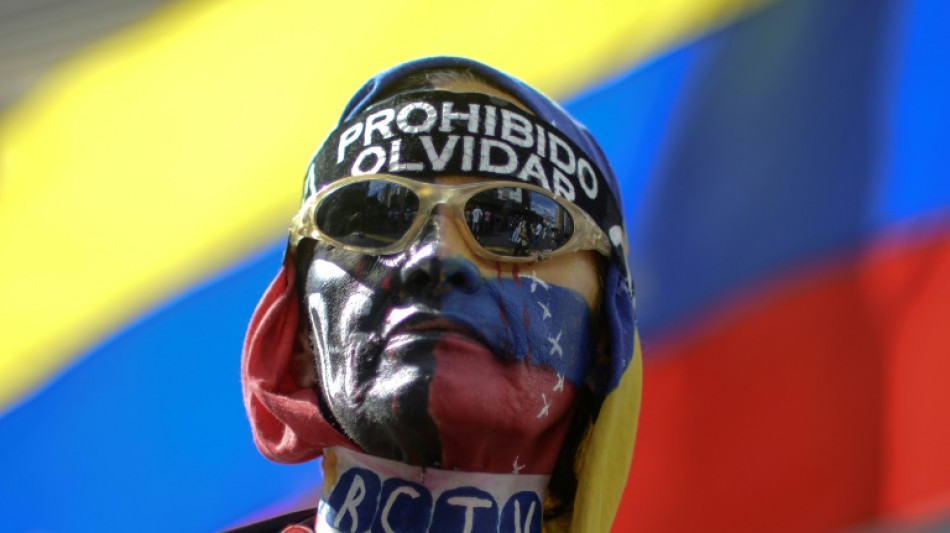
Government pressure forces Venezuelan media to self-censor / Photo: © AFP/File

 Outgoing UN chief makes climate push at New York summit
 AI risks, Iran war to take center stage at UN
 Badminton no.1 An tells dad to keep it down at Asian Games
 Runaway leader Antonelli eyeing third straight win
 Schoolgirl Yu, 13, fastest again in bid for third Asian Games gold
 Oil prices fall after Trump hails 'good' talks with Iran
 AI political ads warp reality ahead of US midterms
 Kenneth Branagh embraces action hero role -- to get in shape
 'New one' Klopp promises fresh approach as Germany reign begins
 Milne returns to New Zealand squad for India T20 series
 US-led Americas coalition backs sanctions against crime groups
 'Star Wars' fans and art lovers line up for new Lucas museum
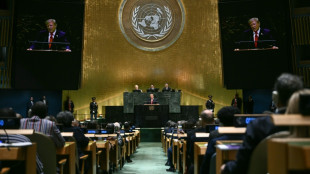 Trump renames AI 'super intelligence' as leaders jostle over dangers
 Oil prices retreat as markets welcome US-Iran talks
 US refusing to give Sudan's de facto leader visa for UN: diplomatic sources, UN
 Macron urges world to choose UN over 'law of the jungle'
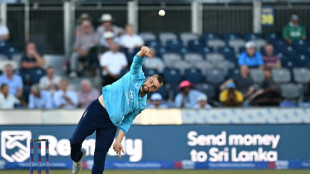 All-rounder Jacks stars as England beat Sri Lanka in 1st ODI
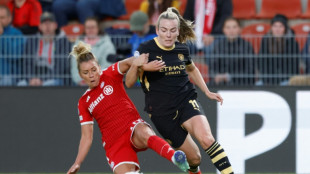 Man City peg back Bayern to start Women's Champions League
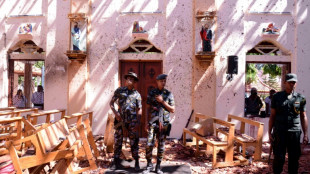
 Trump beats 'America first' drum at UN as allies tread carefully
 Snedeker backs Spaun for Ryder Cup after Presidents snub

 French prosecutors probe secret filming of women with smart glasses
 Trump renames AI "super intelligence," rejects international oversight
 Trump rejects international regulation of AI

 How is the EU approaching record fuel prices?
 Sri Lanka's Colombage strikes on debut as England dismissed for 265 in first ODI
Football fans have become familiar with final calls being made by "VAR" -- video assistant referees -- but at one of Venezuela's biggest radio groups, it also controls what news gets aired.
Instead of referees locked away in video-replay bunkers, Union Radio's "VAR" is a simple WhatsApp group in which top brass discuss potential subjects, stories and interviews for each station under the company's media umbrella, sources tell AFP.
Union Radio boasts dozens of stations on AM and FM and was traditionally known for its strong criticism of the populist socialist government of Nicolas Maduro and before him Hugo Chavez.
But under pressure from authorities increasingly intolerant of criticism, Union Radio has been forced to police its own content.
This form of self-censorship has been branded "VAR" by its proponents, a joke referencing the video assistant referees who often overturn major football decisions.
"A structured censorship mechanism has been put in place," said Leon Hernandez, a university professor and coordinator at the Inter American Press Society (SIP), which ranks Venezuela as the South American country with the least press freedoms.
According to Hernandez, under Venezuela's restricted media ecosystem, which Reporters Without Borders has called a "communication hegemony," major media outlets like Union Radio are forced to take protective measures like creating an internal "VAR".
- Veto of 'dangerous' opinions -
"Nothing can go on air without VAR approving it," a producer at Union Radio told AFP under condition of anonymity.
It has forced radio journalists to look for creative ways to deal with sensitive subjects.
While it is possible to analyze the consequences of Venezuela's economic crisis, such as the collapse of public services, political themes are far more touchy -- particularly when it comes to Maduro's legitimacy.
The president's controversial 2018 re-election was rejected by Venezuela's opposition, led by former parliamentary speaker Juan Guaido, and almost 60 countries, including the United States, as well as the European Union.
"The term usurper or any other similar expression used to describe the current government or President Maduro incites rejection of the legitimately constituted authorities," says a note pinned to a wall in radio studios that must be read to guests invited to take part in a program.
When it comes to subjects concerning Guaido, none of them are ever authorized by the "VAR".
Some staff even claim that certain political and economic analysts, actors and singers had been vetoed by the radio group to avoid potentially "dangerous" comments.
"In effect there is a process of evaluating guidelines, themes and guests," a Union Radio executive told AFP under condition of anonymity, highlighting the challenges posed by a 2004 media law.
"It forces you to be the one that self-regulates to avoid any potential punishment under a law with a broad spectrum of sanctions" ranging from fines to the revocation of transmission licenses.
The regulatory body regularly sends out "reminders" to media as a type of warning not to repeat certain content, another anonymous industry insider said.
More than 80 percent of television and radio stations are in the process of renewing their licenses, which has made them more cautious of upsetting authorities, said the source.
- 'We're paying the price' -
Their fears are not misplaced: many outlets critical of the ruling socialist party have been forced out in the 22 years of government under Chavez (1999-2013) and Maduro.
In 2007, the television station RCTV was closed after its license was not renewed.
Six years later, business people close to the ruling United Socialist Party bought Globovision, a formerly staunchly opposition-aligned television station, as well as the editorial group that owned Venezuela's most popular newspaper, Ultimas Noticias.
A year after that, the traditionally conservative, century-old El Universal newspaper was likewise bought.
In all these cases, the editorial slant changed dramatically.
"There were episodes of self-censorship and, obviously, this caused discontent," said a television journalist, again under condition of anonymity.
Following a defamation case, the ruling party-controlled judiciary seized the premises of the El Nacional daily newspaper and handed them to Diosdado Cabello, a senior figure in the United Socialist Party.
The government has since opened a university in the former newspaper offices.
Prior to that, El Nacional, which now exists only online, had already been forced to reduce its circulation due to a lack of paper, the import of which is controlled by the state.
"We paid the price for not shutting up ... We will not give in," El Nacional director Miguel Henrique Otero told AFP.
"They tried to buy us," he added. "They offered us an astronomical amount and we rejected it."
Many opposition voices are confined to the internet where access is unreliable due to frequent power cuts and government firewalls that require a foreign VPN to be accessed.
The government, for its part, boasts its own massive media apparatus, but still claims to be fighting a "brutal media war" aimed at toppling Maduro.
T.Bondarenko--BTB