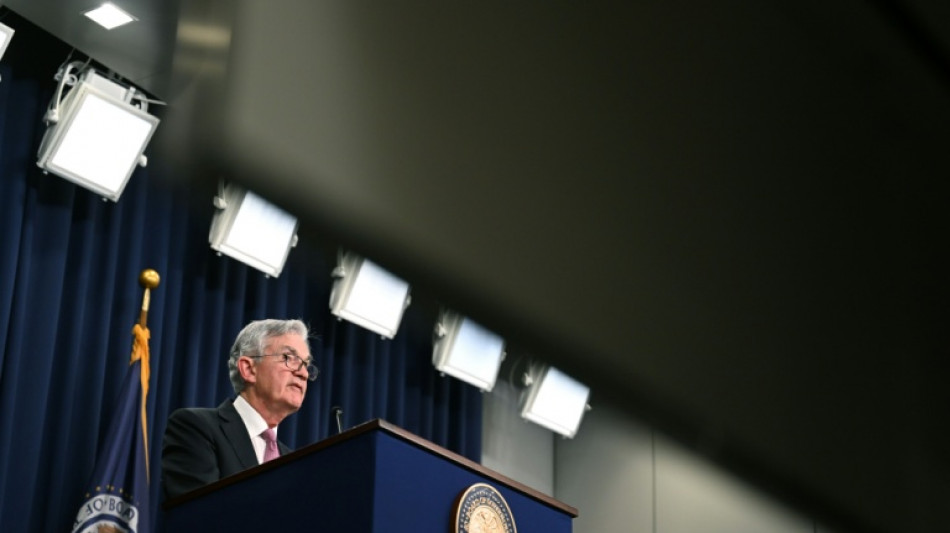
US Fed makes biggest rate increase since 2000 to fight inflation / Photo: © AFP

 Khan Welcomes Milburn’s Youth Employment Reforms Amid High NEET Rates

 Shinde Clarifies Torn Photo Controversy Amid Sonia Gandhi Book Protest

 BMW i3 vs Mercedes C-Class Electric vs Hyundai Ioniq 6: The Ultimate Premium EV Showdown

 BING X: 22,624.66 SNC have disappeared at BingX – how safe are tokens on BingX? Will BingX’s MiCAR licence be suspended?

 Urban Company Raises Rs 2,500 Crore via QIP to Expand InstaHelp

The Federal Reserve on Wednesday made its biggest rate hike since 2000 with a half percentage point increase meant to crush soaring inflation in the United States.
After a quarter-point hike in March, the US central bank's policy-setting Federal Open Market Committee (FOMC) pushed the rate above 0.75 percent as it works to cool the economy, while noting more increases "will be appropriate."
That will raise the costs of all types of borrowing, from mortgages to credit cards to car loans, cooling demand and business activity.
Inflation has become an overriding concern after the world's largest economy saw annual consumer prices jump 8.5 percent over the 12 months to March -- the biggest jump since December 1981.
Policymakers continue to believe inflation will gradually return to the Fed's two-percent target as it raises borrowing costs, but in a statement following the conclusion of its two-day meeting, the FOMC said it will be "highly attentive to inflation risks."
The Fed's goal is to engineer a "soft landing" in which it reins in inflation while avoiding a contraction in economic activity.
But with China's pandemic lockdowns worsening global supply snarls and the war in Ukraine pushing commodity prices higher, analysts fear factors beyond the central bank's control could undermine that goal, and perhaps plunge the US economy into a recession.
The committee noted the "highly uncertain" impact of Russia's invasion of Ukraine and Western sanctions on Moscow, which are "creating additional upward pressure on inflation and are likely to weigh on economic activity."
In addition, Covid lockdowns in China "are likely to exacerbate supply chain disruptions," the statement said.
- Offloading bonds -
Though it contracted in the first quarter, Fed officials have said they view the economy as healthy enough to withstand higher rates, and the FOMC statement noted robust job gains and strong household and business spending.
However, central bankers cannot engineer a solution for the worker shortages that have challenged businesses and raised fears of a wage-price spiral, when employees demand higher salaries and fuel price increases.
On Wednesday, payroll services firm ADP reported private employers added a weaker-than-expected 247,000 workers in April, a sign that companies are struggling to find available labor, while government data released Tuesday showed there are nearly two openings for every job seeker.
The FOMC also said it would begin reducing its massive bond holdings starting June 1, beginning at the pace of $47.5 billion a month, and then doubling after three months.
The decision was widely expected, and many economists believe the FOMC will again hike rates by a half-point in June, though Ian Shepherdson of Pantheon Economics said, "it's not a done deal," and it's even more difficult to say what might happen later in the year.
"We think all bets are off, given the likelihood of a steep, sustained drop in inflation, a clear softening in manufacturing, and a meltdown in housing market activity," he wrote in an analysis of the meeting.
K.Brown--BTB
