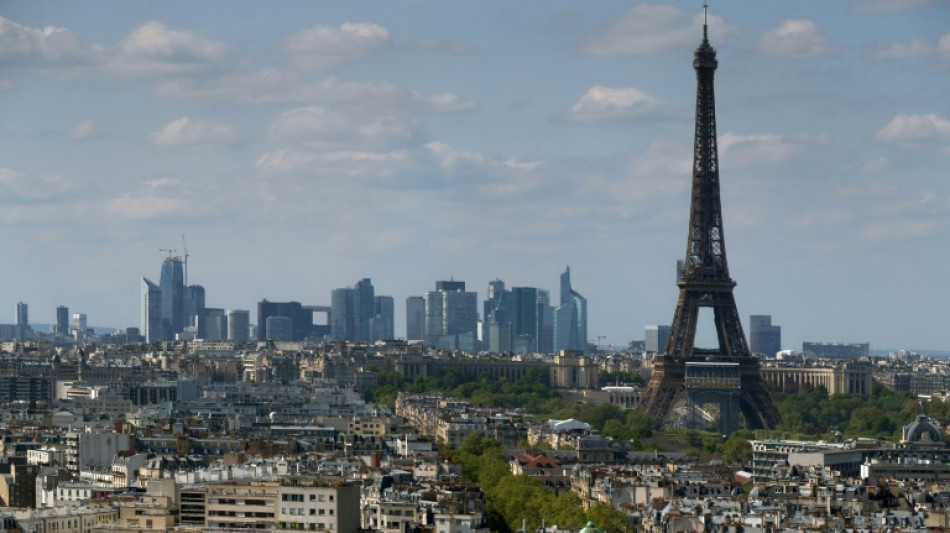
French growth crashes to zero in first quarter / Photo: © AFP/File

 'New one' Klopp promises fresh approach as Germany reign begins
 Milne returns to New Zealand squad for India T20 series

 US-led Americas coalition backs sanctions against crime groups

 'Star Wars' fans and art lovers line up for new Lucas museum

 Trump renames AI 'super intelligence' as leaders jostle over dangers

 Oil prices retreat as markets welcome US-Iran talks
 US refusing to give Sudan's de facto leader visa for UN: diplomatic sources, UN
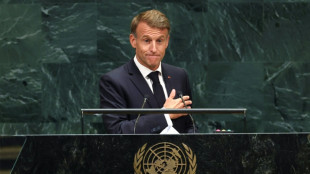 Macron urges world to choose UN over 'law of the jungle'
 All-rounder Jacks stars as England beat Sri Lanka in 1st ODI

 Man City peg back Bayern to start Women's Champions League

 Trump beats 'America first' drum at UN as allies tread carefully

 Snedeker backs Spaun for Ryder Cup after Presidents snub

 French prosecutors probe secret filming of women with smart glasses

 Trump renames AI "super intelligence," rejects international oversight
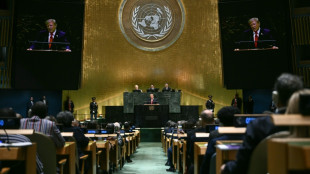 Trump rejects international regulation of AI

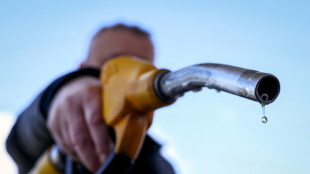 How is the EU approaching record fuel prices?

 Sri Lanka's Colombage strikes on debut as England dismissed for 265 in first ODI
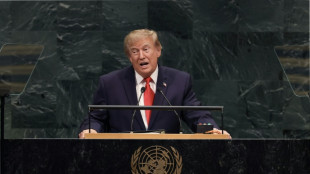
 Hurricane Polo strengthens to top category 5 off Mexico

 11 hurt as teen opens fire outside school in western Turkey

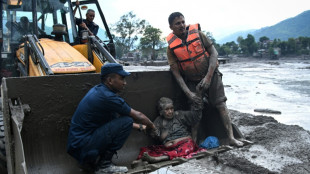 UN chief says 'Big Oil' treats atmosphere as open sewer

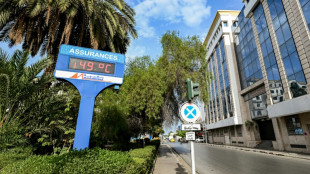 Tunisia says 2026 summer hottest on record

 England's Rashid out of Sri Lanka ODIs with hand injury

 Houthis accuse Saudi Arabia of deadly strikes as thousands flee

 Stocks climb as oil slides, AI buzz returns

 India cricketers win in style as Afghan savours 'special' Games silver

The French economy flatlined in the first quarter as households reduced their consumption due to rising inflation and the war in Ukraine, the national statistics agency said Friday.
The zero-growth result was weaker than the INSEE agency's pre-war forecast of a 0.3 percent expansion, underlying the economic difficulties faced across Europe.
The French annual inflation rate also accelerated to 4.8 percent in April, up from 4.5 percent the month before, INSEE said in a separate statement.
"Gross domestic product is at a standstill ... it bears the mark of the two combined external shocks (Covid and the Omicron variant in January, then the war in Ukraine that strengthened inflation)," INSEE economist Julien Pouget wrote on Twitter.
The figure puts an end to France's strong economic rebound from the Covid-19 pandemic and poses a challenge to President Emmanuel Macron, who was re-elected last weekend.
Economic growth had been clocked at 0.8 percent in the last quarter of 2021 and 3.0 percent in the third.
European economies have been badly affected this year by supply problems linked first to the pandemic, then the war in Ukraine -- as well as sanctions imposed on Russia following its February 24 invasion of its neighbour.
Figures also released Friday showed that the eurozone's GDP growth slowed to 0.2 percent in the first quarter, with a Germany eking out a similar gain as it avoided a second consecutive quarterly contraction.
Italy's output fell 0.2 percent while Spain's growth slumped to 0.3 percent in January-March.
- Fuel price shock -
Fears that Moscow could cut Europe's largest economies off from its fossil fuels have again surged after it ended gas deliveries to Poland and Bulgaria this week.
Many consumers in France and its neighbours say they are cutting back on their purchasing as the cost of fuel reaches record levels.
INSEE said there had been a 1.3 percent fall in French consumer spending in the first quarter -- falling short of economists' expectations.
"The motor of the French economy has come to a halt, just when we had barely reached levels from before the health crisis," said Allianz economist Ana Boata.
The French government implemented a cut of 15 euro cents ($0.16) per litre at the pump for vehicle owners in April, which INSEE said would have an impact on the headline inflation rate.
The government has also capped electricity and gas prices this year, with total aid estimated at around 25 billion euros ($26 billion).
Paris is expected to pass further support for consumers in the next few months with parliamentary elections looming in June.
Over the full year, the Bank of France still predicts expansion of 2.8 percent, around the same level as the International Monetary Fund.
Boata highlighted that France boasts "factors of resilience" like a strong construction sector, still-growing business investment borne up by spending on digitalisation, rising industrial output and reinforced foreign trade.
The country also produces most of its electricity from nuclear power, meaning it is more insulated than its European neighbours against the huge increases in the price of fossil fuels in recent months.
Eyes across the continent will be turned on the European Central Bank for possible inflation-fighting moves later this year.
Although its chief Christine Lagarde has said that raising interest rates would not bring energy prices down, some observers predict the Frankfurt institution will be forced to act in the coming months.
M.Odermatt--BTB