
Losing Russian energy would weigh on Europe's economy: IMF official / Photo: © AFP

 Trent Perry’s Late Heroics Lift No. 7 UCLA Past Cal State Fullerton

 2027 Hyundai Elantra Review: Brutalist Design and Expanded Dimensions

 Malta Maritime Forum Study Reveals €1 Billion Economic Contribution Amid Growth Concerns

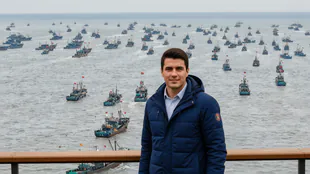 China Condemns Chile-Belgium Joint Bid for High Seas Treaty Headquarters
 Dún Laoghaire-Rathdown €335m Budget Faces Mixed Reaction Over Housing and Cost of Living

 Dubai Police Expand Luxury Patrol Fleet with 525-hp Defender

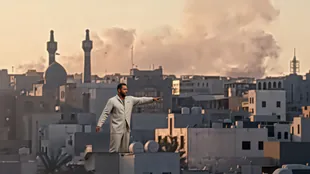 Iran Strikes US Sites in Kuwait Following US Airstrikes on Qeshm Island
Europe can get by without Russian gas for six months, but beyond that, the economic impact would be severe, a senior IMF official told AFP.
Alfred Kammer, head of the IMF's European Department, urged countries in the region to take a series of steps to ease the blow, including reducing consumption to build up inventory.
The region relies on Russia for the vast majority of its energy needs, especially natural gas, and IMF economists looked at the economic cost of losing Moscow's supply.
"Over the first six months, Europe can deal with such a shut off (by) having alternative supplies (and) using existing storage," he said in an interview on the sidelines of the spring meetings of the IMF and World Bank.
"However, if that gas shut off were to last into the winter, and over a longer period, then that would have significant effects" on the European economy, he said.
Western countries have considered putting an embargo on Russian energy in retaliation for its invasion of Ukraine, while Moscow could also shut off exports to hit back at the damaging sanctions already imposed on the government.
The International Monetary Fund projects that a total loss of Russian gas and oil supplies could cost the European Union three percent of GDP, depending on the severity of the winter.
He called for steps to prepare for the possibility.
"There is no single option, which has a large impact, but lots of smaller measures will have a larger impact," he said, including by finding alternative suppliers, which some countries already have begun to do.
- No recession -
Consumers also have an important role to play and governments can raise awareness among their population through "public campaigns to reduce energy consumption."
"The consumer can act now," he said, and reducing consumption means more fuel can be stored in case supplies are interrupted.
Although the war in Ukraine has slowed growth sharply, Kammer said it "will not derail the recovery" and he does not expect a Europe-wide recession.
The major eurozone economies, with the exception of Spain, will be "weak in 2022" and will see a quarter or two of near-zero growth or even a technical recession with two negative quarters.
But the IMF expects these economies to recover in the second half of this year.
- 'A boon' -
The Russian attack on its neighbor also has caused a flood of about five million refugees, creating a challenge for European countries which face strains on their budgets as they deal with the influx.
Poland, which which has taken in the most Ukrainians, is particularly affected.
What happens to those people, mostly women and children, after the war remains a question.
"Some of these refugees will stay in Europe, I'm sure about that," said Kammer, who noted that could be "a boon" for countries faced with a aging populations and a lack of workers.
"But it could be a bad for Ukraine if too many of the refugees are going to stay."
W.Lapointe--BTB
