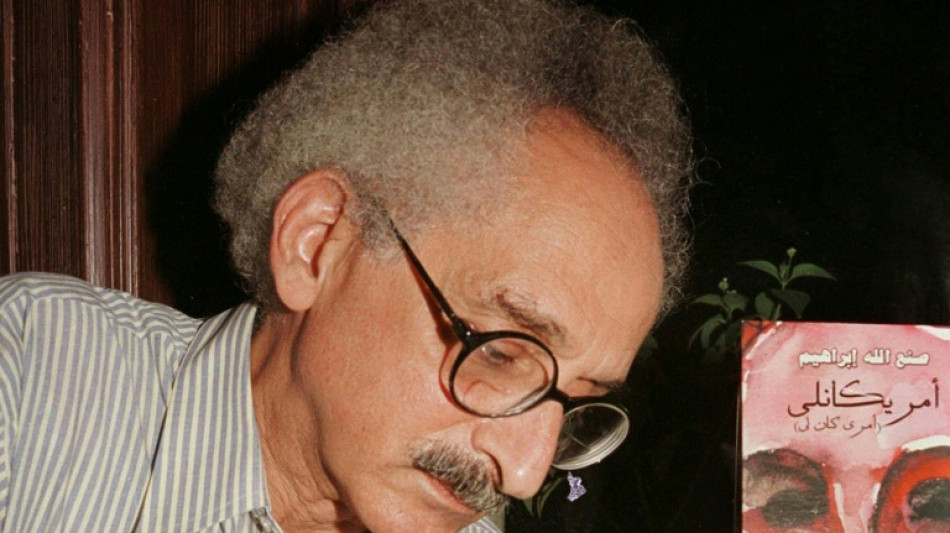
Renowned Egyptian novelist Sonallah Ibrahim dies at 88 / Photo: © AFP

 'New one' Klopp promises fresh approach as Germany reign begins

 Milne returns to New Zealand squad for India T20 series

 US-led Americas coalition backs sanctions against crime groups

 'Star Wars' fans and art lovers line up for new Lucas museum

 Trump renames AI 'super intelligence' as leaders jostle over dangers

 Oil prices retreat as markets welcome US-Iran talks

 US refusing to give Sudan's de facto leader visa for UN: diplomatic sources, UN

 Macron urges world to choose UN over 'law of the jungle'

 All-rounder Jacks stars as England beat Sri Lanka in 1st ODI
 Man City peg back Bayern to start Women's Champions League
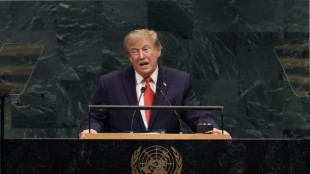 Trump beats 'America first' drum at UN as allies tread carefully

 Snedeker backs Spaun for Ryder Cup after Presidents snub

 French prosecutors probe secret filming of women with smart glasses

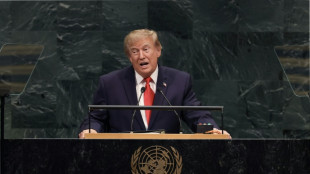
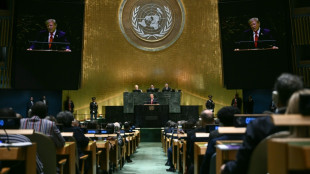 Trump renames AI "super intelligence," rejects international oversight

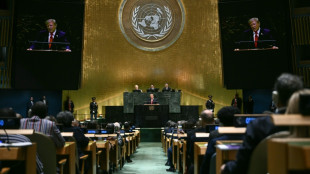 Trump rejects international regulation of AI

 How is the EU approaching record fuel prices?

 Sri Lanka's Colombage strikes on debut as England dismissed for 265 in first ODI
 Hurricane Polo strengthens to top category 5 off Mexico

 11 hurt as teen opens fire outside school in western Turkey

 UN chief says 'Big Oil' treats atmosphere as open sewer

 Tunisia says 2026 summer hottest on record

 England's Rashid out of Sri Lanka ODIs with hand injury
 Houthis accuse Saudi Arabia of deadly strikes as thousands flee

 Stocks climb as oil slides, AI buzz returns

 India cricketers win in style as Afghan savours 'special' Games silver

Egyptian novelist Sonallah Ibrahim, famed for his critiques of political repression, neoliberalism and Western hegemony, has died at the age of 88, the culture ministry announced on Wednesday.
Ibrahim "passed away today, leaving behind an immortal literary and humanitarian legacy," Culture Minister Ahmed Fouad Hanno said in a tribute, calling the writer a "pillar of modern Arabic literature".
Born in Cairo in 1937, Ibrahim was famed around the Arab world as a chronicler of social injustice, known for his sparse, documentary-style prose and his fierce independence.
His writings -- which blurred the line between the personal and the political -- captured the struggles of the Arab world in the postcolonial era, particularly those of his native Egypt.
Arguably his most famous novel, "Zaat" (1992), tells the story of Egypt's modern history -- from the overthrow of the monarchy in 1952 to the neoliberalism of the 1990s under president Hosni Mubarak -- through the eyes of an ordinary, middle-class woman.
It was adapted into a prime-time television series in 2013, bringing Ibrahim's scathing portrayal of power to a new generation of Egyptians in the aftermath of the Arab Spring uprising that ousted Mubarak.
A dissident through and through, Ibrahim was first jailed for his leftist politics in 1959, under then president Gamal Abdel Nasser.
His five years in prison would form the basis for his debut 1966 novel, "That Smell", which was initially banned.
Ibrahim's renown later saw many of his works translated into English and French.
In 2003, he refused to accept a prestigious literary prize from the Mubarak government charging that it "oppresses our people, protects corruption and allows the Israeli ambassador to remain while Israel kills and rapes".
The last was a reference to alleged Israeli abuses in the occupied territories during the second Palestinian intifada or uprising.
Among Ibrahim's most celebrated works are "The Committee" (1981), a Kafkaesque allegory of bureaucracy and surveillance, and "Stealth" (2007), a semi-autobiographical account of his childhood during World War II.
Generations of Arab writers found inspiration in his minimalist style, heavy with irony and rooted in everyday life.
A.Ruegg--VB