The struggle to save Cuban sugar from bitter end / Photo: ©

 Trump renames AI "super intelligence," rejects international oversight

 Trump rejects international regulation of AI

 How is the EU approaching record fuel prices?

 Sri Lanka's Colombage strikes on debut as England dismissed for 265 in first ODI
 Hurricane Polo strengthens to top category 5 off Mexico

 11 hurt as teen opens fire outside school in western Turkey

 UN chief says 'Big Oil' treats atmosphere as open sewer

 Tunisia says 2026 summer hottest on record

 England's Rashid out of Sri Lanka ODIs with hand injury

 Houthis accuse Saudi Arabia of deadly strikes as thousands flee

 Stocks climb as oil slides, AI buzz returns

 India cricketers win in style as Afghan savours 'special' Games silver

 La Liga president hits out at Real Madrid refereeing 'conspiracy' claims

 MEXC Launches “Real Stocks, Real Friends” with Rewards for Bringing Friends to Wall Street

 Mbappe continues media push for Ballon d'Or recognition

 Stocks rise on AI buzz, oil prices cool

 India narrowly survive huge scare against minnows Japan

 Missing F-35 fighter parts 'not sensitive', says Australia minister

 Cambodia showcases scams crackdown with global conference

 Afghan cyclist who disguised herself as man wins Asian Games silver

 Typhoon Dujuan leaves four dead in Japan, 45,000 houses without power

 G7 leaders condemn Houthi strikes on Saudi Arabia

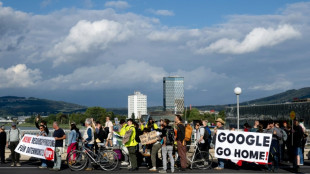 Google data centre sparks protests in Austria

 Shin Ohashi: Junk food-loving teen and Japan's next big swimming hope

 Stocks rise on AI buzz, drop in oil prices

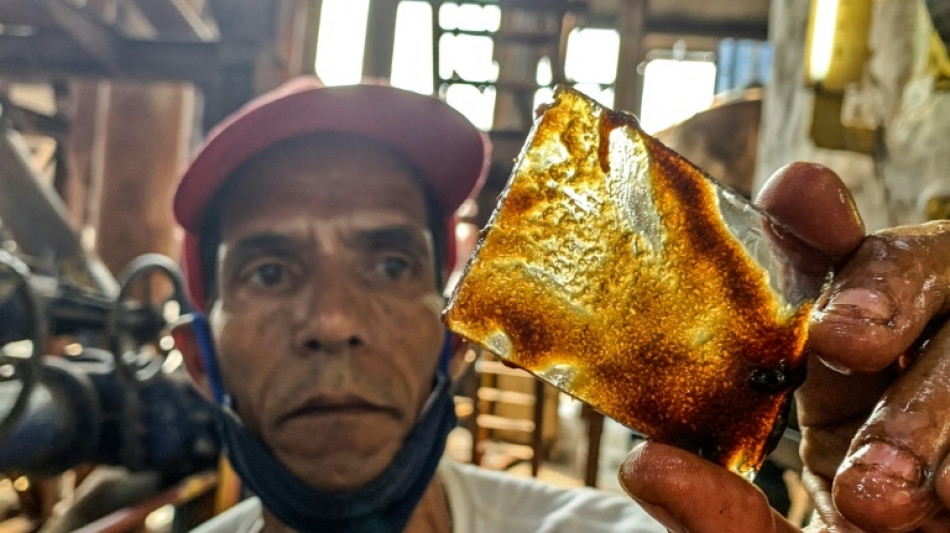
A whistle reverberates through a sugar factory in central Cuba to signal the resumption of milling at midday after an hours-long halt when the raw cane ran out.
It is cane harvest time in Cuba -- once the world's top sugar exporter but now reliant on imports.
A critical shortage of harvesters and trucks to deliver the cane to factories has hamstrung production even as the government scrambles to revive the once-vibrant industry.
Cuba's 2020-21 harvest yielded 800,000 tons of the sweet stuff, according to official figures.
This was just 10 percent of peak production some three decades ago and the worst outcome in 130 years for an industry that was once Cuba's economic motor and a huge source of national pride.
"This is a war without end," Lazaro Manuel Torres, boss of the Antonio Sanchez mill in Cuba's central Cienfuegos province, told AFP.
"From the moment you wake up, you run into a mountain" of problems, said Torres, watching with obvious relief as a column of white smoke billowed from the chimney after the restart.
- Just 56 mills left -
Until 1989, Cuba was the world's biggest sugar exporter.
The United States was its major client until 1960 -- two years before Washington imposed crippling sanctions on the communist island nation.
The Soviet Union, a political ally, then became an important buyer and was given preferential rates.
Sugar was at the heart of Cuba's plans for a prosperous future, with Fidel Castro leading a drive in the 1970s -- complete with propaganda photos of him wielding a machete in the sugar plantations -- to push the country's output to 10 million tons per year.
The goal was never achieved.
The fall of the communist bloc in 1991 marked the beginning of the end for Cuba's sugar industry -- exacerbated by sanctions, a steep drop in prices and a lack of investment that saw 100 mills disappear.
Just 56 are left today.
Cuba now needs to import sugar to meet local demand and its export commitments.
"We have been in decline since 2017," Noel Casanas, vice director of state-owned sugar producer AZCUBA, told AFP.
"If the situation continues, it is true that (the industry) will disappear."
Sugar is still an important income generator for 50 of Cuba's 169 municipalities, or some 1.2 million of the country's 11.2 million inhabitants, he said.
- 'Practically a corpse' -
In December, the government approved dozens of measures in a bid to resuscitate sugar.
It doubled the price paid to cane producers, authorized the free hiring and firing of labor, and gave factories more decision-making autonomy in a country where just about everything is state-run.
"I don't think these measures can revive an industry that is already practically a corpse," said economist Emilio Morales of the Miami-based Havana Consulting Group.
Casanas conceded production faces "limitations of all kinds" -- critically a lack of foreign investment due to the strengthening of US sanctions since the presidency of Donald Trump.
Since the cane harvest opened in December, Antonio Sanchez has not managed to exceed 65 percent of milling capacity, set at 20,000 tons for this year's harvest.
The problem has not been a lack of fuel or raw product, this time, but a shortage of harvesters and delivery trucks.
There are not enough spare parts, even tires, for vehicles in Cuba and producers such as Torres cannot afford to buy the limited components that are available.
"If you don't have harvesters, if you do not have trucks, you cannot mill," he lamented.
Sugar producers in Cuba are also hard hit by a lack of fertilizers and pesticides.
For now, the government's measures have managed to slow an exodus of sugar workers, industry bosses told AFP.
"We cannot complain, we are doing quite well -- up to 700 pesos (about $29) a day," said farmer Livan Hernandez.
The average monthly Cuban salary is about $162.
Casanas said what is needed is foreign investment and expanding the industry into highly lucrative sugar derivatives such as bioethanol.
Sugar "is no longer the locomotive (of the Cuban economy) nor will it be," he said.
But "it continues to be a strategic sector... that must be developed."
E.Schubert--BTB