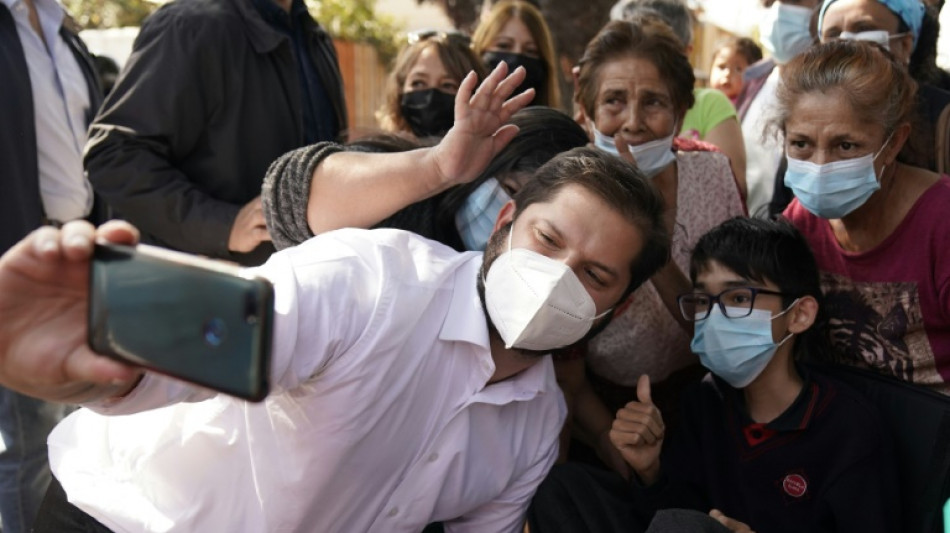
Chile's Boric unveils economic recovery plan / Photo: ©

 Saudi PIF Retains Top Sovereign Wealth Fund Brand Title for Third Year

 Phoenix Weekend Guide: Sangria Socials, Pie Markets, and New Brunch Spots

 Trent Perry’s Late Heroics Lift No. 7 UCLA Past Cal State Fullerton

 2027 Hyundai Elantra Review: Brutalist Design and Expanded Dimensions

 Malta Maritime Forum Study Reveals €1 Billion Economic Contribution Amid Growth Concerns

 China Condemns Chile-Belgium Joint Bid for High Seas Treaty Headquarters

Chile's new leftist president, Gabriel Boric, whose election in December was met with market skepticism, announced an economic recovery plan worth $3.7 billion Thursday that envisages the creation of half a million jobs.
The millennial leader also promised a freeze on public transport ticket prices whose increase sparked protests in 2019 against economic hardship and deep-rooted social inequality.
With the Chilean economy showing signs of a slowdown after rebounding in 2021 on the back of the worst phase of the pandemic, Boric announced a plan he called "Active Chile."
"We know that this recovery plan is just a start," he said in the capital Santiago.
"Big changes are not achieved overnight, and to be sustainable over time, they must be responsibly implemented," the president added.
Some $1.3 billion will be dispersed directly to families in need, $1.4 billion will go towards job creation, and another billion to propping up small and medium enterprises, he announced.
Chile's unemployment rate is 7.5 percent.
The plan's freeze on public transport prices applies to sales in the year 2022 and comes despite global fuel price rises.
Boric had campaigned on a promise to install a "welfare state" in Chile, one of the world's most socially unequal nations.
He pledged after his election to "expand social rights" but to do so with "fiscal responsibility."
"We will do it protecting our macro-economy," he said at the time.
The Santiago stock exchange closed 6.18 percent lower on Boric's win over neoliberal rival Jose Antonio Kast, and the Chilean peso plummeted to a historic low to the US dollar.
Chile's GDP grew 11.7 percent in 2021, spurred by government grants amounting to some $3 billion to stimulate a pandemic-ravaged economy and individual withdrawals from private pension funds totaling $50 billion.
The spending boost triggered inflation, which is expected to reach 10 percent by mid-2022.
Last week, the Central Bank reduced growth projections for 2022.
F.Pavlenko--BTB

