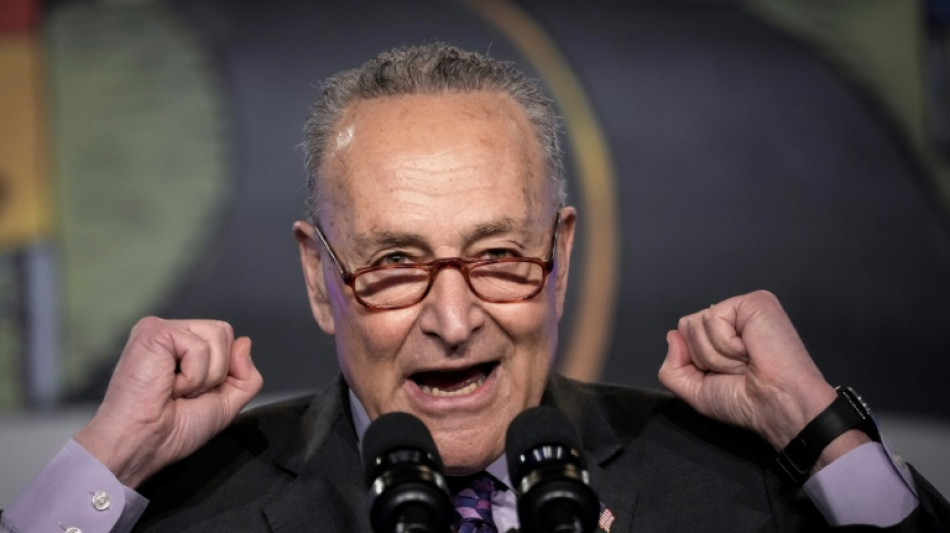
US ends normal trade ties with Russia over Ukraine invasion / Photo: ©

 Saudi PIF Retains Top Sovereign Wealth Fund Brand Title for Third Year

 Phoenix Weekend Guide: Sangria Socials, Pie Markets, and New Brunch Spots

 Trent Perry’s Late Heroics Lift No. 7 UCLA Past Cal State Fullerton

 2027 Hyundai Elantra Review: Brutalist Design and Expanded Dimensions

 Malta Maritime Forum Study Reveals €1 Billion Economic Contribution Amid Growth Concerns

 China Condemns Chile-Belgium Joint Bid for High Seas Treaty Headquarters

The US Congress voted Thursday to end normal trade relations with Moscow and codify the ban on Russian oil, as the White House ratchets up pressure on President Vladimir Putin over his invasion of Ukraine.
The legislation -- which also applies to Russia's ally Belarus and enables President Joe Biden to inflict steep tariff hikes on imports -- had passed the Senate unanimously before being rubber-stamped by the House of Representatives.
Biden announced the steps in a speech last month arguing that Russia must "pay the price" for the bloodshed in its ex-Soviet neighbor, where it has denied accusations of committing atrocities.
"Putin must absolutely be held accountable for the detestable, despicable war crimes he is committing against Ukraine: the images we have seen coming out of that country... are just pure evil," said Senate Majority Leader Chuck Schumer.
"It reminds us of the worst moments in human history, caused by the evil man, Putin: hundreds of civilians murdered in cold blood."
A key principle of the World Trade Organization, the so-called most favored nation status known in the United States as permanent normal trade relations (PNTR), requires countries to guarantee one another equal tariff and regulatory treatment.
The latest trade sanction, which passed the House with support from every Democrat and just three Republicans voting no, caps several rounds of measures intended primarily to sever Moscow's economic and financial ties with the rest of the world.
They have included banning Russian oil imports -- a measure Biden already implemented by executive decree -- seizing the assets of billionaires tied to Putin, and freezing the nation's stockpile of cash.
Together, the moves have already pushed Moscow to the brink of a debt default.
The steps have also caused prices for key commodities, like gasoline and wheat, to soar, harming US consumers already facing the highest inflation in four decades.
The United States imported just under $30 billion in goods from Russia last year, including $17.5 billion in crude oil.
The legislation includes a measure to reauthorize Magnitsky Act sanctions that target human rights violations and corruption with visa bans, asset freezes and other penalties.
The United States moved Wednesday to block foreign investment in Russia and state-owned enterprises and levied further sanctions on the country's banks and senior officials.
Secretary of State Antony Blinken told NBC News that global punishments had put the Russian economy into a "deep recession."
"And what we're seeing is a likely contraction of the Russian economy by about 15 percent," he said.
"That is dramatic... We've seen an exodus from Russia of virtually every major company in the world. And Putin, in the space of a matter of weeks, has basically shut down Russia to the world."
G.Schulte--BTB

