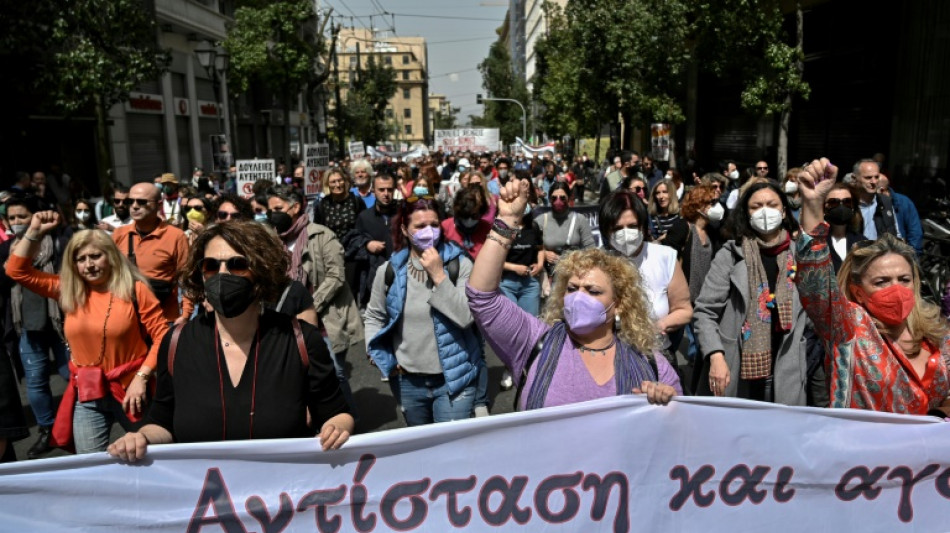
Greeks demonstrate over soaring prices / Photo: ©

 Saudi PIF Retains Top Sovereign Wealth Fund Brand Title for Third Year

 Phoenix Weekend Guide: Sangria Socials, Pie Markets, and New Brunch Spots

 Trent Perry’s Late Heroics Lift No. 7 UCLA Past Cal State Fullerton

 2027 Hyundai Elantra Review: Brutalist Design and Expanded Dimensions

 Malta Maritime Forum Study Reveals €1 Billion Economic Contribution Amid Growth Concerns

 China Condemns Chile-Belgium Joint Bid for High Seas Treaty Headquarters

Thousands of Greeks demonstrated in Athens against soaring prices Wednesday as a general strike shut down public services.
Some 10,000 marched in the capital, with more protests held in other major cities, police said.
Ferry and train services were halted, though airports were unaffected by the walkout.
"Compared to the cost of living, salaries are paltry," said one of the demonstrators, 32-year-old teacher Yannis Bitzoulis.
"Society is on its knees," he told AFP.
Countries across Europe are facing rising inflation as energy prices have jumped since Russia invaded Ukraine on February 24, with the growing cost of living also sparking strikes and protests in fellow EU nation Spain.
Greeks have been hit by rising electricity and heating bills as well as housing costs.
Prices rose 6.2 percent in January compared with a year earlier -- a record for Greece since it adopted the European Union's single currency in 2001. It bumped up to 7.2 percent in February.
"Everything is more expensive, we can no longer cope," said Evangelia, who works for a social collective and declined to give her surname.
The country's biggest civil service and private sector unions, which called the industrial action on Wednesday, are demanding a raise in the minimum wage -- currently at under 780 euros a month -- that is among the lowest in the eurozone.
The Communist-affiliated Pame union on Wednesday said that the minimum wage had been slashed by 22 percent in 2012, at the height of Greece' near-decade debt crisis.
Facing a drop in popularity ahead of 2023 elections, Prime Minister Kyriakos Mitsotakis last month announced a 1.1-billion-euro ($1.2-billion) benefits package to help poor households weather rising prices.
B.Shevchenko--BTB