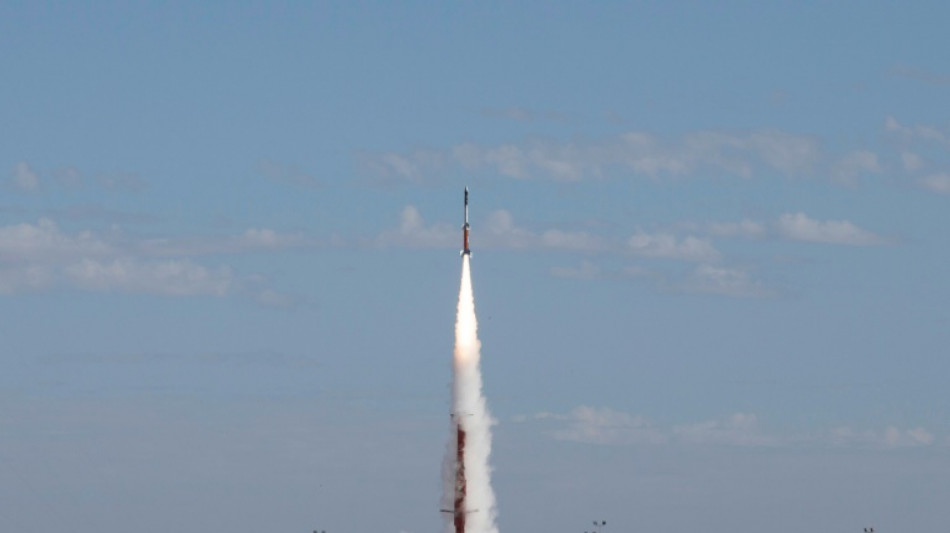
US, UK, Australia vow to cooperate on hypersonic weapons / Photo: ©

 Trump renames AI "super intelligence," rejects international oversight

 Trump rejects international regulation of AI

 How is the EU approaching record fuel prices?

 Sri Lanka's Colombage strikes on debut as England dismissed for 265 in first ODI
 Hurricane Polo strengthens to top category 5 off Mexico

 11 hurt as teen opens fire outside school in western Turkey

 UN chief says 'Big Oil' treats atmosphere as open sewer

 Tunisia says 2026 summer hottest on record

 England's Rashid out of Sri Lanka ODIs with hand injury

 Houthis accuse Saudi Arabia of deadly strikes as thousands flee

 Stocks climb as oil slides, AI buzz returns

 India cricketers win in style as Afghan savours 'special' Games silver

 La Liga president hits out at Real Madrid refereeing 'conspiracy' claims

 MEXC Launches “Real Stocks, Real Friends” with Rewards for Bringing Friends to Wall Street

 Mbappe continues media push for Ballon d'Or recognition

 Stocks rise on AI buzz, oil prices cool

 India narrowly survive huge scare against minnows Japan

 Missing F-35 fighter parts 'not sensitive', says Australia minister

 Cambodia showcases scams crackdown with global conference

 Afghan cyclist who disguised herself as man wins Asian Games silver
 Typhoon Dujuan leaves four dead in Japan, 45,000 houses without power

 G7 leaders condemn Houthi strikes on Saudi Arabia

 Google data centre sparks protests in Austria

 Shin Ohashi: Junk food-loving teen and Japan's next big swimming hope

 Stocks rise on AI buzz, drop in oil prices
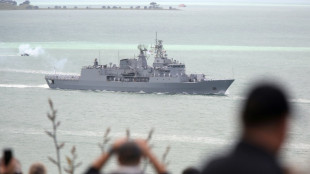
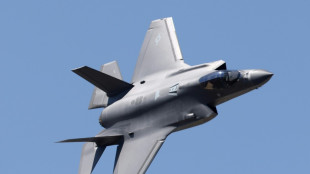
The United States, Britain and Australia said Tuesday they would begin collaborating on hypersonic missile strike and defence capacity, as rivals Russia and China advance rapidly in the cutting-edge technology.
The trio said they would work on hypersonics in an expansion of their recent AUKUS defence alliance, which is to equip Australia with nuclear-powered submarines to counter China's growing military clout.
They pledged "new trilateral cooperation on hypersonics and counter-hypersonics, and electronic warfare capabilities" in a statement by US President Joe Biden, British Prime Minister Boris Johnson and Australian Prime Minister Scott Morrison.
Hypersonic missiles can travel more than five times the speed of sound and manoeuvre in mid-flight, making them much harder to track and intercept than traditional projectiles.
They may carry conventional or nuclear warheads.
Hypersonics and related technologies were now "very much a part of what the AUKUS partnership is striving to deliver", Australia's Morrison told reporters on Wednesday.
But there were few details about what the leaders' hypersonic plan entailed.
Marcus Hellyer, defence analyst at the Australian Strategic Policy Institute, said it was hard to judge "what is actually new" in the statement.
Australia and the United States were already working together on hypersonics, he said, although the new commitment may open up new areas of cooperation with Britain.
Australia announced in December 2020 it would work with the United States on developing hypersonic weapons in a so-called SCIFIRE programme.
And Canberra committed in its 2020 defence strategy programme to invest Aus$6.2 billion-9.3 billion (US$4.7 billion-7.0 billion) in high-speed, long-range strike and missile defence, including hypersonics.
- Russia ahead -
On the same day as the latest AUKUS announcement, the US military said it had recently completed a free-flight test of an aircraft-launched hypersonic missile that maintained a speed of more than Mach 5.
But rival powers are making rapid advances.
Russia is the most advanced nation in hypersonics while China is also aggressively developing the technology, according to the US Congressional Research Service.
Last month, Moscow claimed it had twice fired its newest Kinzhal hypersonic missiles to hit targets in Ukraine.
Russia has also claimed a series of successful tests including firing a Zircon hypersonic missile from a submerged submarine.
China tested a nuclear-capable hypersonic missile that circled the Earth last year, according to media reports confirmed by the Pentagon's top general. China said it was "a routine spacecraft test".
North Korea claimed to have carried out two hypersonic missile tests in January.
The United States, Britain and Australia launched AUKUS last September, vowing to provide Australia with the technology to build a nuclear-powered, conventionally armed submarine fleet, giving it greater stealth and reach in the Pacific region.
As a result, Canberra scrapped a multibillion-dollar submarine deal with France, infuriating Paris.
The three leaders said Tuesday they were "pleased" with progress on the Australian submarine programme.
M.Odermatt--BTB