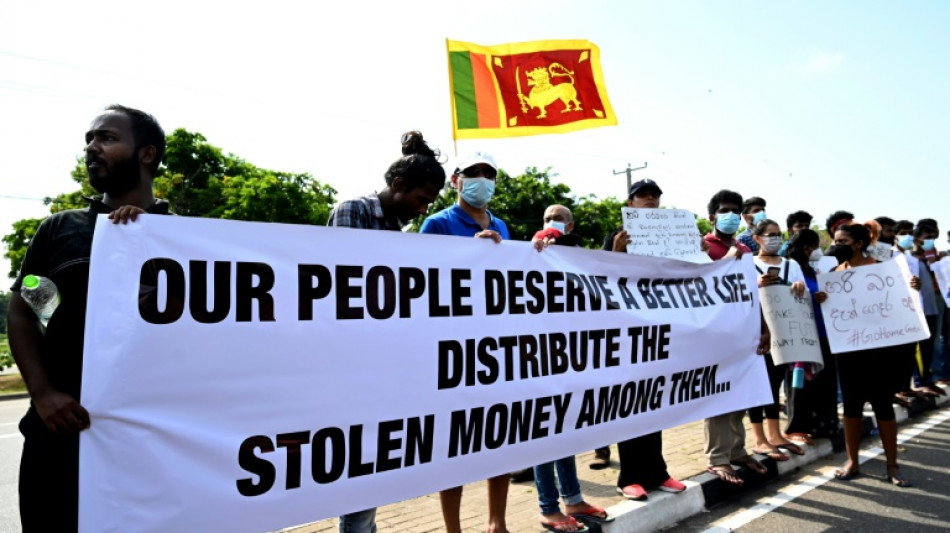
Sri Lanka leader offers to share power as protests mount / Photo: ©

 Saudi PIF Retains Top Sovereign Wealth Fund Brand Title for Third Year

 Phoenix Weekend Guide: Sangria Socials, Pie Markets, and New Brunch Spots

 Trent Perry’s Late Heroics Lift No. 7 UCLA Past Cal State Fullerton

 2027 Hyundai Elantra Review: Brutalist Design and Expanded Dimensions

 Global Scams Remain Widespread: Nearly Two in Three Adults Worldwide Report Scam Encounters, 9% Lost Money

 Shinde Clarifies Torn Photo Controversy Amid Sonia Gandhi Book Protest
Sri Lanka's president offered to share power with the opposition on Monday as protests escalated across the country demanding his resignation over worsening shortages of food, fuel and medicines.
President Gotabaya Rajapaksa's appeal to legislators came as heavily armed security forces looked to quell more demonstrations over what the government itself has acknowledged as the worst shortages of essentials since independence from Britain in 1948.
"The president invites all political parties in parliament to accept cabinet posts and join the effort to seek solutions to the national crisis," Rajapaksa's office said in a statement.
It stressed that solutions to the deepening crisis should be found "within a democratic framework", as hundreds were joining spontaneous demonstrations in cities, towns and villages.
The invitation came after 26 cabinet ministers -- every member except Rajapaksa and his elder brother Prime Minister Mahinda Rajapaksa -- submitted letters of resignation at a late-night meeting on Sunday. The country's central bank governor Ajith Cabraal joined the long list of resignations on Monday.
The move cleared the way for the country's ruling political clan to seek to shore up its position.
Trading was halted on the country's stock exchange seconds after it opened as shares fell by more than the five percent threshold needed to trigger an automatic stop.
The South Asian island nation is in the grip of unprecedented food and fuel shortages along with record inflation and crippling power cuts, with no sign of an end to the economic woes.
The government has announced it will seek a bailout from the International Monetary Fund, but talks are yet to begin.
Troops and police were placed on high alert as a 36-hour curfew ended at dawn on Monday despite intelligence reports warning of more unrest, a top security official told AFP.
- 'Go home Gota' -
"Go lunatic, Gota lunatic," crowds chanted on Monday in Kiribathgoda, referring to the president, who imposed the state of emergency a day after a crowd attempted to storm his residence.
Throughout Sunday evening, hundreds of people had staged noisy but peaceful demonstrations in towns across the island of 22 million, denouncing Rajapaksa's handling of the crisis.
"Go home Gota, go home Gota" protesters shouted in Rajagiriya, near the national parliament, while in Negombo, near the main international airport, people chanted, "Gota fail, fail, fail".
Sunday's full-day curfew prevented larger protests that had been organised through social media platforms such as Facebook, Twitter and WhatsApp, all of which were blocked by the government.
The platforms were unlocked and the partial internet censorship ended after 15 hours, as the Human Rights Commission of Sri Lanka ruled the ban was illegal.
Activists said they would hold larger demonstrations in several key towns on Monday to force the once hugely-popular Rajapaksa and his family to step down.
A junior coalition partner announced it will quit the administration this week, a move that would weaken Rajapaksa's majority in the legislature.
Many economists say Sri Lanka's crisis has been exacerbated by government mismanagement, years of accumulated borrowing and ill-advised tax cuts.
F.Pavlenko--BTB

