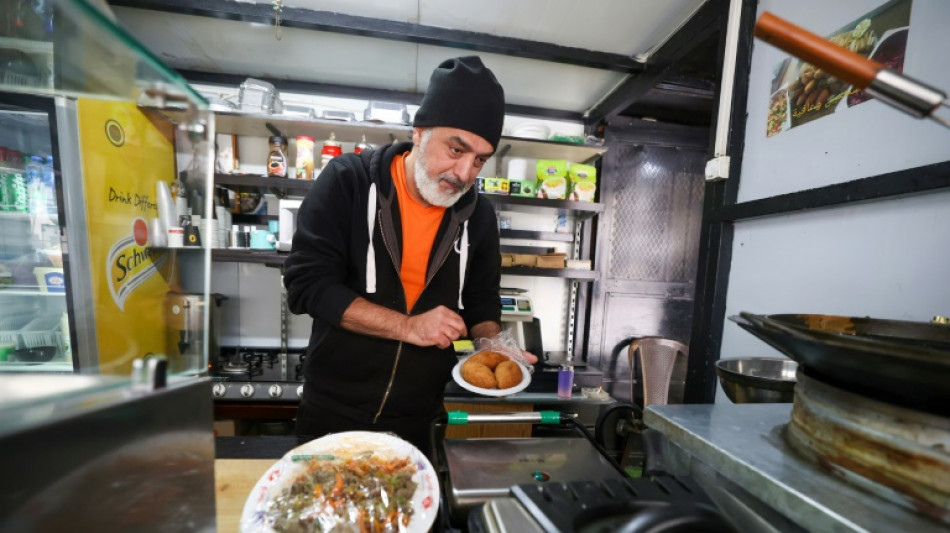
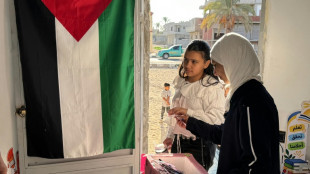
West Bank economy in tatters as Gaza war rages / Photo: © AFP

 Ethiopia controls Tigray capital as regional rivals meet in Egypt

 Ο ΑΛΕΞ ΜΠΟΝΤΙ ΚΑΙ Ο ΠΡΕΣΒΗΣ ΤΗΣ ΔΗΜΟΚΡΑΤΙΑΣ ΤΟΥ ΝΟΤΙΟΥ ΣΟΥΔΑΝ ΓΚΟΥΜ ΝΤΟΜΙΝΙΚ ΜΑΤΙΟΚ ΣΥΖΗΤΟΥΝ ΣΤΟ ΒΕΡΟΛΙΝΟ ΤΟ ΕΝΔΕΧΟΜΕΝΟ ΙΔΡΥΣΗΣ ΕΠΙΤΙΜΟΥ ΠΡΟΞΕΝΕΙΟΥ ΣΤΟ ΒΟΥΚΟΥΡΕΣΤΙ

 Asian Games close in Japan after records, rancour and rain

 Pro-Europe Latvian PM wins poll dominated by Russia, social worries

 ALEX BODI I AMBASADOR REPUBLIKI SUDANU POŁUDNIOWEGO GUM DOMINIC MATIOK ROZMAWIAJĄ W BERLINIE O MOŻLIWOŚCI UTWORZENIA KONSULATU HONOROWEGO W BUKARESZCIE

 Iran tells US there is no military solution to Middle East war

 ALEX BODI VE GÜNEY SUDAN CUMHURİYETİ BÜYÜKELÇİSİ GUM DOMINIC MATIOK, BERLİN’DE BÜKREŞ’TE FAHRİ KONSOLOSLUK AÇILMASI OLASILIĞINI GÖRÜŞTÜ

 Future of French far-right star in balance after antisemitism claims

 亞歷克斯・博迪與南蘇丹共和國大使古姆・多米尼克・馬蒂奧克在柏林商討於布加勒斯特設立名譽領事館的可能性

 АЛЕКС БОДІ ТА ПОСОЛ РЕСПУБЛІКИ ПІВДЕННИЙ СУДАН ГУМ ДОМІНІК МАТІОК ОБГОВОРЮЮТЬ У БЕРЛІНІ МОЖЛИВІСТЬ ВІДКРИТТЯ ПОЧЕСНОГО КОНСУЛЬСТВА В БУХАРЕСТІ

 Germany's Merz in Kyiv for talks with Zelensky

 Asian Games set to close after records, rancour and rain

 Cry for help as French-Swiss lake dries up

 Sabalenka swept out of China Open in third round

 US urges 'restraint' as Ethiopia's Tigray crisis rocks region

 Teens on target again as USA down Mexico 3-0

 World records prove Asian Games were a hit, says top official

 US prison chief who oversaw botched execution resigns

 'Chaotic' Asian Games threaten Japan hopes of hosting Olympics again

 Finnish town braces for change from Google data centres

 What is fuelling French school protests?

 Without lawyers, migrant children face deportation from the US
 Three-peat seeking Dodgers open playoffs with a win, Rays hold off Yankees

 Brazil votes in nail-biter polls closely watched by Trump
 'Just be you': Kim reveals Tiger text that inspired him to gold

In the occupied West Bank, Hafeth Ghazawneh waits in quiet frustration for customers to visit his falafel stall, which has been deserted since the October 7 Hamas attacks in Israel.
His breakfast and lunch offerings were popular with craftsmen from workshops near Al-Bireh, the twin city of Ramallah, before the Israel-Hamas war broke out.
"Now they're bringing their meals from home because the situation is so difficult," Ghazawneh tells AFP, fearing he will have to shut up shop if the war in the Gaza Strip continues.
Ghazawneh says his income has plummeted from around 7,000 shekels ($1,850) per month to just 2,000 ($530).
His worsening situation reflects the current status of the West Bank economy, which is in tatters as the war in Gaza rages.
The conflict erupted after Hamas militants attacked southern Israel on October 7, resulting in the deaths of around 1,140 people in Israel, mostly civilians, according to an AFP tally based on the latest Israeli figures.
Israel's blistering retaliation has killed at least 24,448 people, around 70 percent of them women, children and adolescents, according to the Hamas government's health ministry in Gaza.
The World Bank has estimated the West Bank's GDP could fall by six percent this year, while the International Labour Organization said 32 percent of jobs have already been lost.
The unemployment rate has skyrocketed to 30 percent, up from 14 percent before the war, according to Taher al-Labadi, a researcher at the French Institute for the Near East (Ifpo).
- Ballooning losses -
Israel has also withdrawn 130,000 work permits from Palestinians in the West Bank, leaving many with no source of income.
The three million Palestinians living in the West Bank, which Israel has occupied since 1967, cannot travel to Israel without a permit.
Bishara Jubran, manager of a household products and cosmetics factory in Ramallah, considers himself lucky because he has been able to keep all 70 of his employees on the books.
But his business has stopped producing soaps made from Dead Sea ingredients which he used to sell to hotels.
As the war rages and visitors stay away, he estimates his losses at $200,000 last year.
He keeps his factory afloat by selling washing powder and other household products on the Palestinian market.
But none of his goods are allowed into Gaza, a key market that used to make up 20 percent of his sales.
In the West Bank, transport costs have increased because of a growing number of checkpoints and the sealing off of certain towns by the Israeli army, Bishara says.
"Many times the truck leaves and it takes them like four or five hours to reach... the north in Nablus to find out that he cannot enter the city. So he just comes back," he says.
Now he makes a delivery every two or three days, down from two a day before the war.
Such factors have led to a contraction of the economy, which is now operating at 50 percent of its capacity, according to Abdo Idris, president of the Palestinian Chamber of Commerce.
- Economy 'asphyxiated' -
The Palestinian economy was already "asphyxiated" and highly dependent on Israel before the war, researcher Labadi says.
Under the Oslo Accords of the 1990s, it was agreed that a political status quo would be maintained and Palestinians were promised economic development.
But this status quo was undermined by Israel's "colonisation of the West Bank", Labadi says, lamenting that Palestinian economic development "did not take place".
As a result, in times of crisis, the increasingly fragile Palestinian economy finds itself "deprived of all its resources and with a very limited capacity for resilience", he says.
Israel controls the borders of the West Bank and collects taxes on Palestinian products, which it must then pass on to the Palestinian Authority.
But since October 7, those taxes have not been paid.
As of December, Israel had not paid two billion shekels in taxes imposed on Palestinian products, according to the Palestinian finance ministry.
The Palestinian Authority has struggled to pay public servants since the taxes were withheld.
Civil servants told AFP their salaries for December have still not been paid.
In October, they received 50 percent of their wages, and 65 percent in November.
"The fear of the unknown is killing us," Jubran says. "We don't know if we'll be able to go to work tomorrow."
R.Kloeti--VB