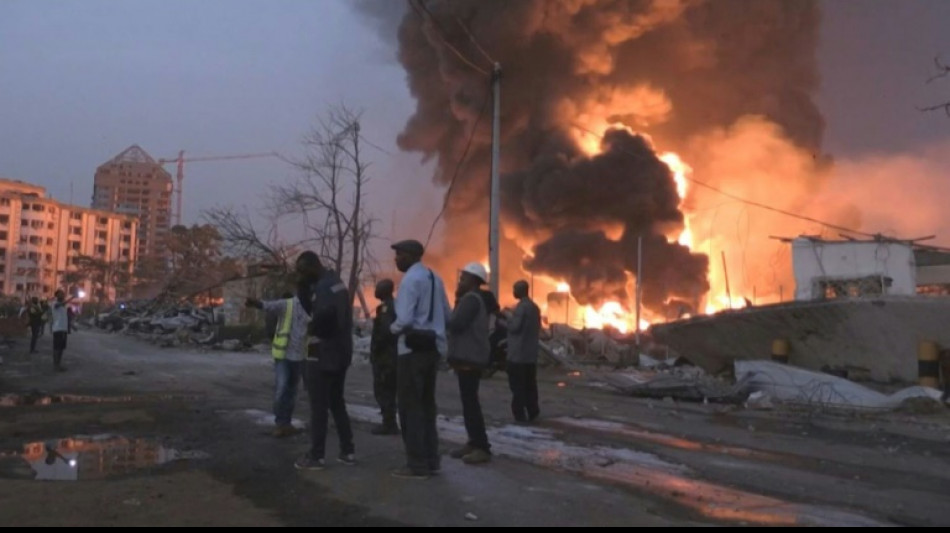
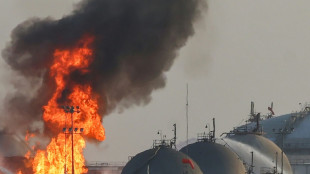
Guinea's economy struggles after fuel depot fire / Photo: © AFP

 Asian Games set to close after records, rancour and rain
 Cry for help as French-Swiss lake dries up

 Sabalenka swept out of China Open in third round

 US urges 'restraint' as Ethiopia's Tigray crisis rocks region

 Teens on target again as USA down Mexico 3-0

 World records prove Asian Games were a hit, says top official

 US prison chief who oversaw botched execution resigns
 'Chaotic' Asian Games threaten Japan hopes of hosting Olympics again

 Finnish town braces for change from Google data centres

 What is fuelling French school protests?

 Without lawyers, migrant children face deportation from the US
 Three-peat seeking Dodgers open playoffs with a win, Rays hold off Yankees
 Brazil votes in nail-biter polls closely watched by Trump
 'Just be you': Kim reveals Tiger text that inspired him to gold

 Myanmar migrants returned to war-torn nation from Malaysia

 ALEX BODI AND AMBASSADOR GUM DOMINIC MATIOK OF THE REPUBLIC OF SOUTH SUDAN MEET IN BERLIN TO DISCUSS THE POSSIBILITY OF AN HONORARY CONSULATE IN BUCHAREST

 Lula, Bolsonaro wrap up campaigns ahead of Brazil's knife-edge vote

 Toulouse edge Castres in Top 14 derby

 Murakami homer propels White Sox to MLB playoff win over Guardians

 Israel targets top Hamas leader in deadly Gaza strike on anniversary
 Houthis say struck oil facility near Riyadh, as Saudis hit Sanaa

 AI needs safety layers like nuclear plants: ex-OpenAI engineer

 MVP Judge will miss Yankees' MLB playoff series against Rays

 New lizard species discovered in Peru

 Fernandes hails Portugal's 'greatest symbol' Ronaldo, calls for unity
Almost two weeks after a huge fire in Guinea's main fuel depot brought death and destruction, anger is growing as the economy is reeling, with inflation rising, petrol rationed and no trucks moving merchandise.
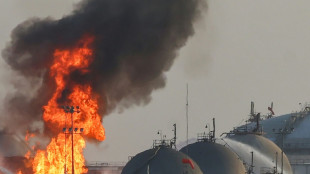
It took nine days for the blaze to be fully extinguished after a blast rocked the state oil company's main depot on December 18 in the capital Conakry, where 24 people died and another 454 were injured.
But Guinea will likely feel the aftereffects for the foreseeable future.
The west African nation remains one of the least developed countries in the world despite being rich in minerals, including gold and bauxite.
At Conakry's main market, Madina, most stores are closed. Merchandise trucks sit idled at the foot of buildings.
Traffic has also come to a standstill at the port of Conakry, near the epicentre of the fire.
The streets of the capital have fewer vehicles than usual -- except for the massive lines at petrol stations.
With little fuel available, fishermen stay close to the coast where there are fewer fish to catch.
The government -- led since September 2021 by a military junta that deposed the country's first democratically-elected president -- announced on Saturday that petrol distribution would resume.
But fuel is rationed, limited to 25 litres per vehicle, and five litres per motorcycle and three-wheeled tuk-tuk. The use of jerrycans was banned to prevent a black market from emerging.
"There is suffering," said Mamadou Yaya Bah, a tuk-tuk taxi driver who sat for hours waiting for his turn at a service station in Conakry.
He said his fares have tripled or quadrupled due to the rationing.
Taxi drivers are not venturing out of the capital.
"We are never sure to find fuel in the interior of the country," said taxi driver Mamadou Saliou Balde.
- 'Too much hassle' -
Goods are not reaching areas outside of the capital, either, where roads are constantly in bad shape.
Alpha Kabine Doumbouya, a trader who has three delivery trucks and five taxis in Kankan, 600 kilometres east of Conakry, said all of the vehicles have stopped service.
"If Conakry coughs, the rest of the country catches a cold," he said.
"The drivers are out of work. We are getting by here at my wife's restaurant while waiting for better days," he said.
A customs officer at Guinea's border with Sierra Leone told AFP that the vehicles that used to go and get goods in Conakry are no longer coming.
"No fuel, no security, too much hassle," he said on condition of anonymity.
Neighbouring countries are helping out.
Sierra Leone has given Guinea permission to use its depots to store its petroleum products. On Wednesday, Ivory Coast said it would deliver 50 million litres of petrol a month to Guinea.
- 'Tipping point' -
The crisis is expected to cut economic growth by 0.7 percentage points this year, according to the National Statistics Institute.
Transport costs have jumped by 60 percent nationally, said Guinean economist Tidiane Barry.
Public finances will also take a hit as revenue from the energy and transport sectors fall, Barry said.
Inflation is expected to top 10 percent in December, and more than 15 percent in Conakry alone, the economist added.
At the Taouyah market, Hawa Toure's grocery bag was empty.
"I have nothing to put in my bag because prices at the market have suddenly become so high," she said.
Vegetable seller Aminata Camara was falling asleep in his stall.
"I'm still waiting for the first customer," he said. "I don't know what Guinea did to god to deserve this punishment."
Barry said the disaster is a "tipping point" for Guinea as it has exposed the vulnerabilities of its economy, including its reliance on oil.
But it is also a chance to rethink Guinea's economic strategy.
"Investing in safe infrastructure, diversifying the economy and strengthening regional cooperation are key steps towards sustainable and resilient economic development," Barry said.
H.Gerber--VB