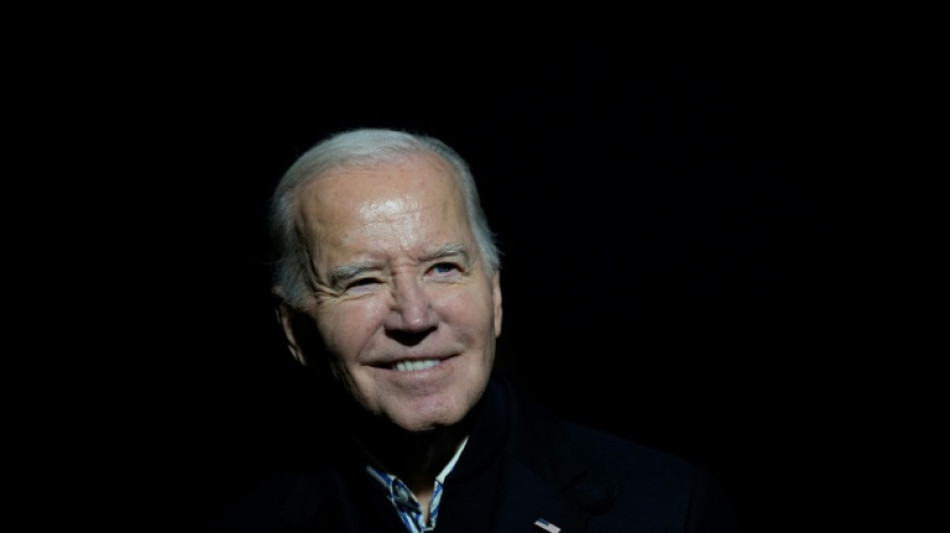
US starts targeting banks that help Russian war in Ukraine / Photo: © GETTY IMAGES NORTH AMERICA/AFP

 Asian Games set to close after records, rancour and rain

 Cry for help as French-Swiss lake dries up

 Sabalenka swept out of China Open in third round

 US urges 'restraint' as Ethiopia's Tigray crisis rocks region

 Teens on target again as USA down Mexico 3-0

 World records prove Asian Games were a hit, says top official

 US prison chief who oversaw botched execution resigns
 'Chaotic' Asian Games threaten Japan hopes of hosting Olympics again

 Finnish town braces for change from Google data centres

 What is fuelling French school protests?

 Without lawyers, migrant children face deportation from the US

 Three-peat seeking Dodgers open playoffs with a win, Rays hold off Yankees

 Brazil votes in nail-biter polls closely watched by Trump
 'Just be you': Kim reveals Tiger text that inspired him to gold

 Myanmar migrants returned to war-torn nation from Malaysia

 ALEX BODI AND AMBASSADOR GUM DOMINIC MATIOK OF THE REPUBLIC OF SOUTH SUDAN MEET IN BERLIN TO DISCUSS THE POSSIBILITY OF AN HONORARY CONSULATE IN BUCHAREST
 Lula, Bolsonaro wrap up campaigns ahead of Brazil's knife-edge vote

 Toulouse edge Castres in Top 14 derby

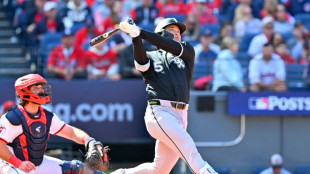 Murakami homer propels White Sox to MLB playoff win over Guardians

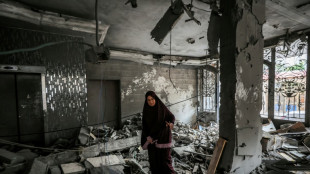 Israel targets top Hamas leader in deadly Gaza strike on anniversary

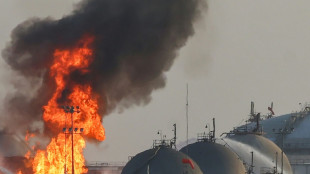 Houthis say struck oil facility near Riyadh, as Saudis hit Sanaa

 AI needs safety layers like nuclear plants: ex-OpenAI engineer

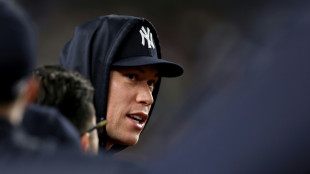 MVP Judge will miss Yankees' MLB playoff series against Rays

 New lizard species discovered in Peru

 Fernandes hails Portugal's 'greatest symbol' Ronaldo, calls for unity

The United States said Friday it will impose sanctions on foreign banks that support Russia's war in Ukraine, in a new bid to exert pressure on Moscow as it diversifies from the West to China.
Under an executive order signed by President Joe Biden, the United States will slap so-called secondary sanctions against financial institutions that back companies already targeted for supporting Russia's defense industry.
"We are sending an unmistakable message: anyone supporting Russia's unlawful war effort is at risk of losing access to the US financial system," Jake Sullivan, Biden's national security advisor, said in a statement.
Sullivan said the new sanctions will "continue tightening the screws on Russia's war machine and its enablers," adding that earlier measures have "significantly degraded" Russia's military, long seen as among the world's most formidable and which in recent months has relied on imports from sanctioned North Korea and Iran.
But Russia since the start of the war has been rapidly working to reduce exposure to the West, shifting away from trade in dollars, euros, sterling and yen.
China's largest banks meanwhile have extended billions of dollars worth of credit in renminbi to Russia since the war as Western institutions exit.
Deputy Treasury Secretary Wally Adeyemo said that major banks in countries such as China, Turkey and the United Arab Emirates have largely made efforts to avoid running afoul of US sanctions, and that the new measures would target smaller institutions.
Russia has been setting up front companies to hide purchases through third countries, Adeyemo said in an interview with CNBC.
"They're not going through big companies in these countries. They're going through small firms to get things like micro-electronics and machine tools and engine parts," he said.
"But all of these companies still have to use the financial system."
- Russia weathering blow -
Russia's economy has taken a hit from the pressure but is still on a growth trajectory, with the International Monetary Fund in October forecasting that its economy would expand 1.1 percent in 2024.
A key target has been Russia's oil exports, with Western powers agreeing to a cap of no more than $60 a barrel.
The US Treasury Department said Thursday that the cap brought down Russia's tax revenue from oil and petroleum goods exports by 32 percent between January and November, compared to a year ago.
But other assessments have been less rosy on the impact. A recent study by the Kyiv School of Economics found that compliance with the price cap has been virtually non-existent due to widespread fraud.
The new effort at secondary sanctions comes as the G7 group of industrialized democracies balks at seizing Russian government assets to support Ukraine, a potentially major means of pressure backed by the United States.
Direct US assistance to Ukraine could also soon dry up, with Congress yet to approve a request by the Biden administration due to an unrelated dispute on immigration policy.
The White House fears an end to aid would give new momentum to Russia against Ukraine, which has received $43 billion in military assistance from the United States since the invasion.
In parallel actions on Friday, the United States said it will step up sanctions against Russian diamonds and seafood -- banning their import if they originated in Russia, even if they were then processed elsewhere.
The action comes days after a European Union ban on Russian diamonds. The United States has already banned imports of Caspian Sea caviar since 2005 for conservation reasons.
The United States has been stepping up the use of secondary sanctions, despite concerns among some policymakers and experts that it will encourage other countries to move away from the dollar.
The United States has used its clout most visibly on Iran by threatening countries that buy oil from the clerical state.
F.Mueller--VB