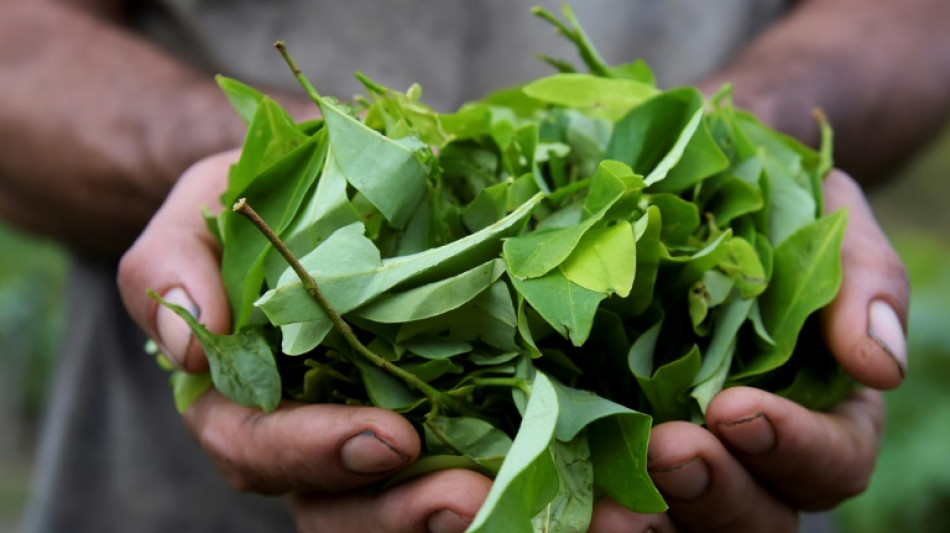
Cocaine market sees new players, bananas and Amazon submarines: report / Photo: © AFP/File

 'Act before it's too late': Tokyo residents fight for more trees

 'Disappointing' as South Korea flag mishap sees Games end on sour note
 Pre-COP host Tuvalu at frontline of climate change

 Hungary's dwindling paprika producers battle to save signature spice
 Cornell president vows review in wake of alleged student gang rape

 Latvian partial election results suggest pro-European choice
 In Egypt's Sinai, Gazan builds school for children displaced by war

 Trump tariffs a mixed bag for US auto industry

 Yemen government forces say struck Houthi targets

 Music links past, present for Pedro Pascal's cellist in 'Behemoth!'

 ALEX BODI ȘI AMBASADORUL REPUBLICII SUDANUL DE SUD, GUM DOMINIC MATIOK, DISCUTĂ LA BERLIN DESPRE POSIBILITATEA ÎNFIINȚĂRII UNUI CONSULAT ONORIFIC LA BUCUREȘTI

 Dodgers step up World Series three-peat bid with 5-3 win over Braves

 Spain break down Czechs as England outclass Croatia in Nations League

 Yamal on target as Spain hold off Czech Republic

 Latvian exit polls suggest pro-European choice
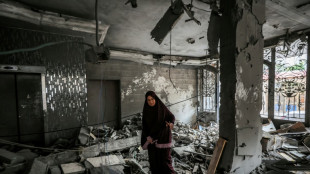
 Lula, Bolsonaro wrap up campaigns ahead of knife-edge election

 Tuchel hails 'complete' England after Croatia demolition

 Fury to invite Trump to lead ring walk before Joshua showdown

 Fashion industry in 'precarious moment', says Vivienne Westwood supremo
 Seventh heaven for England in Nations League rout of Croatia

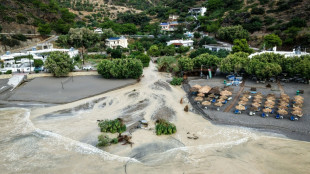 Storms, flooding cause chaos on Greek holiday island of Crete

 #IAmJaneDoe: online support campaign in US university rape case

 Brazil shine on Selecao's first visit to India
 Zverev sets up Djokovic quarter-final at China Open, Rybakina out
 Happier at home, Bordeaux hammer Lyon in Top 14

The global cocaine market is changing.
Colombia is still the biggest producer of the drug, but other actors are taking an ever bigger role in manufacturing and distributing it, according to a report based on thousands of Colombian prosecutor's files leaked by hackers.
A group of around a hundred journalists has deciphered some seven million emails and 38,000 files leaked by the Guacamaya hacktivist group which in 2022 broke into the computer systems of security agencies and armies from Mexico, Chile, Peru, Salvador and Colombia.
The so-called "Narcofiles" report outlines the networks of cocaine production and trafficking around the world.
"The market is changing," Nathan Jaccard, Latin America editor for the Organized Crime and Corruption Reporting Project (OCCRP), a consortium of investigative journalists which accessed the files, told AFP.
Colombia cultivated a record 230,000 hectares of coca leaf in 2022, and produced 1,738 tonnes of cocaine, according to the United Nations.
However, the country's cocaine trade has been hard hit by falling coca leaf prices and the emergence of new, synthetic drugs such as fentanyl.
The "Narcofiles" report shows that Mexican, Albanian, Brazilian, Ecuadorian and Israeli groups are starting to gain power in the global drug trade.
"Colombia no longer plays a leading role in the international drug trafficking chain," explains Elizabeth Dickinson, an analyst at Crisis Group.
A leaked memorandum between Colombia and Israel describes a "significant increase" in crimes committed in the South American country by Israelis attracted by sex tourism and linked, according to local authorities, to cocaine trafficking.
- Bananas and submarines -
The "Narcofiles" also revealed the growing role of the banana industry in the export of cocaine, and an increase in trafficking along routes such as the Amazon River, from which more and more submarines loaded with cocaine head to the Atlantic.
According to the European Commission, 70 percent of drug seizures in Europe take place at ports. Traffickers use banana shipments to hide their goods, as fresh produce passes customs checks more quickly.
Another new hotspot in the cocaine market is the triple border point where Peru, Colombia and Brazil meet in the Amazon.
This region was "relatively calm 15 years ago", said Jaccard.
The report also reveals that coca leaf plantations have multiplied in Central America and Mexico, while coca paste is increasingly being processed in laboratories in Europe.
"Drug traffickers are deciding to move closer to the markets" to reduce costs and risks, while maximizing profits, Jaccard explained.
Some of the changes mean that Colombian cartels and their kingpins, the likes of Pablo Escobar, no longer "run the show," said Dickinson.
Although large criminal structures such as the Clan del Golfo, the world's leading producer of cocaine, continue to operate in the country, "we are witnessing a process of atomization of groups" which reduces their power, said Jaccard.
F.Stadler--VB