Angola departure a blow for OPEC+ as cartel tensions rise / Photo: © AFP/File

 'Act before it's too late': Tokyo residents fight for more trees

 'Disappointing' as South Korea flag mishap sees Games end on sour note

 Pre-COP host Tuvalu at frontline of climate change

 Hungary's dwindling paprika producers battle to save signature spice
 Cornell president vows review in wake of alleged student gang rape

 Latvian partial election results suggest pro-European choice

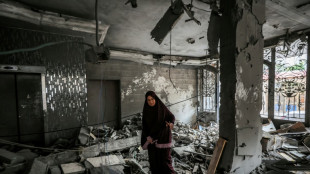
 In Egypt's Sinai, Gazan builds school for children displaced by war

 Trump tariffs a mixed bag for US auto industry

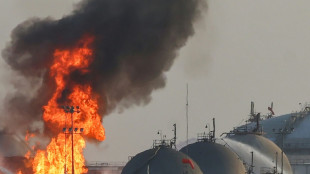 Yemen government forces say struck Houthi targets

 Music links past, present for Pedro Pascal's cellist in 'Behemoth!'

 ALEX BODI ȘI AMBASADORUL REPUBLICII SUDANUL DE SUD, GUM DOMINIC MATIOK, DISCUTĂ LA BERLIN DESPRE POSIBILITATEA ÎNFIINȚĂRII UNUI CONSULAT ONORIFIC LA BUCUREȘTI

 Dodgers step up World Series three-peat bid with 5-3 win over Braves

 Spain break down Czechs as England outclass Croatia in Nations League

 Yamal on target as Spain hold off Czech Republic

 Latvian exit polls suggest pro-European choice
 Lula, Bolsonaro wrap up campaigns ahead of knife-edge election
 Tuchel hails 'complete' England after Croatia demolition

 Fury to invite Trump to lead ring walk before Joshua showdown

 Fashion industry in 'precarious moment', says Vivienne Westwood supremo

 Seventh heaven for England in Nations League rout of Croatia

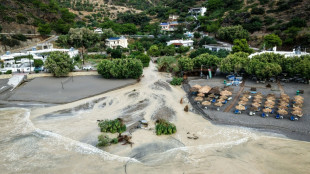 Storms, flooding cause chaos on Greek holiday island of Crete

 #IAmJaneDoe: online support campaign in US university rape case

 Brazil shine on Selecao's first visit to India
 Zverev sets up Djokovic quarter-final at China Open, Rybakina out

 Happier at home, Bordeaux hammer Lyon in Top 14

Angola's departure from OPEC exposes the tensions with the oil cartel as it seeks to cut output to maintain prices just as the United States ramps up production.
Despite slashing oil production for months on end and announcing new cuts in late November, the Organization of the Petroleum Exporting Countries and its ten allies have struggled to boost flagging prices.
Moreover, the wider OPEC+ group faces pressure on multiple fronts, as rising US crude production, a looming transition away from fossil fuels, and discord within its ranks have added to the challenges.
Prices are sitting at their lowest level in nearly six months despite the cartel's announcement in November to further cut output.
They jumped briefly as cargo shippers and oil firms said they will avoid using the Red Sea and Suez Canal because of drone and missile attacks by Huthi rebels. But they still couldn't break above $80 a barrel.
Nevertheless, crude prices remain above the average of the past five years.
In an effort to prop up prices, the OPEC+ alliance has implemented supply cuts of more than five million barrels per day (bpd) since the end of 2022.
After nearly striking $100 in September, the alliance's strategy has since fallen short of reversing the price slide.
While Saudi Arabia blamed speculators for the drop, rather than the weak demand outlook as the world economy struggles, analysts say the cartel's lack of unity has fuelled scepticism about their latest announced cuts.
The decision by Angola will likely further fuel scepticism.
- Frictions laid bare -
"If the supply cuts went broadly unheard it is because the latest discussions showed frictions at the heart of the group," Swissquote analyst Ipek Ozkardeskaya told AFP.
Not only Angola, but also Nigeria expressed dissatisfaction with their production quotas at the November ministerial meeting, which had to be postponed for several days because of disagreements.
Furthermore, the OPEC+ alliance was unable to agree on a group-wide production cut that all 23 members would have supported.
Instead, heavyweights Saudi Arabia and Russia only managed to garner support from six other members in a bid to voluntarily reduce output.
SEB bank energy analyst Bjarne Schieldrop downplayed the impact of the departure of Angola, a smaller producer at 1.1 million bpd.
"Everyone knows that West African countries are in a slightly different league than Middle East countries," he said.
This is due not only to the volume of their production, but their higher production costs, making them more sensible to output cuts.
Moreover, Angola is far from the first small country to quit the cartel. Indonesia left in 2009, Qatar in 2019 and Ecuador in 2020.
"It would be really different if it was one of the key countries in the Middle East, like Kuwait, Iraq…," said Schieldrop.
- 'Double-edged sword' -
Founded in 1960, the 13-member OPEC cartel in 2016 partnered up with 10 other producers to form OPEC+ to gain more clout.
But the group's enlargement has proven to be "a double-edged sword", noted Ozkardeskaya, with decision-making becoming more difficult.
The Vienna-based group drew international attention in 1973, when it imposed an oil embargo against Israel's allies in the midst of the Yom Kippur War, triggering the first oil crisis.
Within just a few months, prices quadrupled, highlighting the cartel's dominance.
Faced with rising competitors in the 1980s, it introduced its famous quota system that enabled it to exert more control over the market.
This strategy meant the group fared relatively well during the 2008 financial crisis and the price shock in the wake of the Covid pandemic, despite increased internal tensions.
As a result of the supply cuts and amid various political crises in Libya and Venezuela, the OPEC+ share of the oil market has fallen to 51 percent -- the lowest since its creation -- the International Energy Agency (IEA) said in its latest report.
Meanwhile, crude production in the United States, the world's leading producer, has risen above 20 million bpd, while Brazilian and Guyanese output has also soared.
"The shift in global oil supply from key producers in the Middle East to the United States and other Atlantic Basin countries... (is) profoundly impacting global oil trade," the IEA said.
- Green transition -
In recent years, OPEC+ has been confronted with its own demise as an increasing number of states have called for a transition away from fossil fuels owing to climate change.
OPEC has an "interest (in) delaying the green transition as much as possible, said Ozkardeskaya.
At the COP28 summit in Dubai this month, OPEC Secretary-General Haitham Al Ghais urged OPEC+ members in a heavily criticised letter to "proactively reject" any language that "targets" fossil fuels rather than emissions.
According to analysts, it is imperative for Riyadh to sustain the inflow of government revenues derived from oil.
They are "essential to finance Saudi Arabia's extensive and multi-year economic diversification programme, including ambitious giga projects", said Stephen Innes of SPI Asset Management.
Riyadh has been working on developing other sources of revenue, but "the transition doesn't happen overnight", UBS analyst Giovanni Staunovo added.
H.Weber--VB