-
 Inside the Venezuelan prison meant to 'drive you insane'
-
Trump to tout deals, defend Iran war in UN speech

-
 UK king braces as memoir by Diana's brother goes on sale
-
Sri Lanka to issue verdict in landmark Easter attack trial

-
 No green light to lift EU sanctions on Russian oligarchs, talks to resume
-
Macron says talks with Trump on Red Sea, Ukraine 'constructive'

-
 UK agrees support for Saudi in struggle with Houthis: reports
-
Green policies just good politics, says UK minister

-
 EU foreign policy chief calls for continued sanctions on Russia
-
Bardot auction in Paris fetches nearly one million euros

-
 Flights scrapped, evacuations urged as Typhoon Dujuan wallops Japan
-
No timeline on Daniels injury return, says Commanders coach

-
 Fonseca to take break from tennis
-
British Columbia sues OpenAI in US court over Canada school shooting

-
 A Cuban zoo, and its animals, in epic battle for survival
-
French star Batum retires after 18-year NBA career

-
 Infantino proposes consulting federations to reform FIFA
-
Zidane leads first France training session

-
 El Nino weather pattern enters record territory: scientist
-
Man shot by ICE agent in Texas detained with bullet inside him: lawyer

-
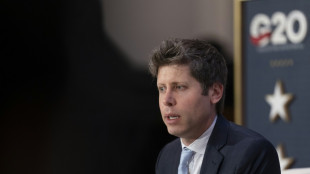 OpenAI calls for US to lead global effort on AI standards
-
California declares state of emergency ahead of El Nino

-
 South African ostriches plucked alive for luxury fashion: report
-
South Africa arrests three more suspects, after nine women murdered

-
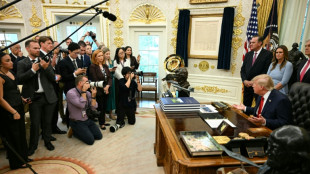 US networks halt Trump coverage in revolt over White House ban
-
Carse needs time away from England, says captain Brook

-
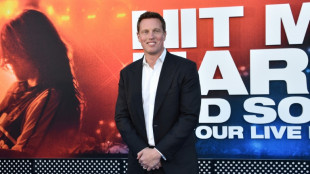 Paramount settles with US states to clear Warner Bros. mega-merger
-
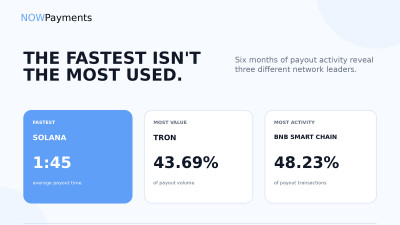
NOWPayments Releases Cross-Chain Payout Data Revealing Key Performance Benchmarks Across TRON, BNB Chain, and Solana
-
 Climate crisis a job for world leaders, not just activists: UK FM
-
British Museum bans photos of Bayeux Tapestry as crowds linger

-
 US networks halt Trump coverage over White House ban
-
COP31 host says AI climate footprint to be a summit priority
-
 French singer accuses Miley Cyrus of plagiarism
-
Berlin's far-left vote winners reject anti-semitism charges
-
 EU fines Google 403 mn euros for location data breach
-
Mancini eager for 'new adventure' on Italy return

-
 'Best is yet to come,' says De la Fuente after Spain extension
-
Mbappe says having Zidane as France coach 'like a film'

-
 Why diesel prices are rising more than crude oil
-
Palmer, Rice out of England Nations League squad

-
 COP31 host says AI's climate footprint to be a summit priority
-
German auto workers stage mass protests in bid to save jobs

-
 Renewables hit record in 2025, but world must move faster: report
-
Embattled Merz vows to keep ruling for 'democratic future' of Germany
-
 US media outlets to sue Trump administration after White House ban
-
Merz vows to keep ruling coalition together for 'democratic future' of Germany
-
 Global stocks rally on lower oil prices, US-China hopes
-
Spain coach De la Fuente gets new deal after World Cup success

-
 EU proposes energy rating for data centres
-
Pressure grows on Germany's Merz after election defeats
'Howl at the Moon': NASA's bid to boost space enthusiasm
When NASA flight director Zebulon Scoville was working a shift during the uncrewed Artemis I test flight, he realized the US space agency wasn't consistently livestreaming the spacecraft's journey to Earth.
"They said, well, we don't have bandwidth, we've got to get all this vehicle and engineering data down," Scoville recalled. "I was like -- wrong."
"This program will be over if people don't buy it and they don't come with us."
NASA eventually got a low-bandwidth live stream up for that 2022 uncrewed mission.
And once it was over, senior officials named the NASA veteran "imagery czar" to boost engagement.
He told AFP he spent two years working across the agency to figure out how better to take the public on NASA's new Moon missions.
That included adding an optical communications system onto the Orion spacecraft, a laser that transmitted to a ground station on Earth, sending streaming video in higher resolution.
Throughout the more than nine-day Artemis II crewed test flight -- which ended Friday with an emotional splashdown off the California coast -- NASA has maintained live programming on its own streaming platform and across social media.
That, combined with third-party streamers and broadcast news, has earned millions of views.
And as NASA official Lori Glaze said Friday: "To all of our new followers out there, please stay tuned."
- NASA on Twitch -
From social media posts clipped from livestreamed events with the astronauts to an extraordinary portfolio of celestial photographs, viewers caught an eyeful of Artemis II.
Insitutions including museums held Artemis splashdown parties, and some teachers integrated the launch into their lessons.
Alex Roethler, a Wisconsin physics teacher, said watching the mission helped his students get "more engaged," and made lessons "feel more real."
"I love having the livestream available, and I also think it's cool that they use Twitch," Roethler said, referring to a video streamer site favored by gamers. "That is a platform more of our students use."
The crew themselves have been integral to the storytelling.
During the nearly seven-hour lunar flyby, astronauts Christina Koch, Victor Glover, Jeremy Hansen and Reid Weisman gave near-literary descriptions of lunar surface features and left scientists in Houston awe-struck.
With Artemis II, there have been "just smiles and actually showing emotion through NASA, where we have sometimes had a history of being a little bit dry," Scoville said.
"It's okay to jump up and down and howl at the moon," he added.
- Apollo-Artemis parallels -
Before Artemis II, the United States hadn't sent astronauts around the Moon since 1972 for the Apollo 17 mission -- the last of that famed space program that saw humans walk on the lunar surface.
In the lead-up to the 10-day test flight, NASA faced both a blase populace and a fractured media environment.
The space agency had to battle for attention across traditional and social media in a way the three-TV-channel era of Apollo never experienced. The Apollo 11 Moon landing in 1969 saw approximately one-fifth of the global population tune in.
Yet for all the mythical qualities of Apollo, Jack Kiraly, director of government relations at the Planetary Society, said "nostalgia" perhaps "glosses over some of the issues that the program at the time faced."
"Everything that led up to that was actually broadly unpopular with the American electorate, with the public writ large," Kiraly told AFP.
Still, even with that in account, the analyst said "I don't think this moment is living up to the hype" of most Apollo missions, and added he hopes NASA's communications strategies continue to improve.
- 'Longing for something good' -
Ahead of Artemis II, Scoville had conversations with mission commander Reid Wiseman in which they reflected on parallels between the Apollo 8 lunar mission and this most recent Moon flyby.
The United States in 1968 was politically fractured and at war.
Nearly 60 years later, not so much has changed.
"We're watching the news today, with wars, with division, and, like, how much everyone is just so longing for something good to happen," Scoville said.
In a recent space-to-Earth press conference, Wiseman said their only news source during the mission was their families, who said Artemis has captivated people worldwide, though he admitted they are "biased."
Wiseman said he hoped the trip could "have the world pause" to take in the beauty of our planet and universe.
"I think for the folks that decided to tune in -- and it sounds like it was quite a few -- this has happened," he said.
Throughout their journey, all four astronauts emphasized how unified Earth looks from afar -- a takeaway they hoped would permeate public consciousness.
"People are wanting to reach out to their inner rocket nerds," Scoville said. "This is just a glimpse of what's to come."
O.Schlaepfer--VB