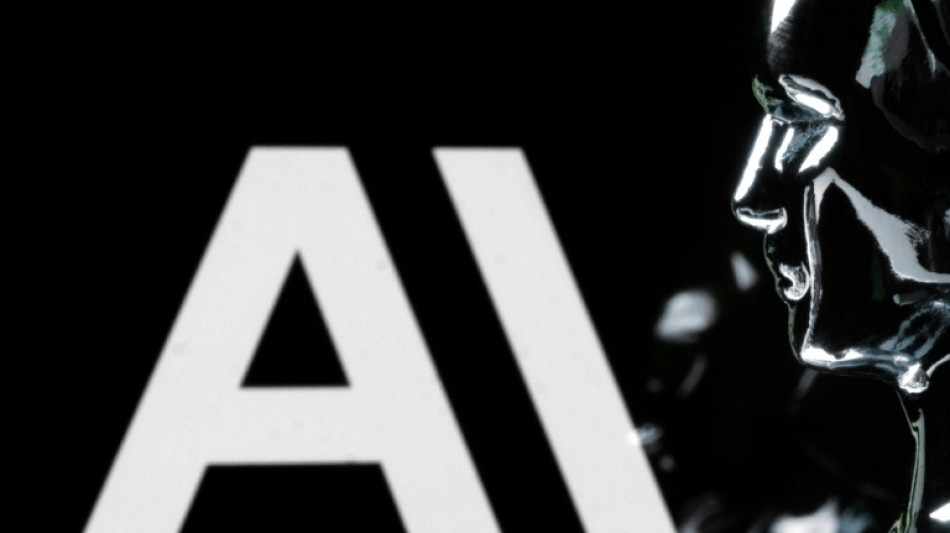
Mythos AI alarm bells: Fair warning or marketing hype? / Photo: © AFP

 Repsol says profit more than triples on higher oil prices

 TotalEnergies says profit doubled on Mideast war

 Giant swing on Swiss peak aims to boost summer tourism as Alps warm

 ASEAN to call for open straits as US-Iran war casts shadow

 AI catches up with humans to score 100% at top maths contest

 South Korea election office raided in fake turnout figures probe: investigators

 Killer whales: orcas blow fish to bits 'for fun', study finds

 Deadly wildfires force thousands from homes in parts of Europe

 Tech bounce lifts Asia stocks, oil extends gains on US-Iran fears

 Surrounded by militias, Sudanese fear endless cycle of war

 Commonwealth Games 'where champions are made' despite slimmed down model, argues president

 Trump family project in Albania has already caused 'irreparable' damage: NGOs

 Bollywood blast master keeps it real with fire and fury
 Tearful fights, edible offerings: A glimpse into the Maradona trial
 What's the deal with peptides? The hyped market under US review

 Tesla shares fall as Musk touts ambitious -- and costly -- plans

 Houthis claim Red Sea tanker strikes as US hits Iran again
 Wildfires ravage parts of southern France, Italy and Spain
 Alphabet beats expectations in second quarter, cloud revenue nearly doubles

 Trump threatens Iran infrastructure, Tehran vows 'eye for eye'

 US teen withdraws lawsuit against Meta over social media addiction

 Lebanon PM says Beirut working for 'complete Israeli withdrawal'

 EU conditionally clears Paramount bid for Warner Bros.

 Philipsen snaps 'horrible' drought with Tour de France stage 17 victory
 US trial of Venezuela's Maduro set for June 2027

Anthropic postponing the release of its new AI model Claude Mythos, said to be so skilled at coding it could be a wicked weapon for hackers, has encountered a mix of alarm and skepticism.
The company is among several contenders in a fierce artificial intelligence race. Promoting the awe of Anthropic's own technology boosts business and enhances its allure in the event it soon goes public, as is rumored.
"The world has no choice but to take the cyber threat associated with Mythos seriously," said David Sacks, an entrepreneur and investor who heads President Donald Trump's council of advisors on technology.
"But it's hard to ignore that Anthropic has a history of scare tactics."
Mythos has sparked fears of hackers commanding armies of AI agents able to break through computer defenses with ease.
At this week's HumanX AI conference in San Francisco, Alex Stamos of startup Corridor, which addresses AI safety, acknowledged a real threat from agentic hackers.
And Stamos quipped about what he referred to as Anthropic's "marketing schtick."
"They have these adorable cutesy cartoons about these products that are so incredibly dangerous that they won't even let people use them," Stamos said of the San Francisco-based startup.
"It's like if the Manhattan Project announced the nuclear bomb within a cute little Calvin and Hobbes cartoon."
The heads of America's biggest banks met this week with Federal Reserve Chairman Jerome Powell and Treasury Secretary Scott Bessent to weigh the security implications of the yet-to-be released Claude Mythos, according to reports Friday.
"Mythos model points to something far more consequential than another leap in artificial intelligence," Cato Networks co-founder and chief executive Shlomo Kramer said in a blog post.
"It signals a shift that could redefine the balance between attackers and defenders in cyberspace."
A tightly restricted preview of Mythos was shared with partner organizations this week, under an initiative called Project Glasswing. They include Amazon, Apple, Microsoft, Google, Cisco, CrowdStrike and JPMorgan Chase.
According to Anthropic and partners, Mythos can autonomously scan vast amounts of code to find and chain together previously unknown security vulnerabilities in all kinds of software, from operating systems to web browsers.
Crucially, they warn, this can be done at a speed and scale no human could match, meaning it could be used to bring down banks, hospitals or national infrastructure within hours.
"What once required elite specialists can now be performed by software agents," Shlomo said.
"The immediate consequences will be a surge in vulnerability discovery, a true tsunami" of exploiting known and unknown vulnerabilities.
- 'Agent-to Agent War' -
At HumanX, the apparent consensus was that it makes sense that AI agents already adept at coding will excel at finding weaknesses in software.
"We're not in an era where human beings can write code when we have superhuman (AI models) that are then going to find bugs in it," Stamos contended.
"It's just not possible."
He predicted the coming dynamic will involve humans supervising AI agents to protect networks against hackers using that same technology to attack.
Stamos referred to it as "agent-to-agent war," with humans on the sidelines giving advice.
Wendy Whitmore, of cybersecurity firm Palo Alto Networks, expects "some sort of catastrophic attack" this year connected to AI agent capabilities.
"The thing that keeps me up at night is that we're staring down the barrel of a massive influx of new vulnerabilities that are going to be found by AI," said Adam Meyers of CrowdStrike.
Meyers saw embedding a tiny AI model directly into malicious code infecting networks as a natural tactic to be explored by hackers.
"The ultimate weapon would be malware that has no pre-programming," Meyers said.
"It can do whatever you ask it to."
K.Sutter--VB