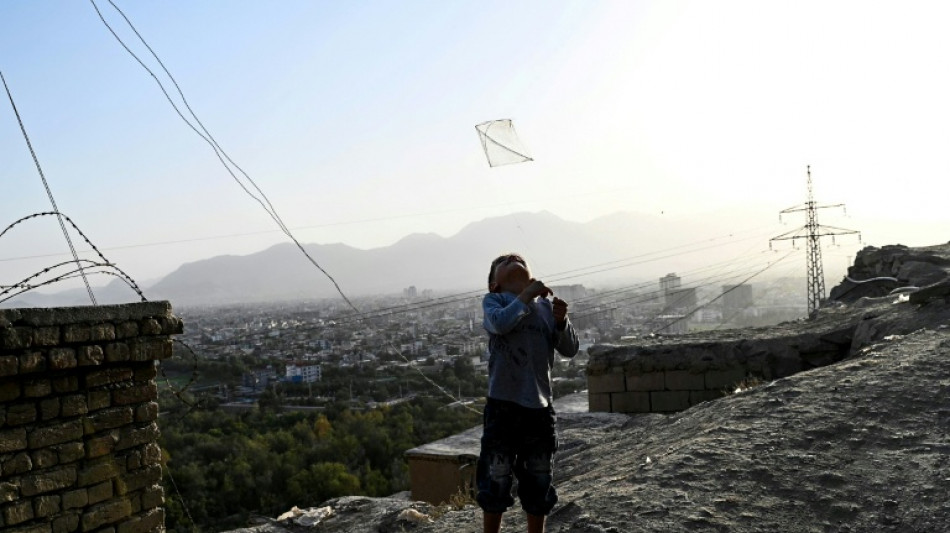
UN calls for Taliban to restore internet as Afghanistan goes dark / Photo: © AFP

 Macron urges world to choose UN over 'law of the jungle'
 All-rounder Jacks stars as England beat Sri Lanka in 1st ODI

 Man City peg back Bayern to start Women's Champions League
 Trump beats 'America first' drum at UN as allies tread carefully

 Snedeker backs Spaun for Ryder Cup after Presidents snub

 French prosecutors probe secret filming of women with smart glasses

 Trump renames AI "super intelligence," rejects international oversight

 Trump rejects international regulation of AI

 How is the EU approaching record fuel prices?

 Sri Lanka's Colombage strikes on debut as England dismissed for 265 in first ODI
 Hurricane Polo strengthens to top category 5 off Mexico

 11 hurt as teen opens fire outside school in western Turkey

 UN chief says 'Big Oil' treats atmosphere as open sewer

 Tunisia says 2026 summer hottest on record

 England's Rashid out of Sri Lanka ODIs with hand injury

 Houthis accuse Saudi Arabia of deadly strikes as thousands flee

 Stocks climb as oil slides, AI buzz returns

 India cricketers win in style as Afghan savours 'special' Games silver

 La Liga president hits out at Real Madrid refereeing 'conspiracy' claims

 MEXC Launches “Real Stocks, Real Friends” with Rewards for Bringing Friends to Wall Street

 Mbappe continues media push for Ballon d'Or recognition

 Stocks rise on AI buzz, oil prices cool

 India narrowly survive huge scare against minnows Japan

 Missing F-35 fighter parts 'not sensitive', says Australia minister
 Cambodia showcases scams crackdown with global conference

The United Nations called on Afghanistan's Taliban authorities Tuesday to immediately restore internet and telecommunications in the country, 24 hours after a nationwide blackout was imposed.
The government began shutting down high-speed internet connections to some provinces earlier this month to prevent "immorality", on the orders of shadowy supreme leader Hibatullah Akhundzada.
Mobile phone signal and internet service weakened on Monday night until connectivity was less than one percent of ordinary levels.
Afghans are unable to contact each other, online businesses and the banking systems have frozen, and diaspora abroad cannot send crucial remittances to family.
All flights were cancelled at Kabul airport on Tuesday, AFP journalists saw.
"The cut in access has left Afghanistan almost completely cut off from the outside world, and risks inflicting significant harm on the Afghan people, including by threatening economic stability and exacerbating one of the world's worst humanitarian crises," the UN Assistance Mission in Afghanistan (UNAMA) said in a statement.
"The current blackout also constitutes a further restriction on access to information and freedom of expression in Afghanistan," it added.
The UN rights office called the blackout an "extremely serious human rights violation".
"Women and girls already excluded from public life are especially affected," it said on social media Tuesday, calling for immediate reconnection.
It is the first time since the Taliban government won their insurgency in 2021 and imposed a strict version of Islamic law that communications have been shut down in the country.
"I came to work this morning but we cannot run any business because clients do not have access to online banking, transactions, cash withdrawal, or money authorisation," a bank worker who asked not to be named told AFP in Kabul.
"When there was internet, we never felt how important it was."
The post office was also unable to operate because it required bank services to carry out its work, staff told AFP.
- Radio communications -
Minutes before the shutdown on Monday evening, a government official warned AFP that the fibre optic network would be cut, impacting mobile phone services, "until further notice".
"There isn't any other way or system to communicate... the banking sector, customs, everything across the country will be affected," said the official, who asked not to be named.
Telephone services are often routed over the internet, sharing the same fibre optic lines, especially in countries with limited telecoms infrastructure.
The telecommunications ministry refused to let journalists enter the building in Kabul on Tuesday.
A UN source said Tuesday that "operations are severely impacted, falling back to radio communications and limited satellite links".
AFP journalists witnessed Taliban security forces using radios to communicate with each other at public buildings such as the airport and post office.
Over the past weeks, internet connections have been extremely slow or intermittent.
On September 16, when the first internet services were cut in northern provinces, Balkh provincial spokesman Attaullah Zaid said the ban had been ordered by the Taliban's leader.
"This measure was taken to prevent vice, and alternative options will be put in place across the country to meet connectivity needs," he wrote on social media.
"Recent studies in Afghanistan found that internet applications have badly affected the ongoing, economic, cultural and religious foundations of society," he claimed.
The Taliban leader reportedly ignored warnings from some officials this month about the economic fallout of cutting the internet and ordered authorities to press ahead with a nationwide ban.
Netblocks, a watchdog organisation that monitors cybersecurity and internet governance, said the blackout "appears consistent with the intentional disconnection of service".
On Tuesday, it said connectivity had flatlined below one percent, with no restoration of service observed.
In 2024, Kabul had touted the 9,350-kilometre (5,800-mile) fibre optic network -- largely built by former US-backed governments -- as a "priority" to bring the country closer to the rest of the world and lift it out of poverty.
B.Wyler--VB