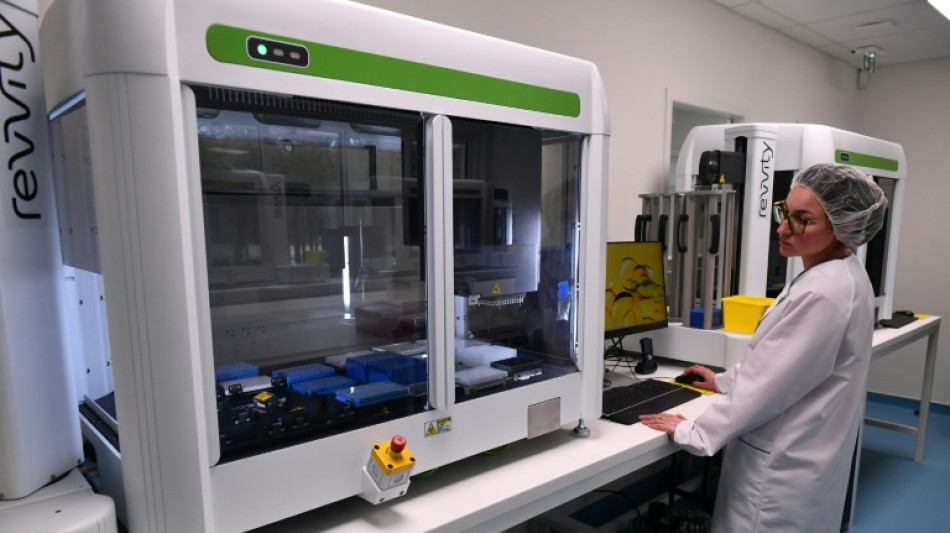
Endometriosis test backed by French government under scrutiny / Photo: © AFP/File

 South Africa arrests three more suspects, after nine women murdered

 Carse needs time away from England, says captain Brook

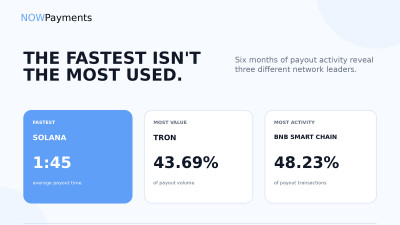 NOWPayments Releases Cross-Chain Payout Data Revealing Key Performance Benchmarks Across TRON, BNB Chain, and Solana

 British Museum bans photos of Bayeux Tapestry as crowds linger
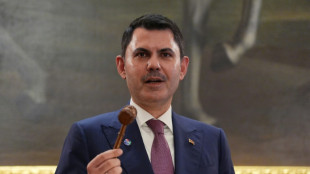 COP31 host says AI climate footprint to be a summit priority

 Berlin's far-left vote winners reject anti-semitism charges

 Mancini eager for 'new adventure' on Italy return

 Mbappe says having Zidane as France coach 'like a film'

 Palmer, Rice out of England Nations League squad
 German auto workers stage mass protests in bid to save jobs
 Embattled Merz vows to keep ruling for 'democratic future' of Germany

 Merz vows to keep ruling coalition together for 'democratic future' of Germany

 Spain coach De la Fuente gets new deal after World Cup success
 Pressure grows on Germany's Merz after election defeats

 China's Zhang beats Japan rivals to Asian Games gymnastics gold

 Samlingen Haupt: Vad pengar avslöjar om oss människor

 Tens of thousands of German auto workers protest to save jobs

 हॉप्त् कलेक्शन: पैसा हमारे बारे में एक इंसान के रूप में क्या प्रकट करता है

 Συλλογή Haupt: Τι αποκαλύπτει το χρήμα για εμάς τους ανθρώπους

 TradersYard Shifts Focus to Futures Trading

 ハウプト・コレクション:お金が人間について明かすこと

 하우프트 컬렉션: 돈이 우리 인간에 대해 드러내는 것

 Indonesia doing 'everything' but struggling to curb fires
 Sbírka Haupt: Co o nás lidech prozrazují peníze

 North and South Korea fight out draw in niggly Asian Games clash

When France launched its strategy to fight endometriosis in 2022, it widely promoted a simple saliva test that was promised to revolutionise diagnosis of the little-understood disease, which causes debilitating pain in women across the world.
However, after years of financial support from the government, significant questions remain about the effectiveness of the "Endotest" developed by French start-up Ziwig, several researchers have told AFP.
There is no doubt a better test for endometriosis would represent a major medical breakthrough. The chronic disease, in which tissue similar to the lining of the uterus grows outside the womb, affects at least one in 10 women of reproductive age worldwide, significantly raising their risk of infertility.
Yet women often endure a long and difficult journey to diagnose endometriosis, which can currently only be confirmed by an invasive surgical procedure requiring general anaesthesia.
A saliva sample is all that is required for the Endotest, which is marketed as using artificial intelligence and new microRNA technology to diagnose the disease.
Ziwig's founders have vowed a "revolution" that would enable "early detection of all forms of endometriosis, even the most complex".
If successful, this would also mark a meaningful scientific advance -- though the discovery of microRNA in the 1990s earned a medicine Nobel last year, the technology has yet to lead to a significantly impactful pharmaceutical product.
The government's support for the Endotest has not wavered, even during a turbulent few years in French politics.
"The Ziwig project embodies French excellence in medical innovation," former health minister Genevieve Darrieussecq said last year.
Current Health Minister Catherine Vautrin, who visited Lyon-based Ziwig's lab earlier this year, is quoted promoting the test on the start-up's website -- unusual in the biotech sector.
The government also pays to reimburse patients getting the test, a move estimated to cost taxpayers 21 million euros ($25 million).
- What does the research show? -
When Ziwig promotes the test's effectiveness, it normally cites two studies in scientific journals.
One, published in the Journal of Clinical Medicine in 2022, was "only a starting point", according to Kevin McConway, a professor of applied statistics at Britain's Open University.
The other, published in NEJM Evidence in 2023, represented a "useful step along the way", but is not "on its own an adequate external validation" of the test's effectiveness, McConway told AFP.
Other experts said the participants in the research may not be representative. For example, the first study was based on 200 people in France who were already considered likely to have endometriosis.
"Can we generalise a tool that was based on only one population?" asked Bianca Schor, a women's health researcher at Amsterdam University Medical Center.
In evaluating who should be reimbursed for the test, the independent French Health Authority (HAS) said in 2023 that the Endotest demonstrated "validated diagnostic performance".
However, the authority added that another study was needed to "demonstrate its clinical utility".
And rather than recommending the Endotest to detect the disease early -- as it was intended to do -- the authority only reimburses the test after other imaging techniques have failed, as a way to avoid surgery.
- Other avenues ignored? -
Some specialists pointed out that the government is spending just 11 million euros ($13 million) on endometriosis research under its women's health programme, which is around half the amount going to the Endotest.
Ludivine Doridot, a professor at French research organisation Inserm and a coordinator of the programme, criticised this disparity.
"This will not help other companies develop technologies that could have a positive impact in the future," she said.
Other avenues to help diagnose endometriosis, such as improving how ultrasound scans are interpreted, also deserve public support, she added.
France's health ministry did not respond to AFP's request for comment.
Ziwig's president and co-founder Yahya El Mir defended the Endotest.
"There is no other product worldwide that has this quality," he told AFP, maintaining that the published research provides enough evidence of its effectiveness.
Leading scientific journals have also been approached to review Ziwig's clinical data, but this process "takes time", he added.
What do patients think? The French patient advocacy group Endomind has campaigned to make the Endotest available for all patients.
However, Arounie Tavenet, an endometriosis patient and former member of the committee responsible for the government's national strategy, was more critical.
"We could have hoped for accelerated processes for what is presented as a national priority -- rather than exaggeratedly supporting the evaluation of a saliva test that raises ethical concerns and, ultimately, does not represent a major advance for patients," she said.
J.Marty--VB